My First Rodeo
Once you're clued in, you can see the opening words and prayer are more than just performative patriotism and piety. It's well-thought-out propaganda with hidden structure and meanings for a radical right wing Christian nationalist agenda. Sounds crazy, eh, but it's true.
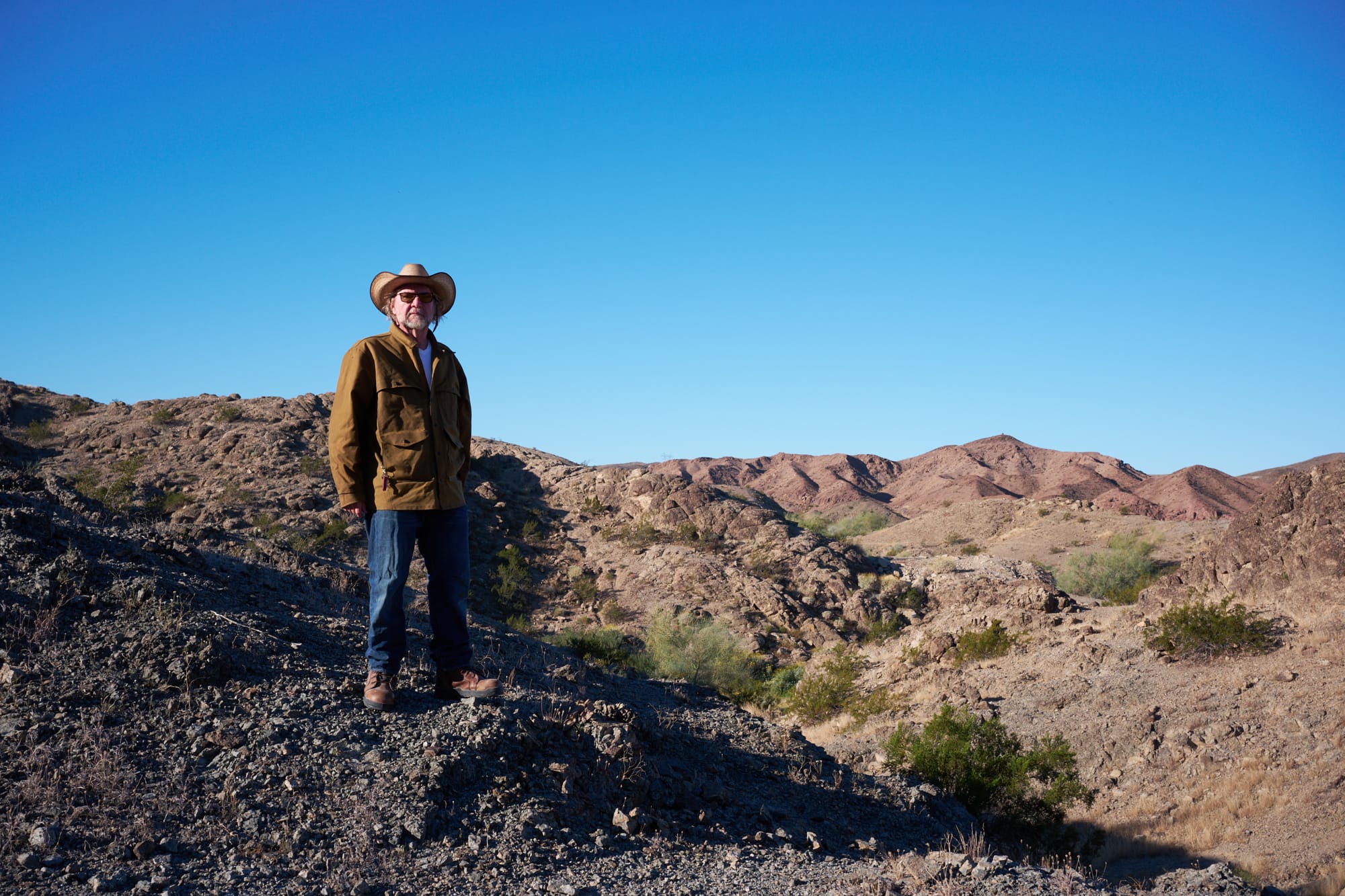
I quit my job, left my wife and kid, put the mobility scooter on the trailer and high tailed it out of helltown for Yuma, Arizona. I'm now living in my car down by the river, or by the lake as the case may be, and considering what I'm going to do with the rest of my life. It occurred to me that I'm sitting here in one of the most famous places for western lore, and I remembered back to my childhood and what I wanted to be when I grew up, and thought why not? I want to be a cowboy. I have Levi's and a western shirt. All I'd need would be a hat and a buckle to get started.
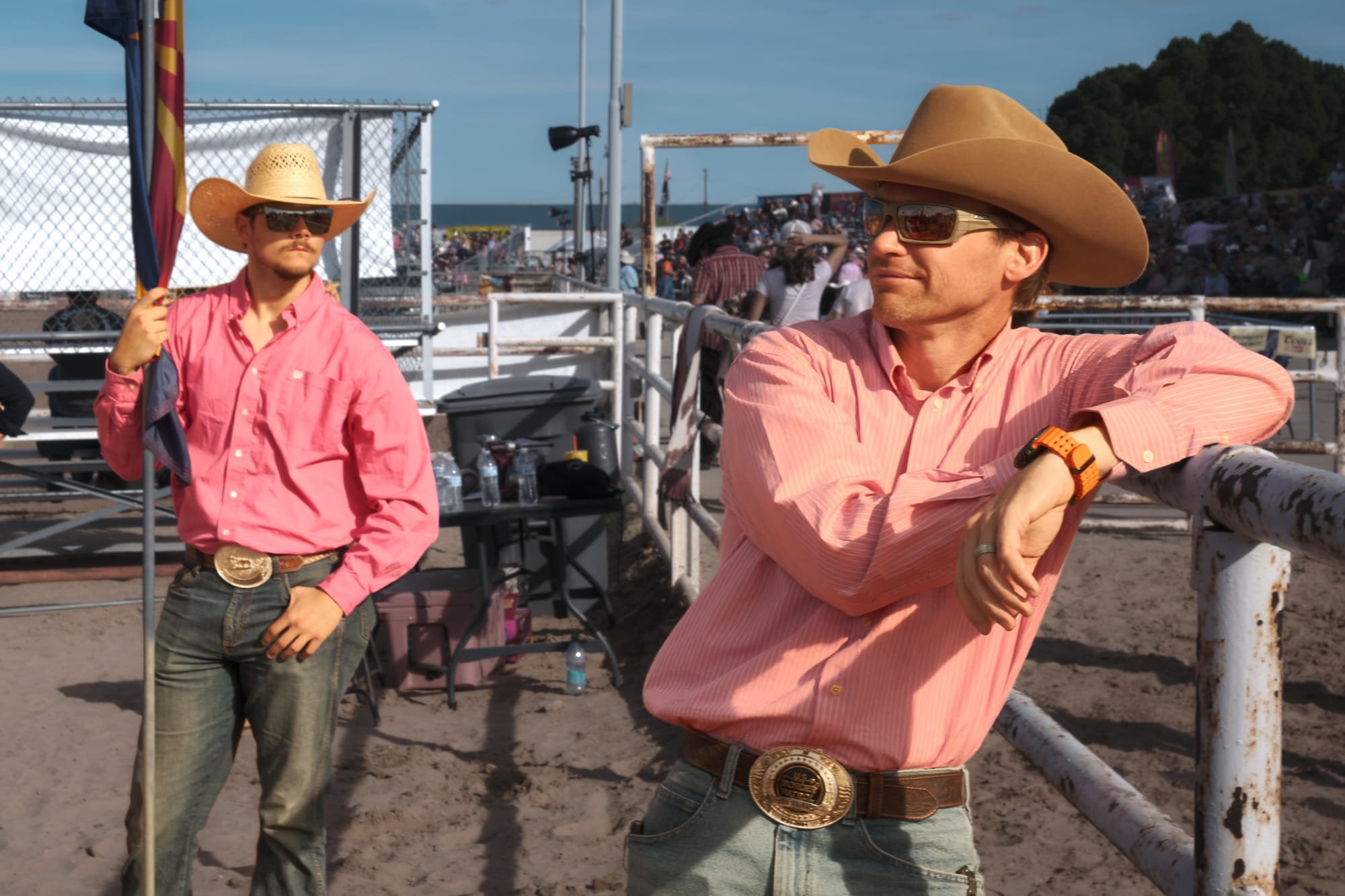
Unsure of how to go about that other than acing the look, I noticed the rodeo was in town and thought that might be a good place to start. Because seriously, I can't see myself as the kind of cowboy that works on a ranch. I don't want a job, much less a difficult job that doesn't pay squat. But riding bucking broncos or bulls, roping calves and wrestling steers sounds more like something I could do. I've always found insanely crazy, dangerous things appealing and I've managed to survive, so maybe I could be a rodeo cowboy. I figured it's worth looking into.
I started my research at the rodeo parade in downtown Yuma. I used to live in Tucson and the rodeo parade there was a huge event. It is the largest non-motorized parade in the U.S. and possibly the world. It draws over 150,000 spectators and schools and many businesses close so the kids and employees can attend. There are over 550 horses, 2,200 people marching, 90 wagons and buggies and 10+ marching bands. The Yuma parade, on the other hand, had few floats and just a few people riding horses, zero marching bands, one wagon, and no buggies, and a very sparse crowd of spectators along the route. I'm from a small town of 7000 in Indiana and the high school homecoming parade there was bigger with more floats and a marching band and quite a few more spectators. After Tucson, that was quite a surprise. Why do the people of Yuma want nothing to do with the rodeo parade?
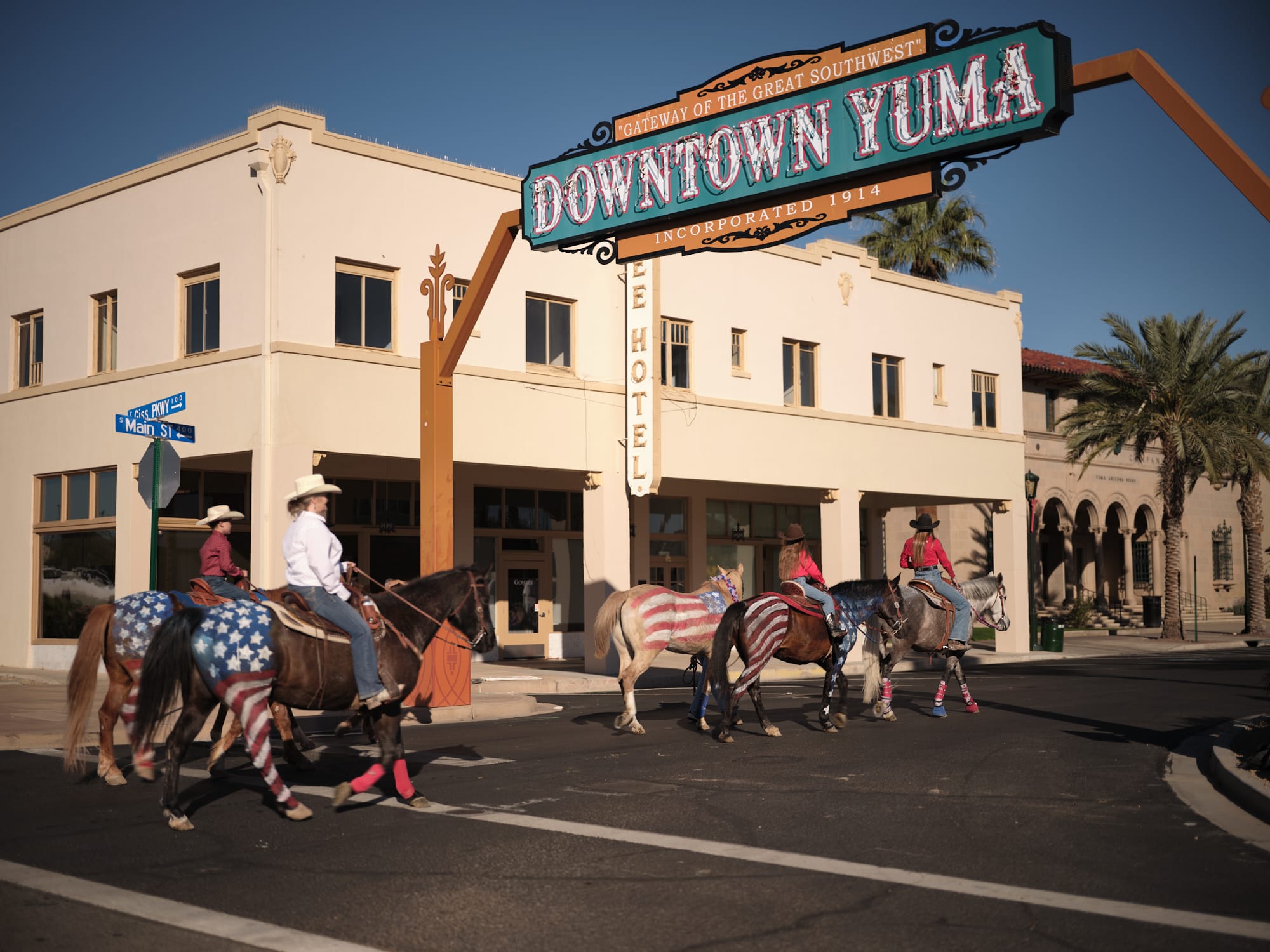
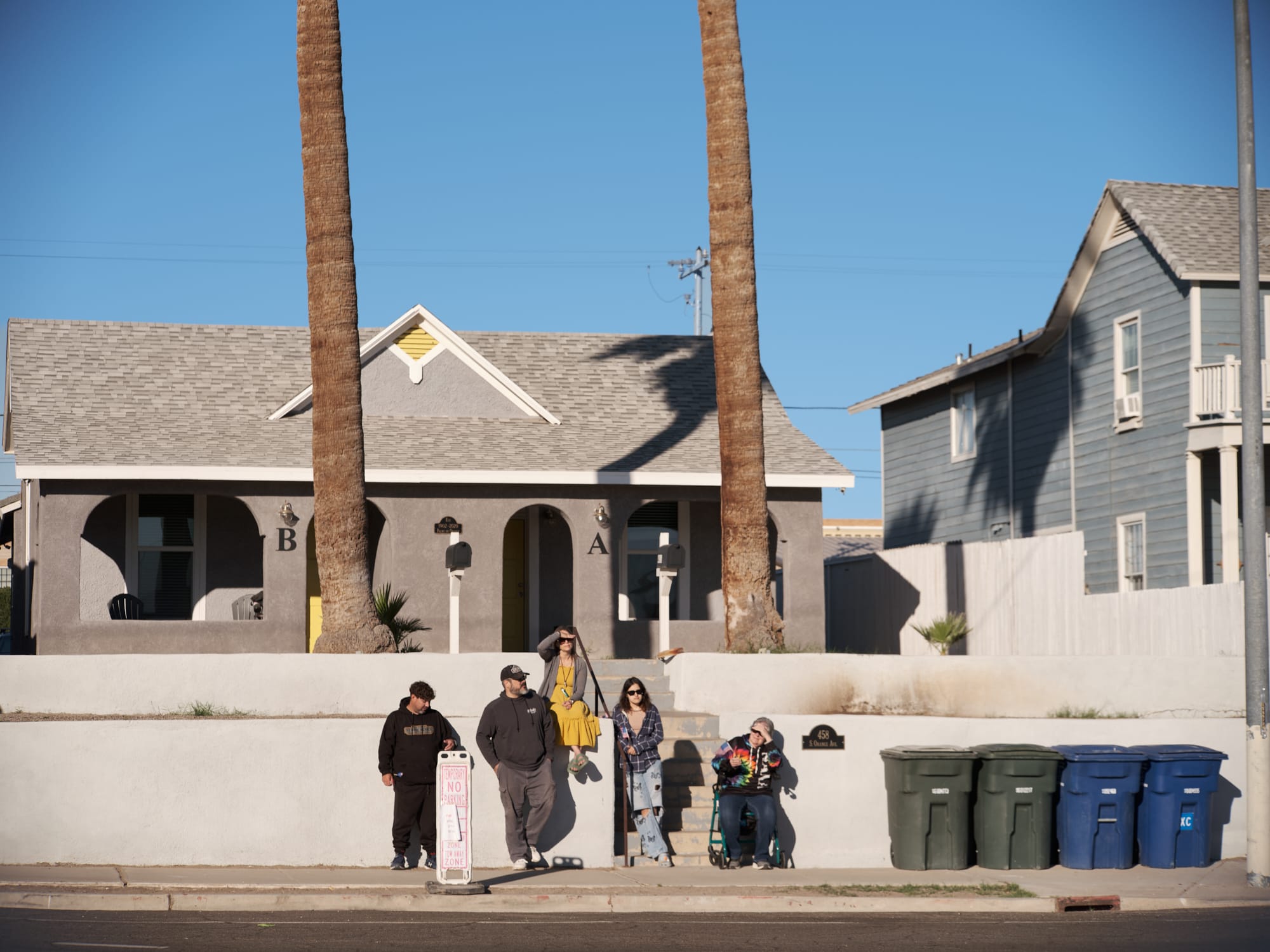
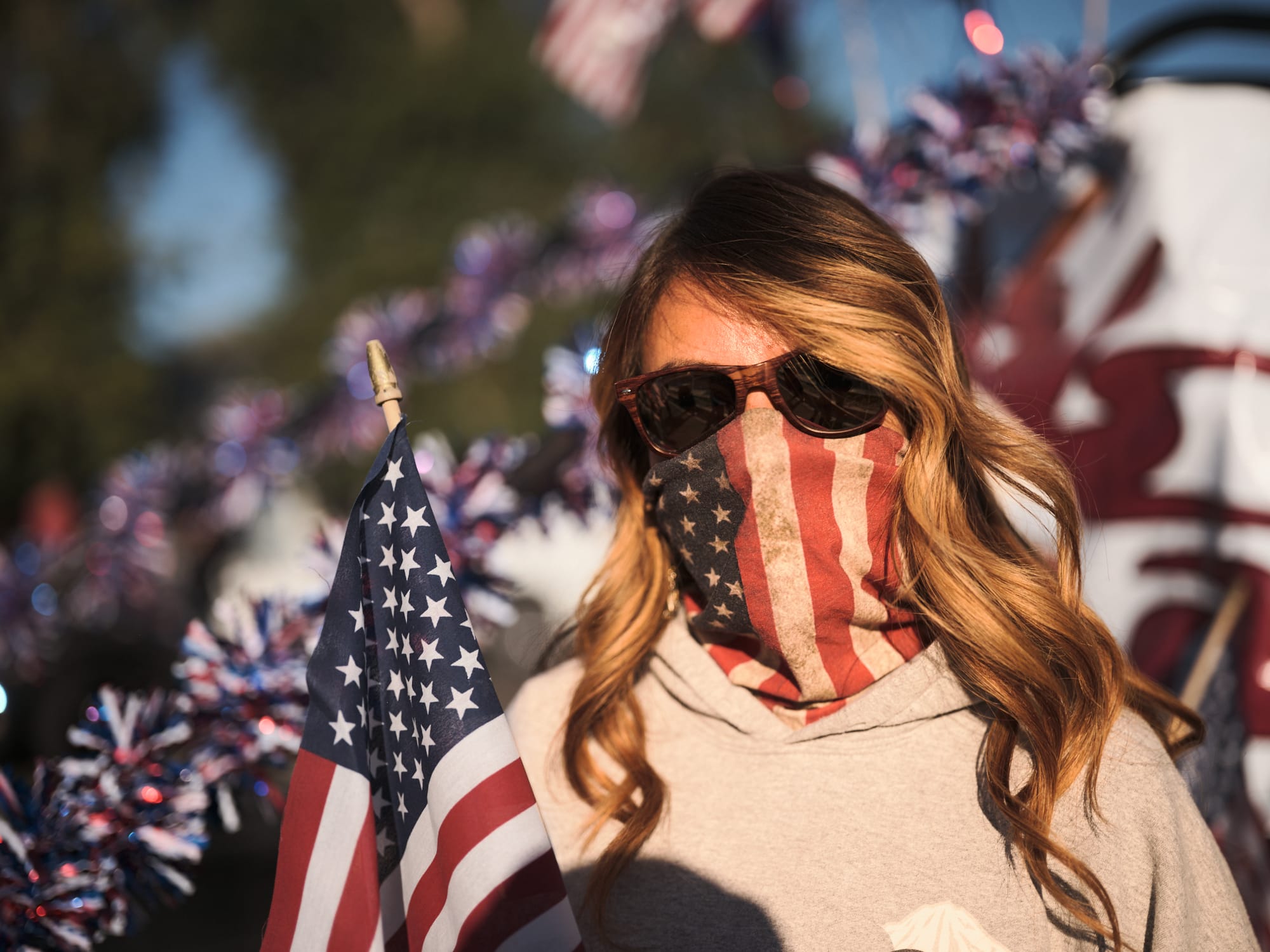
The theme of the parade was "Cannonballs to Rockets" in honor of the military and spectators were exhorted to wear red, white and blue to support the military. As you'll see below, the rodeo turned out to be an in-your-face extravaganza of right wing politics and spiritual warfare and the parade was mile by comparison. One float was doing the U.S.A. chant throughout, but otherwise it was fairly wholesome. I have no problem with the military or law enforcement taking part in a parade. But Yuma's population is only 30 or so percent white, perhaps 65 percent Hispanic and some Indians, so maybe that has something to do with the lack of fervor for strident right wing nationalism. Maybe there were other reasons for the low attendance, I can't really say. Or perhaps a lot of people are just sick of that kind of loud, performative patriotism as it's been used so often to support politicians who it's become more obvious all the time are the opposite of patriotic.
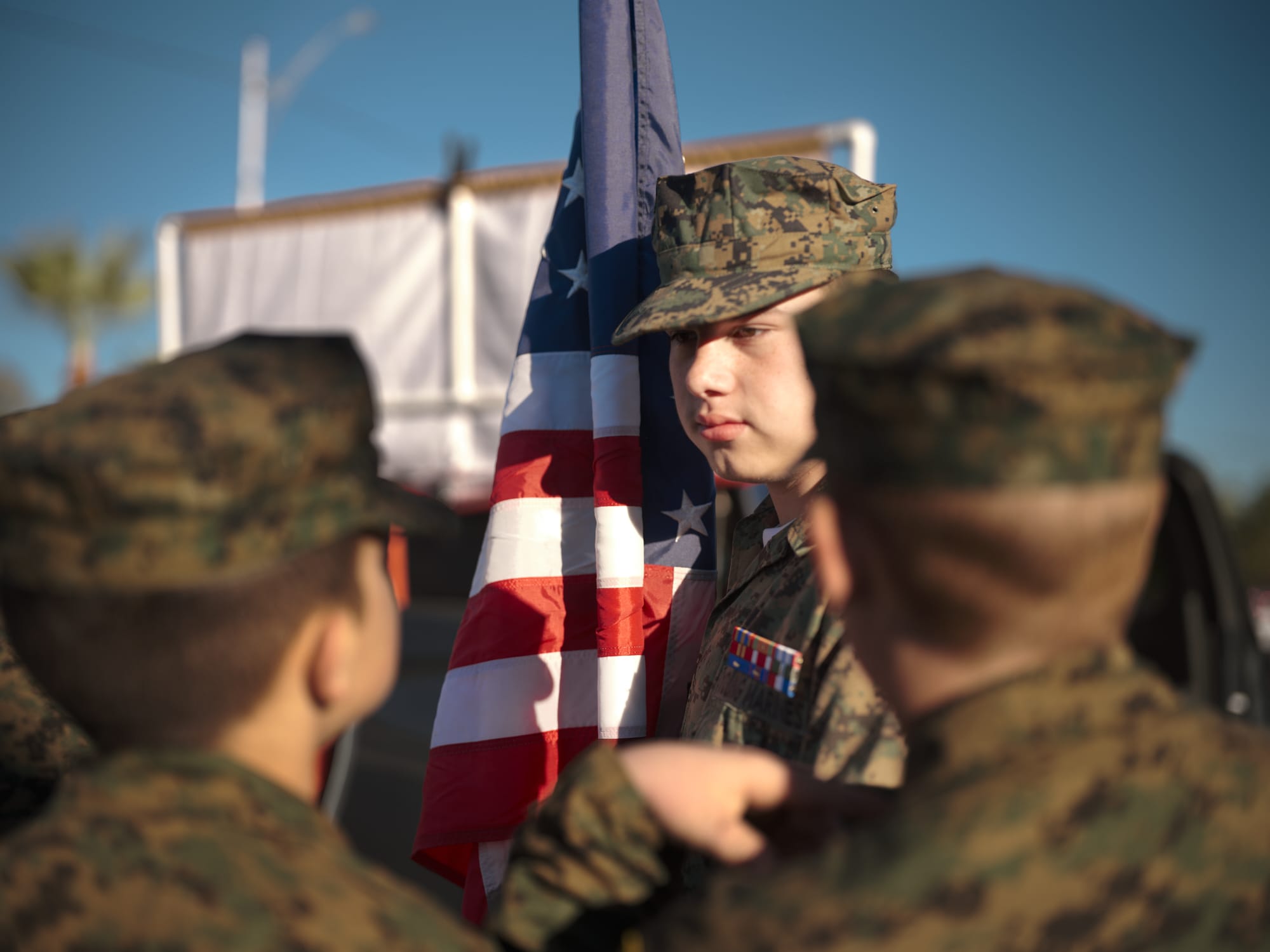
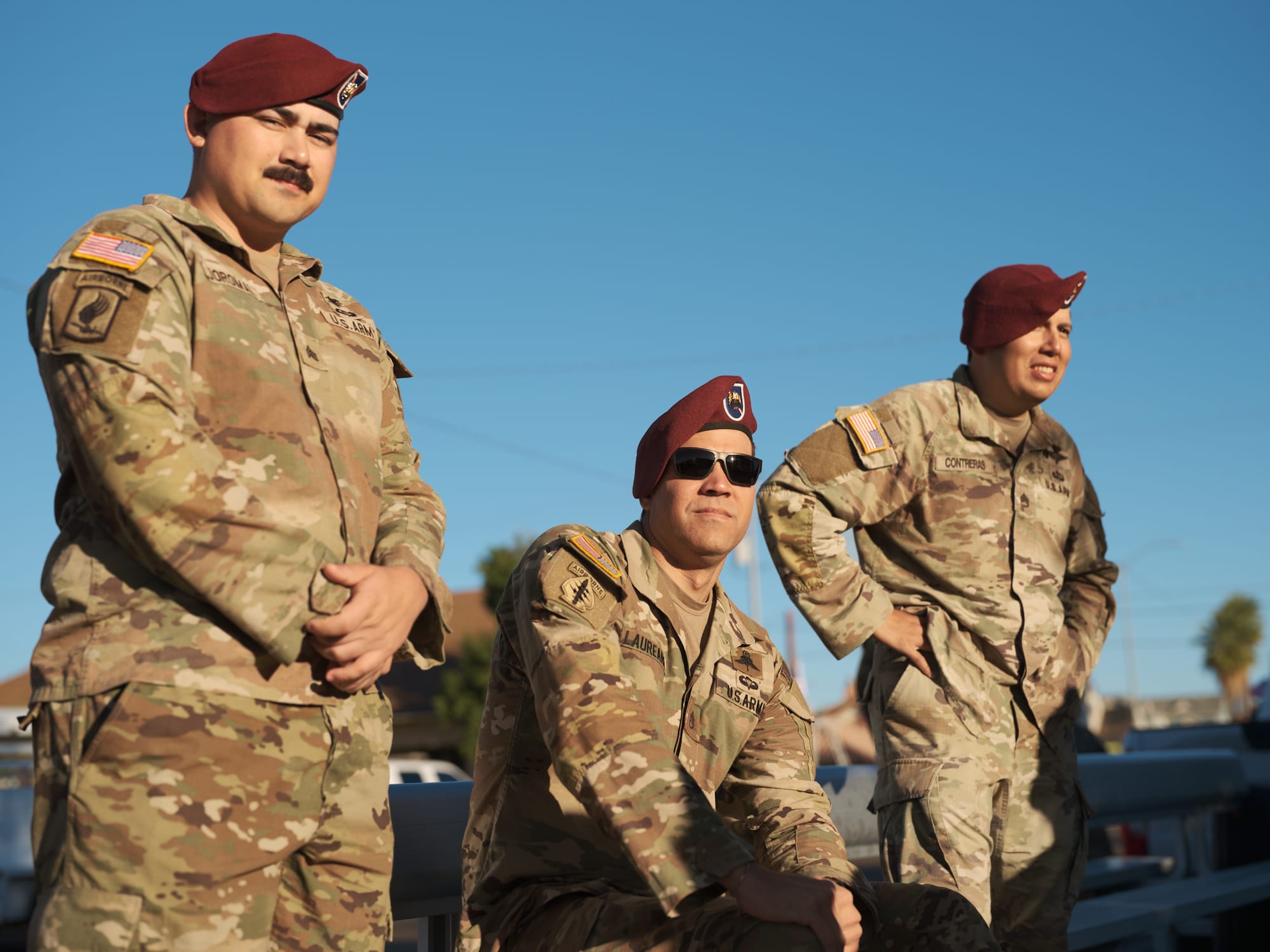
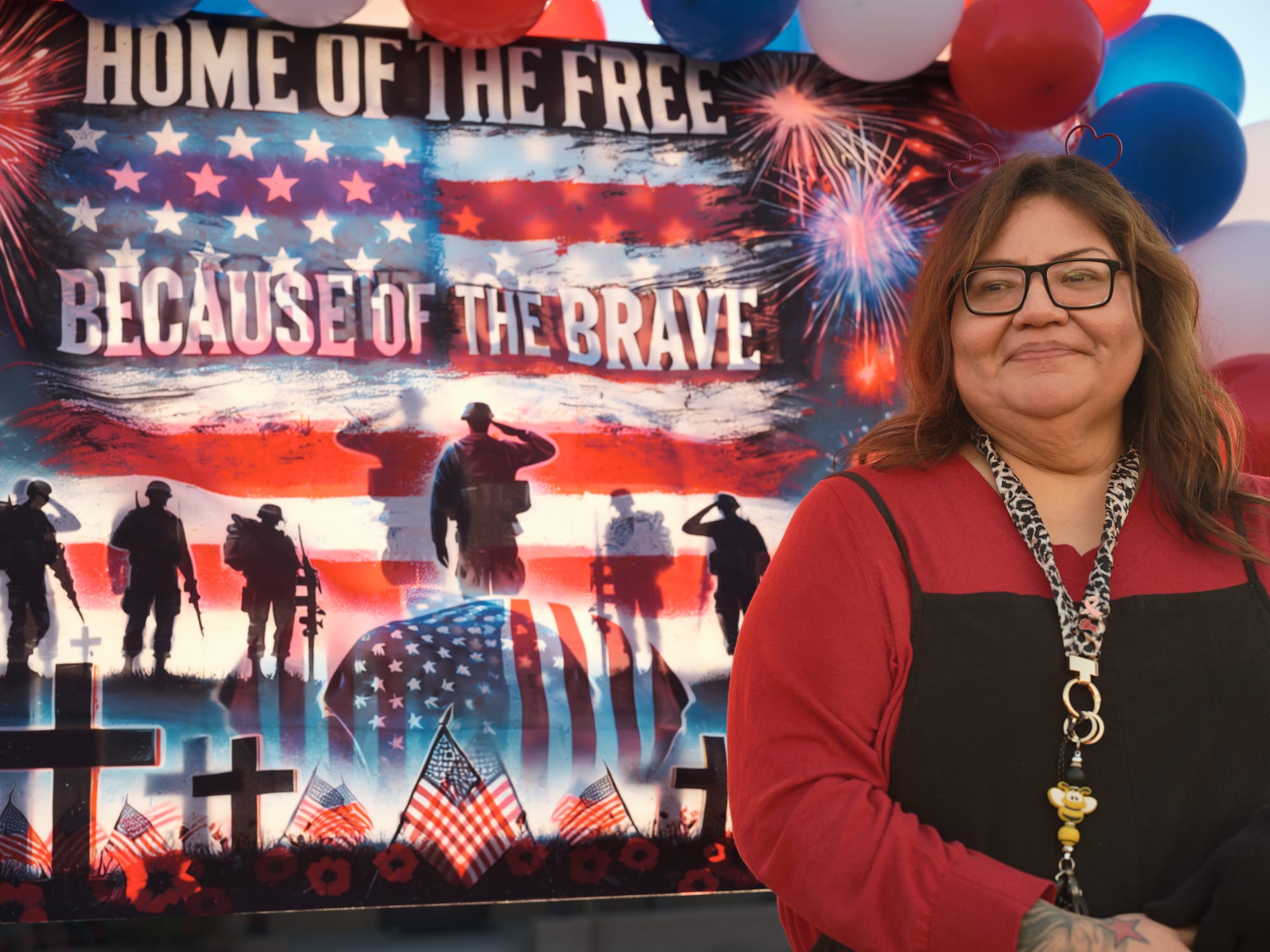
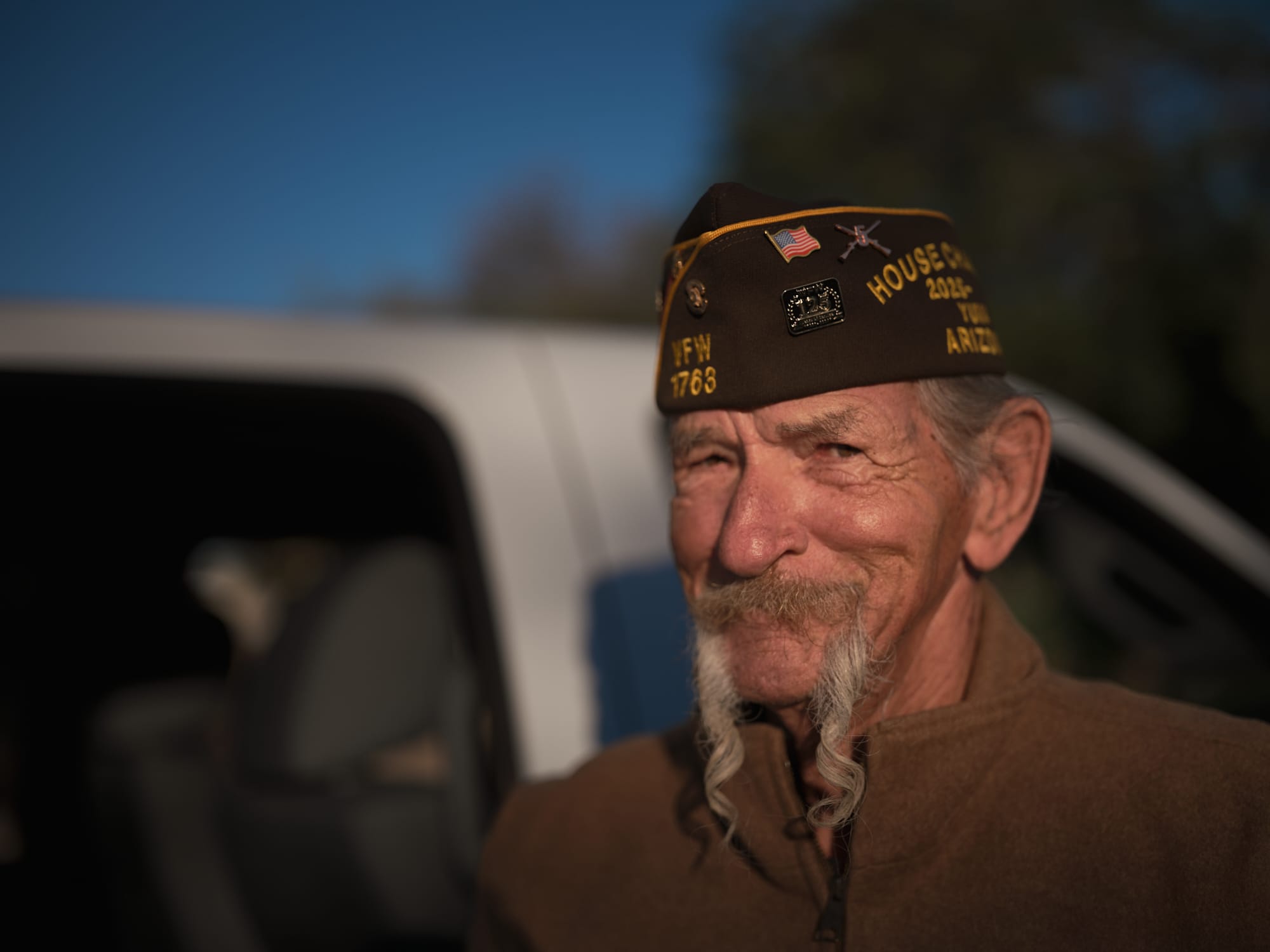
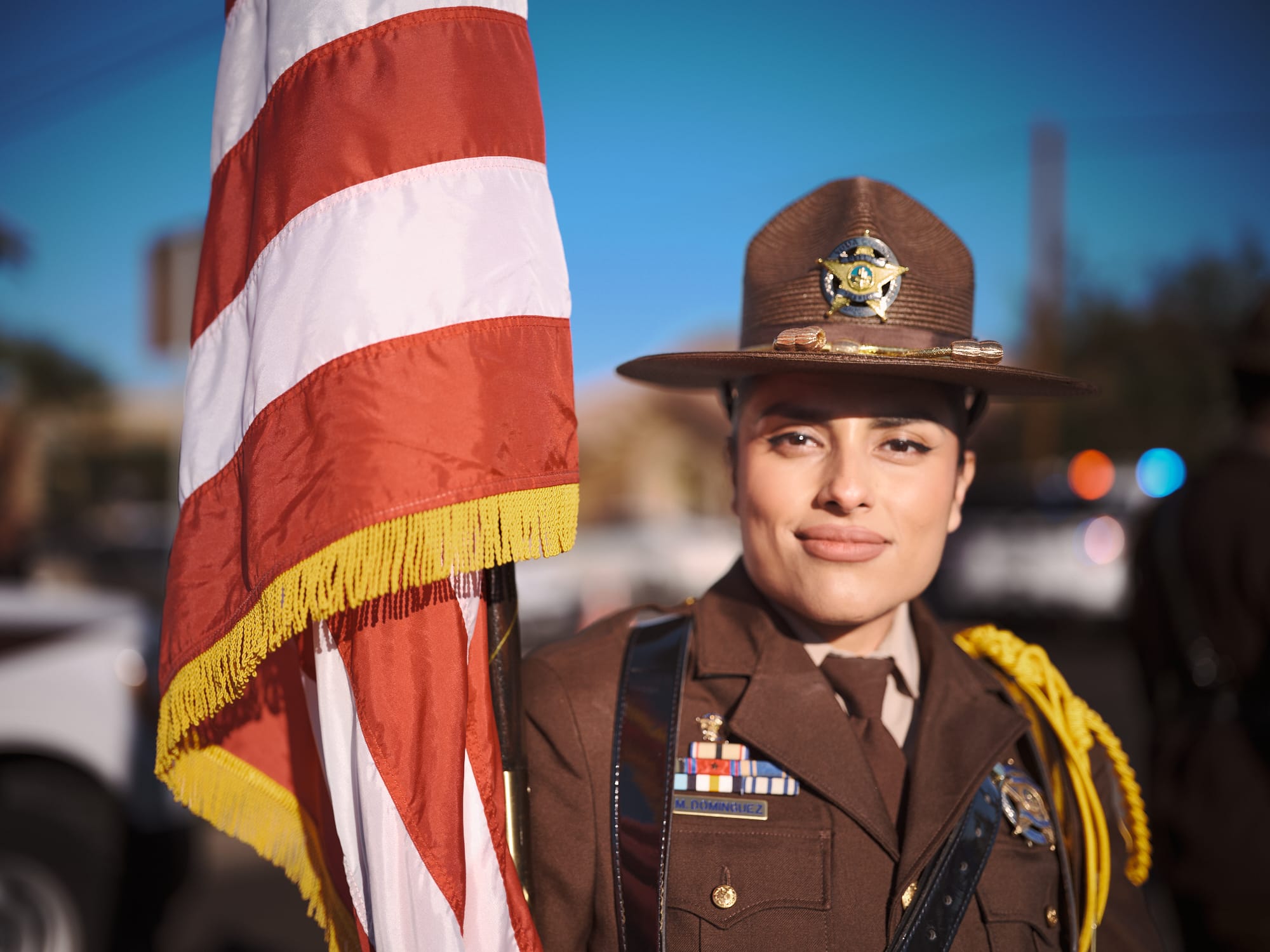
When I photograph parades I always go early and hang out in the staging area to get to know the participants a little and photograph them when they are more accessible and still enthusiastic rather than burned out from the grind as they near the end of the route. I chatted with a lot of people, including active military, veterans, various organizations expressing their patriotic fervor, girls with their horses, local law enforcement, the border patrol, Mexican Americans on tricked out bicycles, and an Indian beauty queen. I expect people to be friendly in that kind of scene, and they were for the most part, but I sensed a lot of them were somewhat guarded as well.
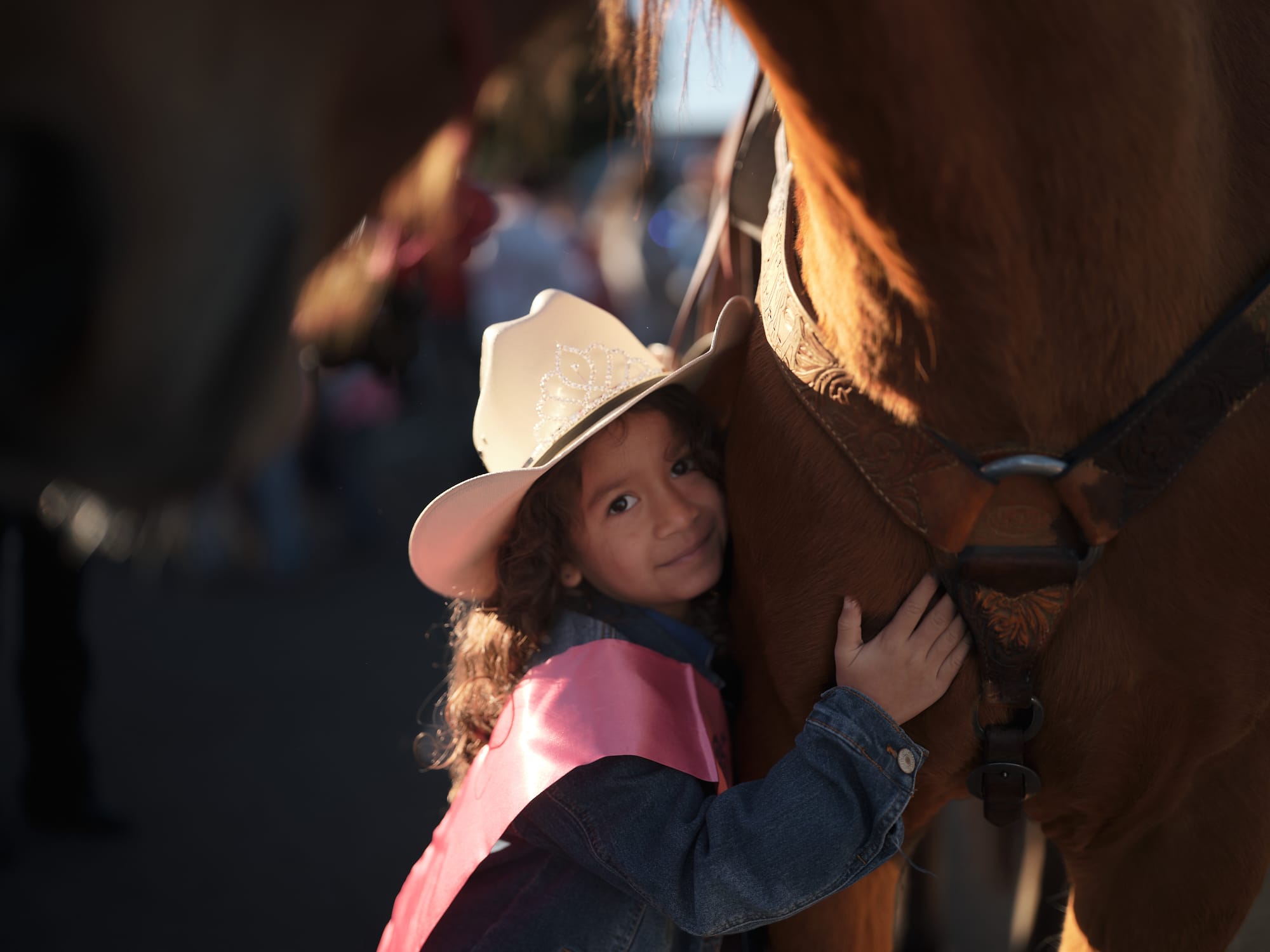
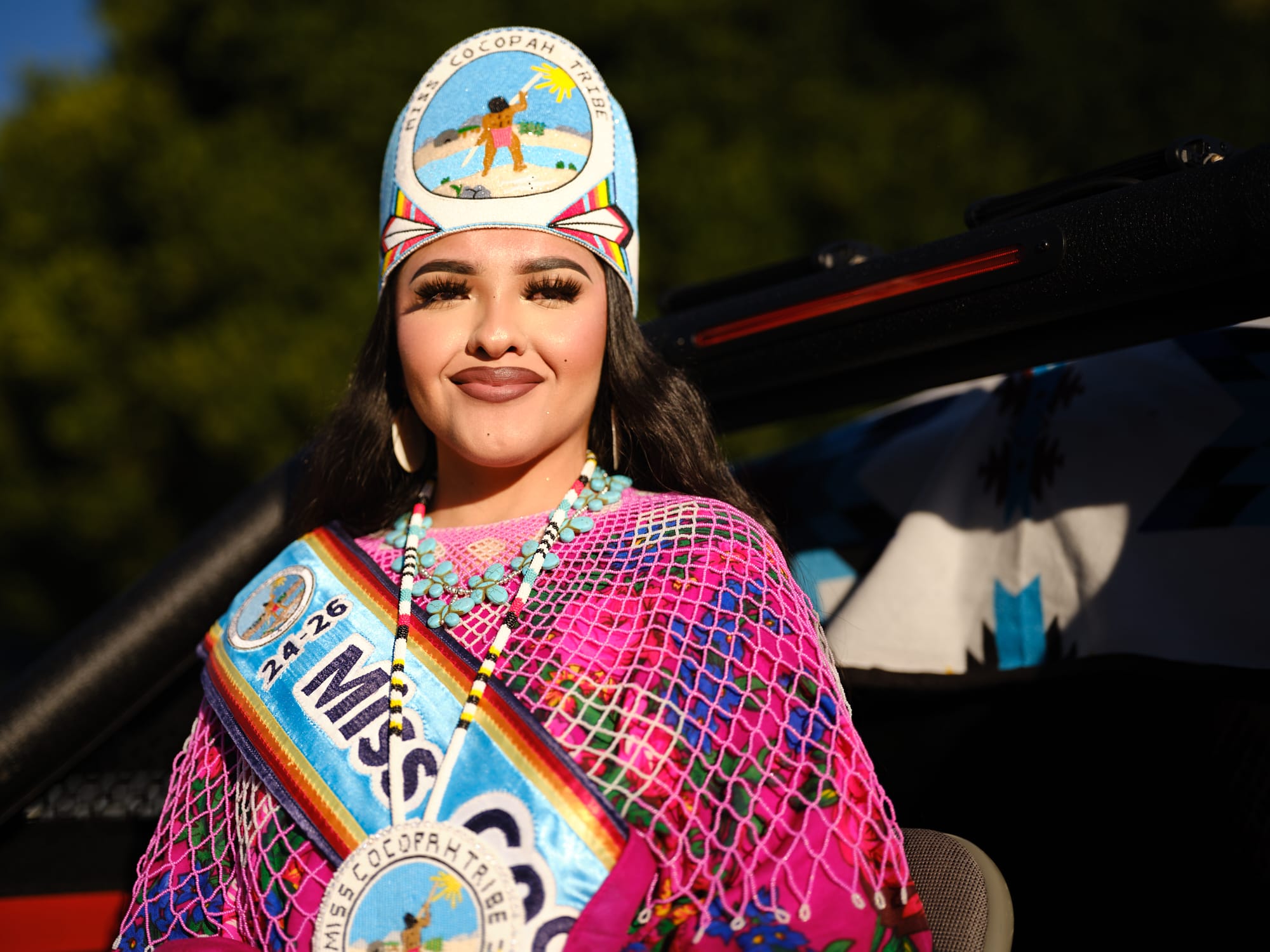
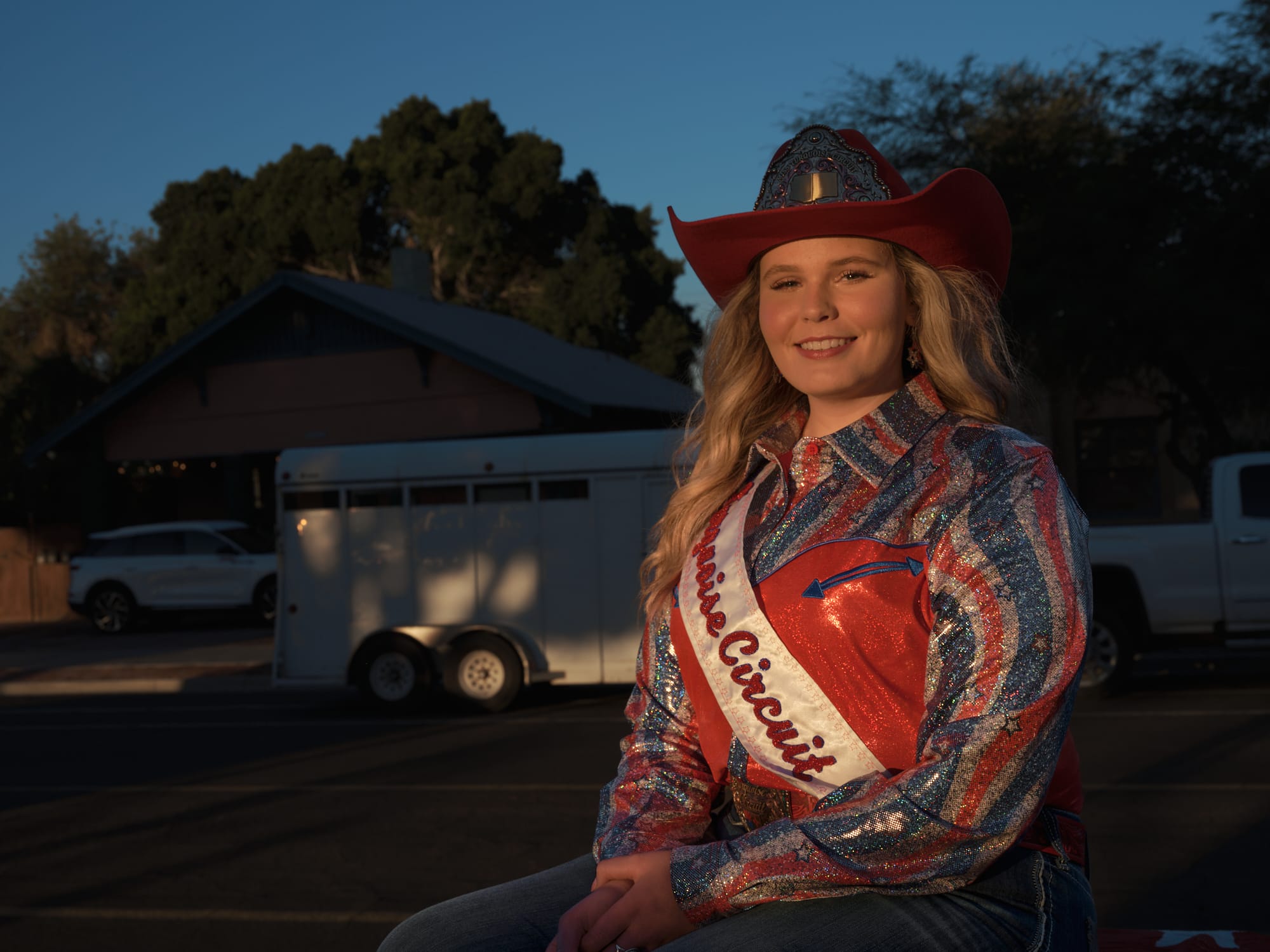
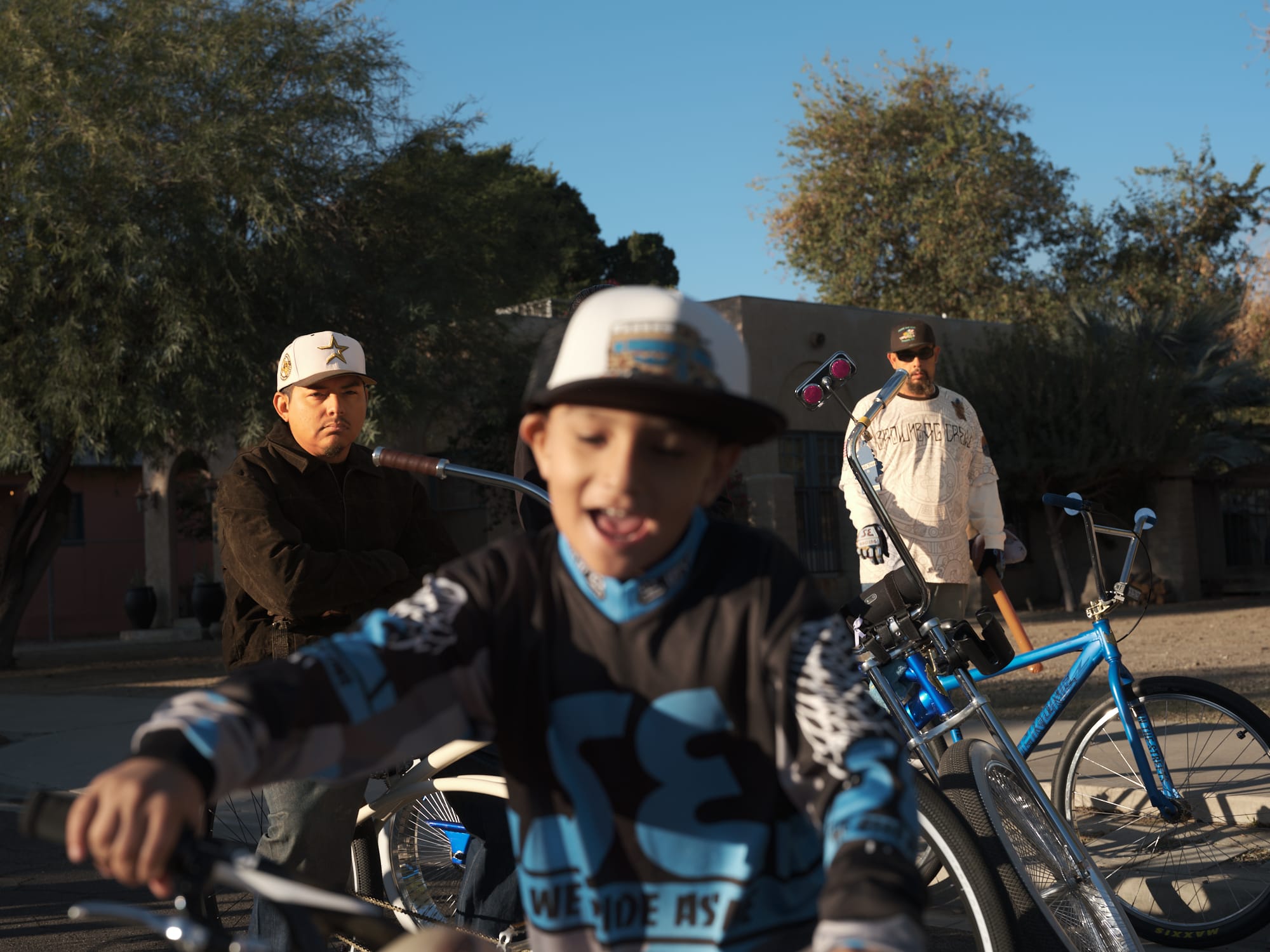
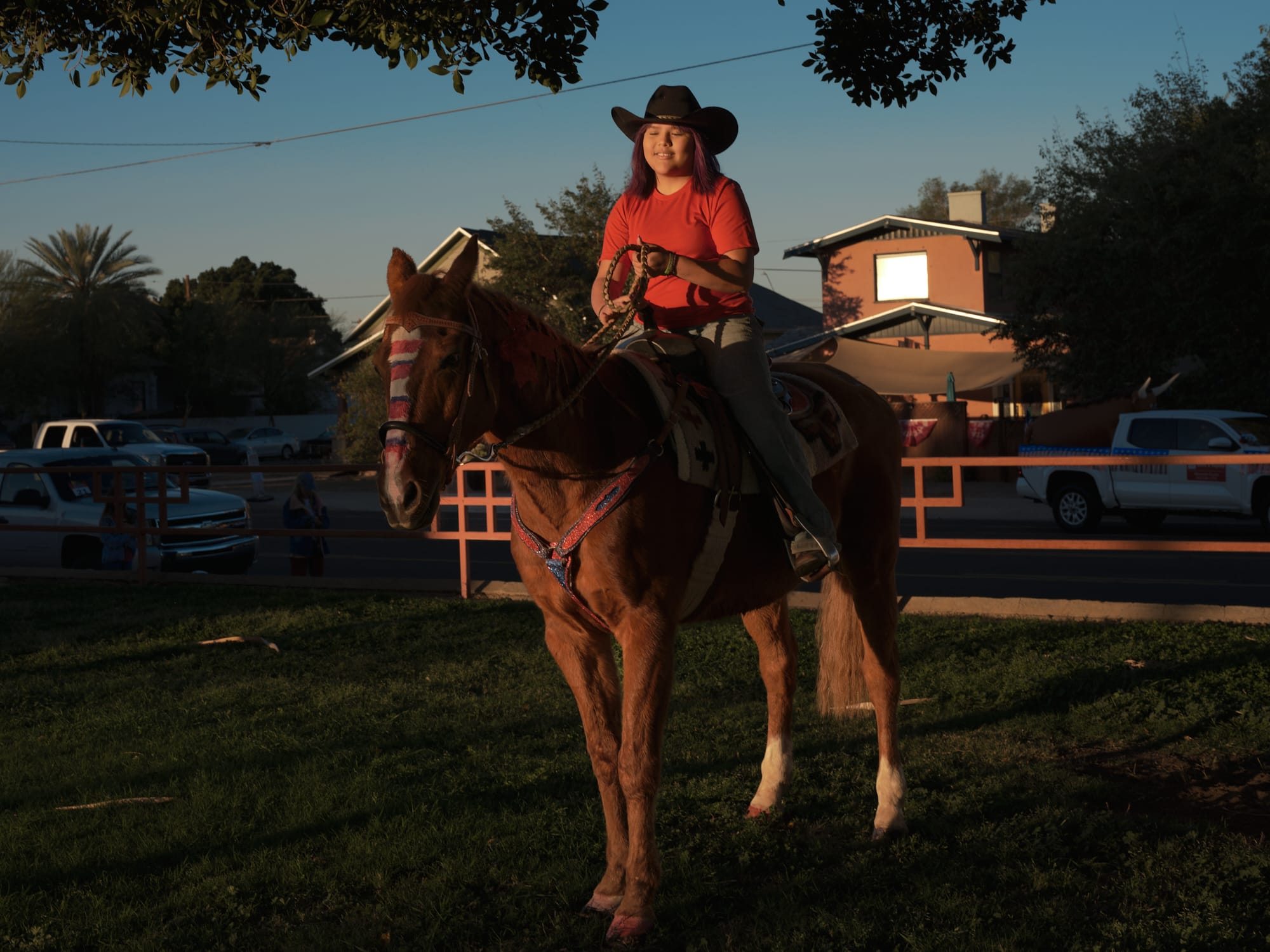
The rodeo's events such as bronco riding and calf roping grew out of the Spanish colonial era and the ranch culture that developed in northern Mexico. Horses had to be broken and calves had to be roped for a ranch to function. Mexican vaqueros were the original cowboys and rodeos are still a prominent part of northern Mexican culture. The Spanish enslaved the local Indians and put them to work on ranches where they honed the riding and roping skills. Rodeo eventually became an important part of their culture as well. Anglo's got into the action when the U.S. annexed the southwest after the Mexican-American war and ranch life was popularized by Wild West shows like Bill Hickock's. So it's truly a multi-cultural phenomenon. These kind of intersections among Spanish Colonial, modern Mexican, Indian and Anglo American cultures fascinated me back when I lived in Tucson and the rodeo is a microcosm of part of that history, so I thought it would be great to experience it in an iconic western city like Yuma. Unfortunately, the only multicultural thing about it was the fry bread burritos and a lot of the faces in the crowd. The rodeo itself? Couldn't have been less so.
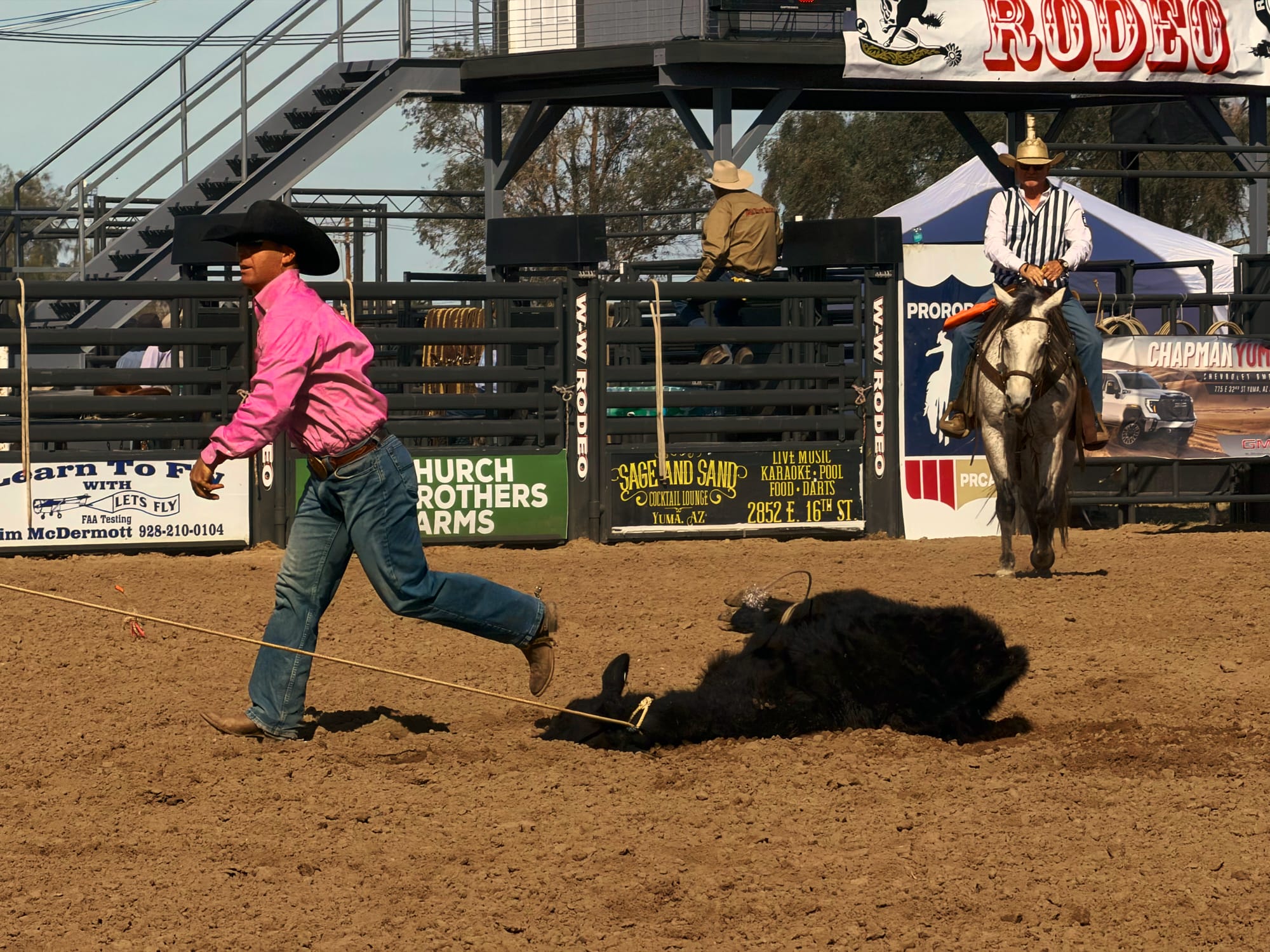
Of course there are concerns about animal cruelty in the rodeo, which of course I am against. Horses and bulls are tortured into becoming homicidal maniacs and many calves have their necks broken when they get roped. But I eat meat so it's hard for me to be overly judgmental when I look at the big picture of how rodeo animals live their lives. I know If I were given a choice I'd take the life of rodeo livestock over that of an industrial farm animal without hesitation. For the most part they live relatively well in spacious pastures and only feel pain and maybe fear during transportation and for the few minutes they are competing in the rodeo itself. Like horse racing, the rodeo authorities argue that the animals are highly trained athletes and enjoy what they are doing. That seems a bit self-serving, but there may be some truth to it. Perhaps I'm anthropomorphizing, but the horses and bulls sure seemed self-satisfied when they throw the cowboys, and the bulls took particular delight in trying to kill them when they are down. The poor little calves no doubt do not enjoy being roped and tied, much less having their necks broken on rare occasions that happens, but at least they go out running rather than living their entire lives in a tiny pen and then getting a hole blown in their skulls at the end of an assembly line in a meat packing plant.
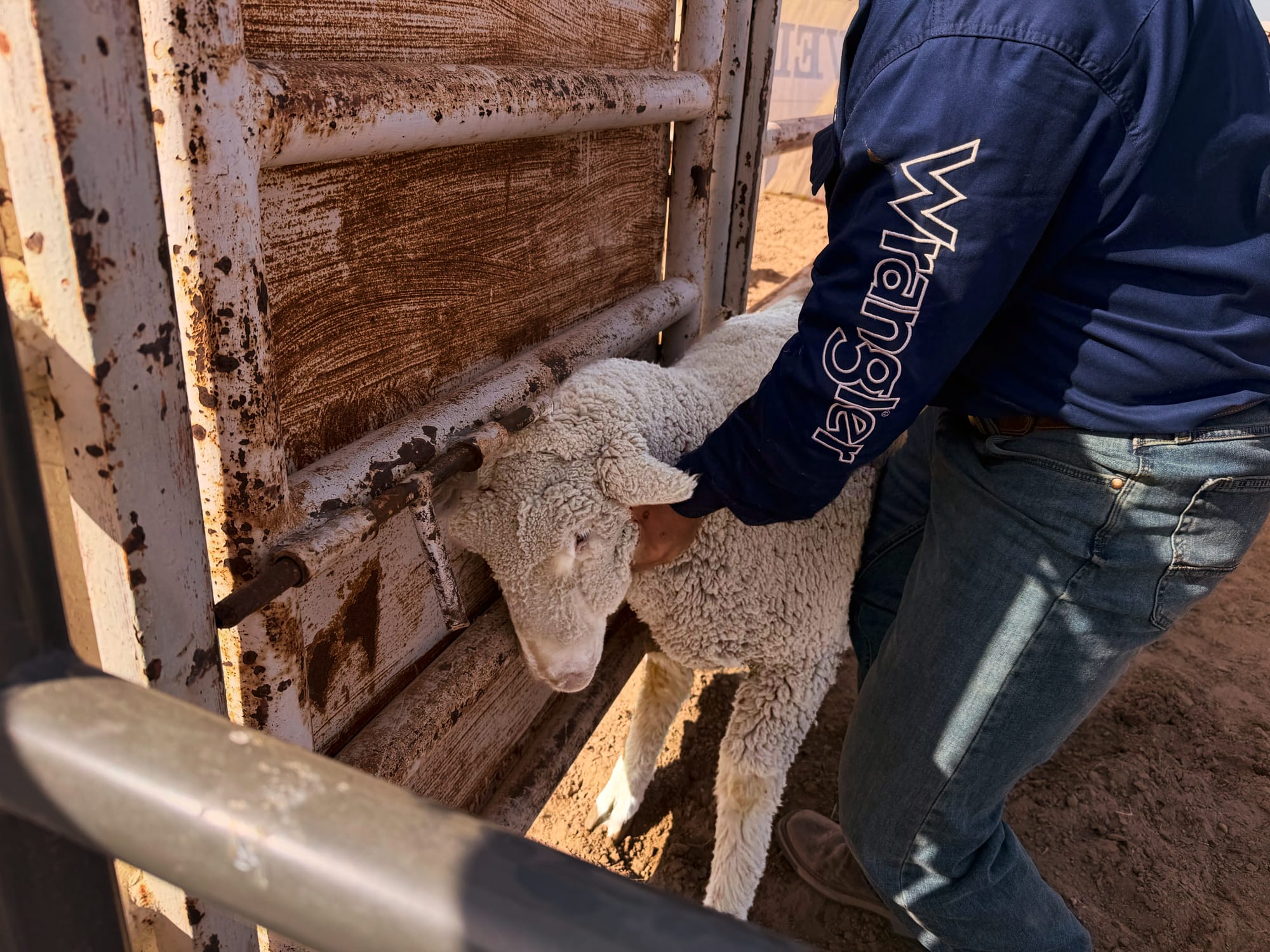
I see it kind of like professional football or boxing where severe injuries, including brain trauma and long drawn out horrible deaths are common. Every Sunday much of the nation watches and cheers as humans are severely injured both short and long term, for our entertainment. What's in it for the victims is that they are handsomely paid and live very well for at least a short time, or somehow otherwise feel they benefit from their sacrifice. The livestock don't have that choice, but they do get the benefits. In a more perfect world no one would watch either humans or animals be inflicted with immediate pain and long-term suffering for our entertainment, but this ain't a perfect world and I am not perfect either. So we live with the trade off. All we can do is somewhat regulate it to avoid the worst.
Anyway, back to my experience at the Yuma rodeo, with just a little tangent about sprint cars. I like to go to sprint car races around the midwest and I figured the rodeo crowd and pageantry would be similar. Like the rodeo, sprint car racing is dangerous and requires an impressive level of crazy just to race, and an exceptional level of insanity to be really good at it. When I was a kid I did suicidally crazy stuff in cars and on motorcycles so I can relate. At first it was just a photo project, but after getting to know a few of the drivers and their families, I started to watch them, then root for them, and soon came to enjoy the racing.
But what most impresses me about the sprint car scene is the overall wholesomeness of it all. Sprint car culture is a multi-generational family affair with good, wholesome vibes all around. The racers and their entourages in the pit area, the crowd in the stands, and the authorities who put on the event are all friendly to each other and to strangers, and seem like good people all around. And for most the friendliness seems genuine, not the "church nice" variety where the smile is warm and the eyes are cold, like with run-of-the-mill small town folk.
Of course there is a lot of overt nationalism and religion at the races. The announcers profess their love for God and the law enforcement and first responders. A corn fed young woman sings the national anthem, and they play God Bless America, then a patriotic country music song. That's followed by a prayer for the drivers and the fans and the military, police, et. al. Everyone in the pits and the stands nods along, but they don't seem to take it too seriously. No doubt all of that performative patriotism and piety appeals to people of a particular political persuasion, but on the surface there's really nothing all that wrong with being religious and caring for people who risk their lives for the public good. I can live with it, nod along like everyone else, and then enjoy the show.
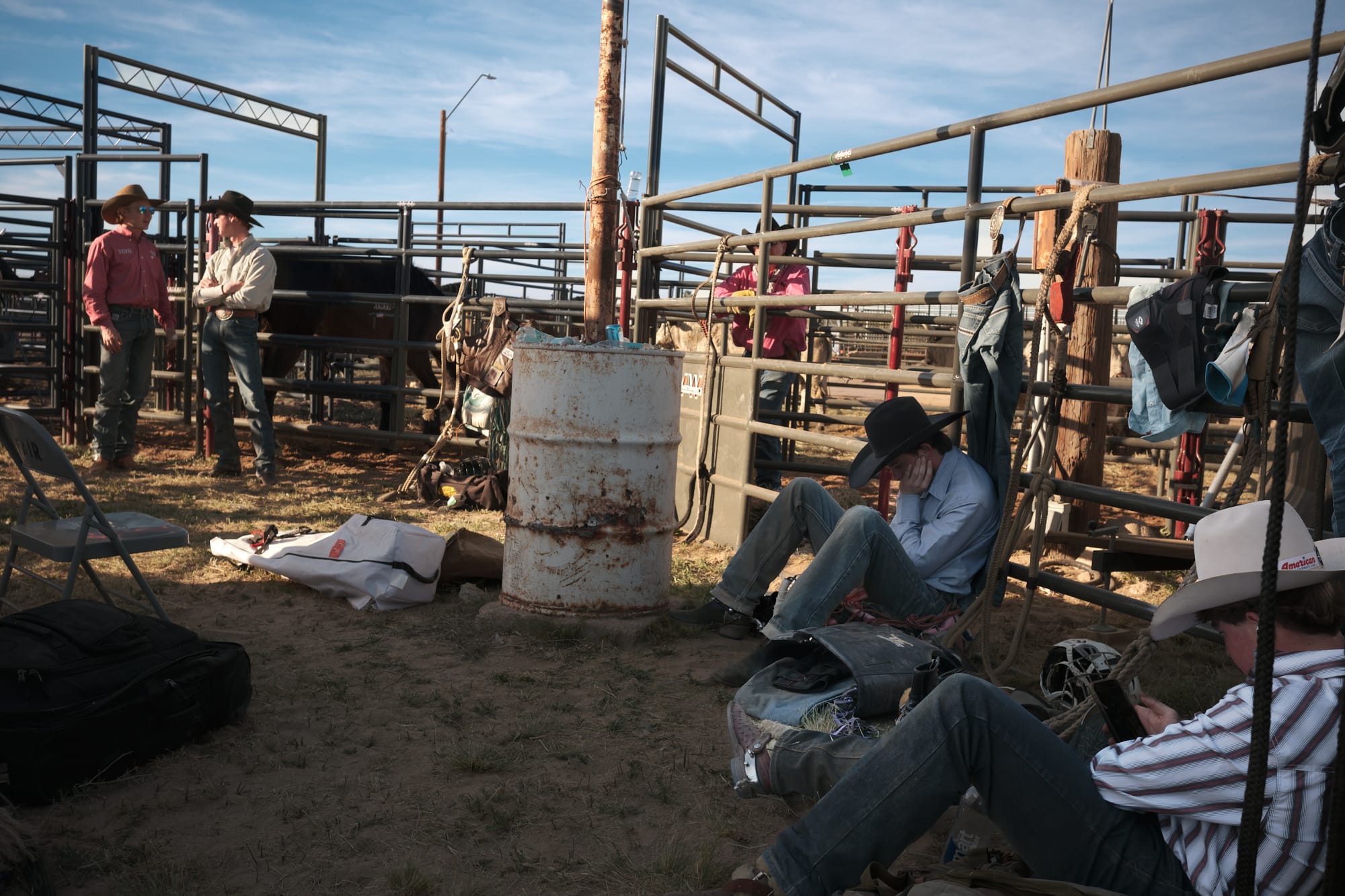
So I figured the rodeo would be a lot like that, and it was, only totally fucking crazy and evil beyond my wildest imagining.
These were the words that came out of the loudspeaker to start the festivities:
"In today's event you will experience loud noises. There will be extreme athleticism by both humans and livestock. You may also see content that has been deemed politically incorrect. Here in Yuma Arizona we will stand for the American flag and only kneel for the fallen. We will begin with prayer and our focus will be on God. We will honor our flag and pay tribute to our American heroes. If you are sensitive to any of this content we encourage you kindly stand up, exit the facility and enjoy the rest of your evening. For those of you who love your country, love God, and love celebrating the western lifestyle, sit back and hang on tight as the rodeo begins just moments from right now."
Ummm kay. Wow.
Beneath the words, they are marking off far territory like a dog pissing on trees along the street. Using the term "politically correct" as they do sets the stage for what's to come. What exactly are these things that are not politically correct? You think he's talking about animal cruelty? Not so much. He's telling people who don't love a far right God, or don't love and worship the U.S.A. and its saintly military to get the fuck out of this rodeo. The part about kneeling references Colin Kapepernick and the BLM protests, to add a whiff if racism to the overall stink. They tack on "celebrating the western lifestyle" at the end, but whose western lifestyle. Not the Mexican-Americans or the Indians, or those who love the western environment, that's for sure.
Then a different announcer:
"This isn't our first rodeo. Born through the dust of the American West we've been at it for a couple hundred years, and the code we live by has been around just as long. We work hard, play fair, and finish what we start. We stand for our flag to honor their sacrifices but when we fall, we get up again and again and again because this isn't just optional to us, this is our lives. For our family, our community and the charities we support, we have never taken the easy way out. There's no three point line, no tv timeouts. We enter to win and ride to survive. This is who what we are, this is what we do. We are the pure American Sport. We are Pro Rodeo."
That part serves to further erase the non-white history of the rodeo and its connection with actual history. No acknowledgement of vaquero origins. No recognition of how Indians are a core part of rodeo past and present. No references to Yuma specific history. Not even any frontier spirit romanticism, which is what I think most people would expect if they go to a rodeo. Just pure extreme right wing nationalism with a dollop, if not a wallop, or racism.
When he says "We are the Pure American Sport," the "we" of which he speaks are the Anglo cowboys. After having effectively erased the Mexican Americans and Indians, pure white is what he is talking about.
Note that somewhere between 30-40 percent of the crowd was Mexican-American or Indian. They are being told they can watch, or even participate, but that their ancestors' contribution doesn't exist and doesn't mean shit if it does. This is the white cowboy's country and these are our values. Bow your greasy heads to the red, white and blue and the right wing God or get the fuck out. That's the real message.
And all that is just the warmup for the prayer, which takes it to an entirely different level of wrong.
"The very first thing that we're gonna do, is we're gonna pray before we start the rodeo. Some people want to take God out of the pledge of allegiance, and out of the money, but we're not gonna let them take God out of the rodeo. We're gonna pray before we start here this afternoon, so join me and let's go the Lord's prayer, the grace. Heavenly father, we come to you today. Lord, I plead the blood of Jesus upon this arena, upon the livestock that's gonna be in it today, Lord, and the contestants Lord. The contestants and I know how dangerous rodeo is, so I just lift them up to you, I place them in your hands, and I pray for your redemption. Lord the people who have come to watch here this afternoon, I pray they have a great time with their family and their friends. I pray that you take them home safely after the rodeo. Lord, the men and women that fight for this country, they mean so much to me, and I want to ask your forgiveness, Lord, for when I take the freedoms they fight for for granted. Lord, I just pray most of all that you'll just bring each one home safe and reunite them with their family. Lord, we love you. We look forward to a great afternoon here in Yuma and in the precious name of Jesus I pray. Amen."
It sounds like gibberish to the uninitiated, but the key to understanding what this is really all about is the phrase "I plead the blood of Jesus upon this arena." "pleading the blood of Jesus" is specific terminology from charismatic/Pentecostal spiritual warfare theology. Dominionism is another term for it.
The spiritual warfare doctrine holds that Christians are in constant combat with demonic forces that control the government, most public institutions, and a lot of key individuals. So it's on Christians to take over the government and public institutions and create a theocracy. For them prayer isn't just communication with God - it's a weapon to fight Satan and his minions on earth, people like me and you.
"Pleading the blood" specifically refers to the blood Jesus shed at his crucifixion and the belief that it has cleansing and protective power. When they "plead the blood of Jesus" over a space or person, they are invoking Christ's sacrifice as their right to control that space, creating a protective barrier around it, and purifying the contaminated ground. The cleansing gets rid of demonic influence, the barrier shields against further demonic attack. Pleading the blood establishes Christian dominion over a physical location or person.
The bit about asking forgiveness for briefly taking the military for granted is simply precious.
Once you're clued in, you can see the opening words and prayer are more than just performative patriotism and piety. It's well-thought-out propaganda with hidden structure and meanings for a radical right wing Christian nationalist agenda for taking over the government of the United States, and the world. Sounds crazy, eh, but it's true.
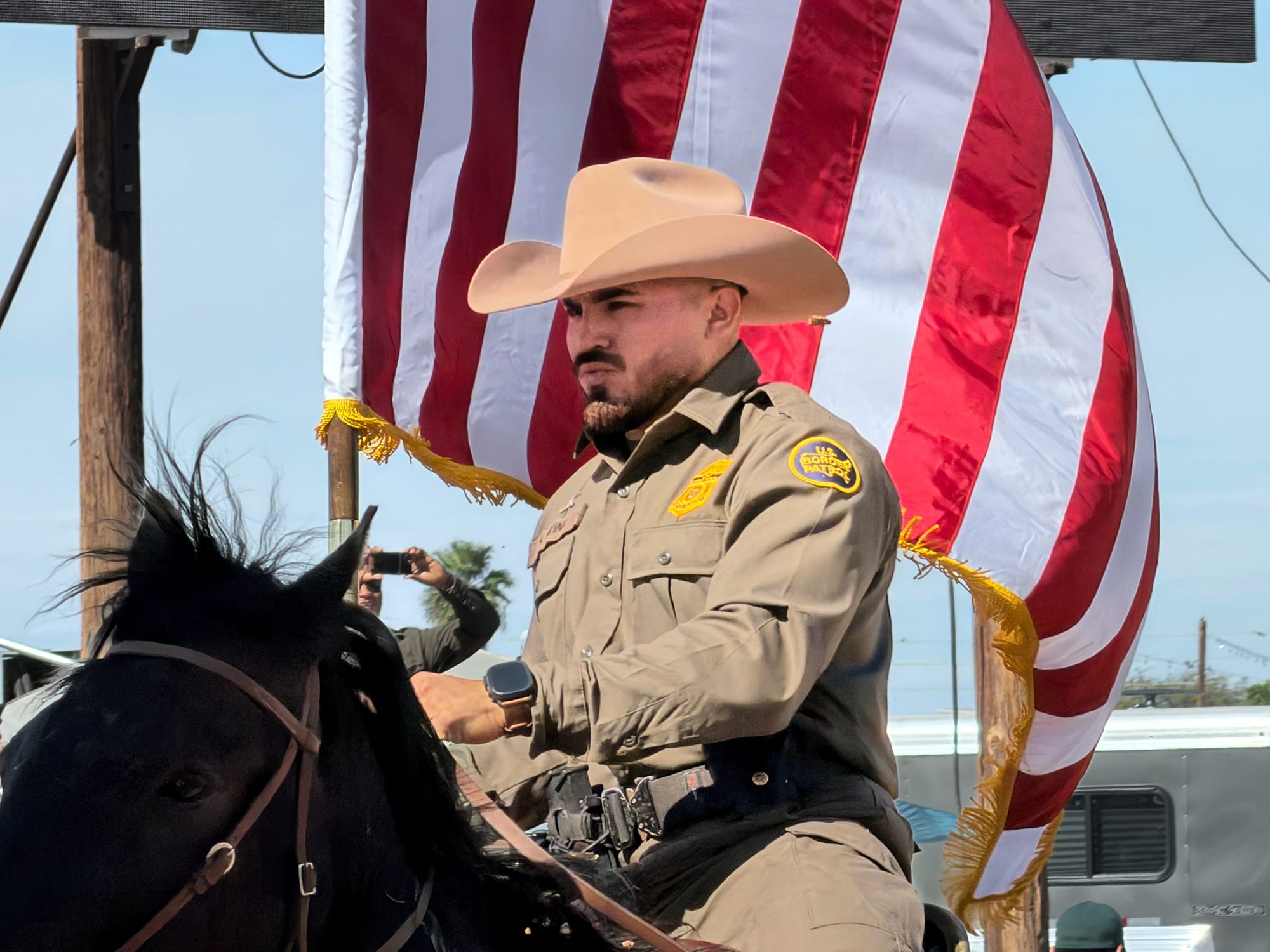
But in real time, all that coded right wing crazy Christian takeover shit only lasted about three minutes. After that it was all pageant and rodeo, with many a word from its sponsors.
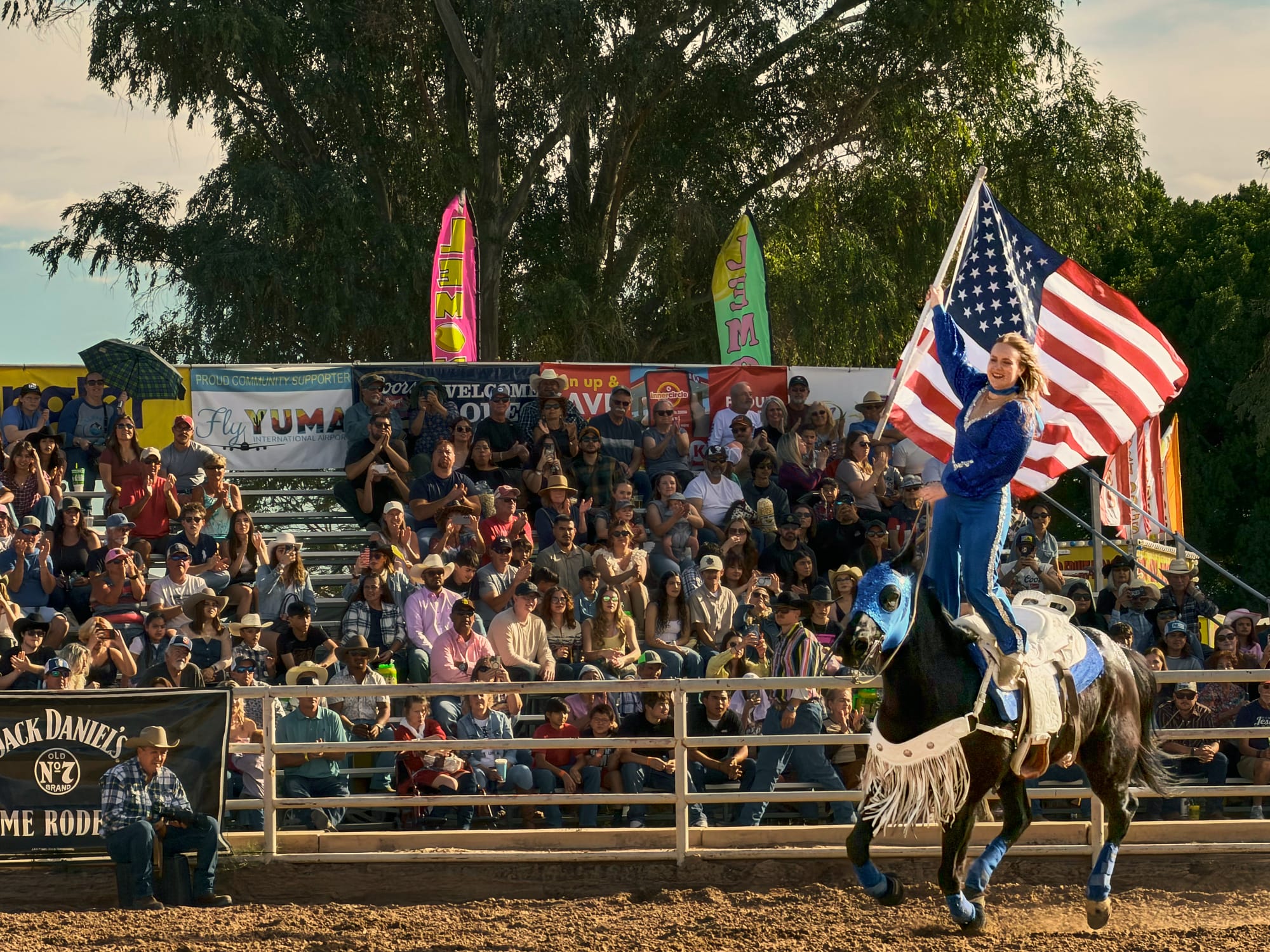
Of course there were more nods to the God and the military, which are largely indistinguishable, and plenty of exhortations to worship the flag, but they were minor and not all that different than what you get at sprint car races. Mostly the announcers talked about the actual rodeo - the events, riders, and livestock, and told stupid jokes. Between events, they pitched the sponsors and told more stupid jokes. Young girls rode fast horses around the arena with the flags of the sponsors, and the American flag, and sometimes other flag like Arizona or the border patrol or various military things. The border patrol was mentioned a lot and had a recruiting booth there, and they were part of the opening ceremony. They all appeared to be Hispanic. No mention of ICE, whatsoever.
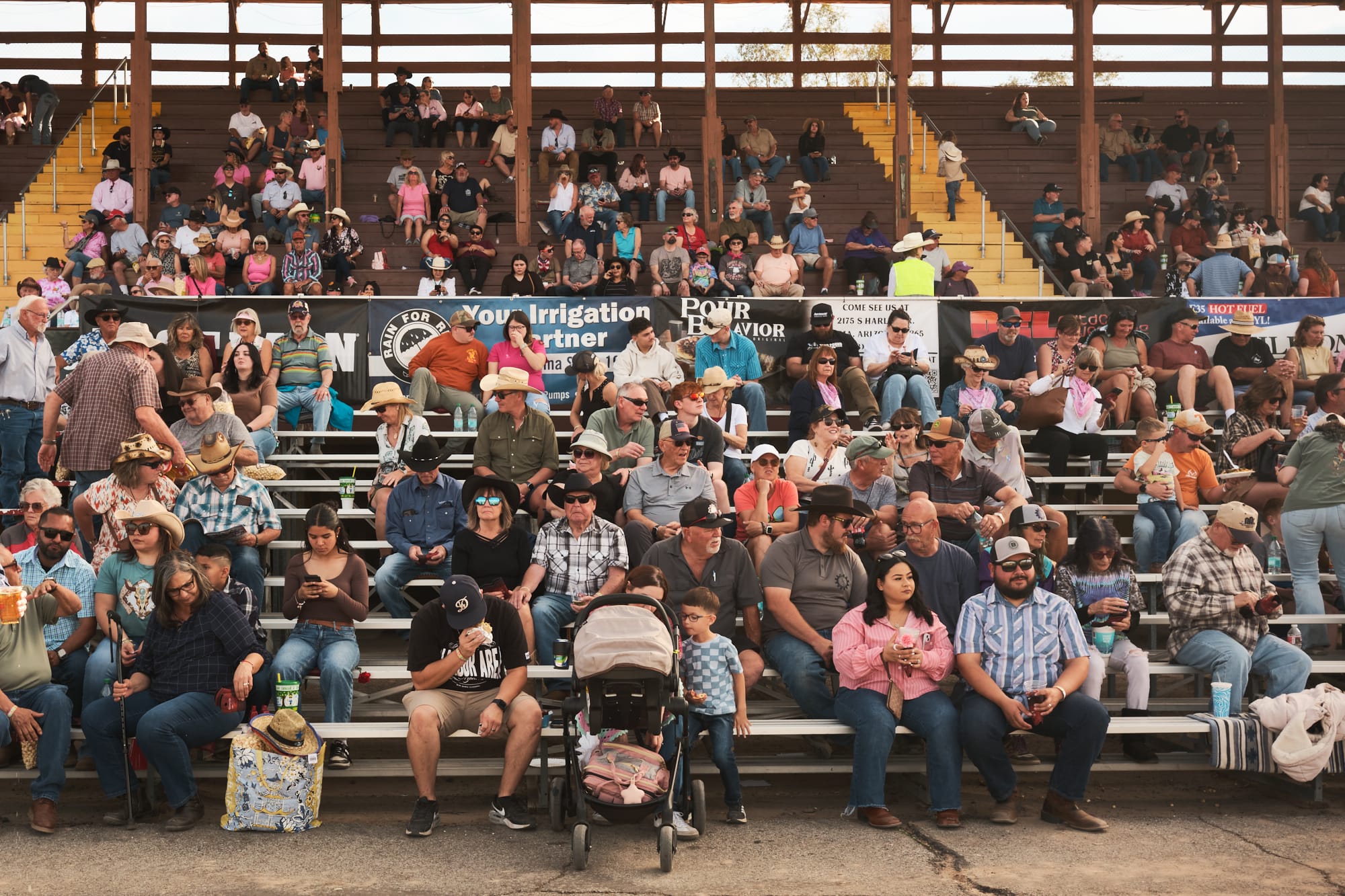
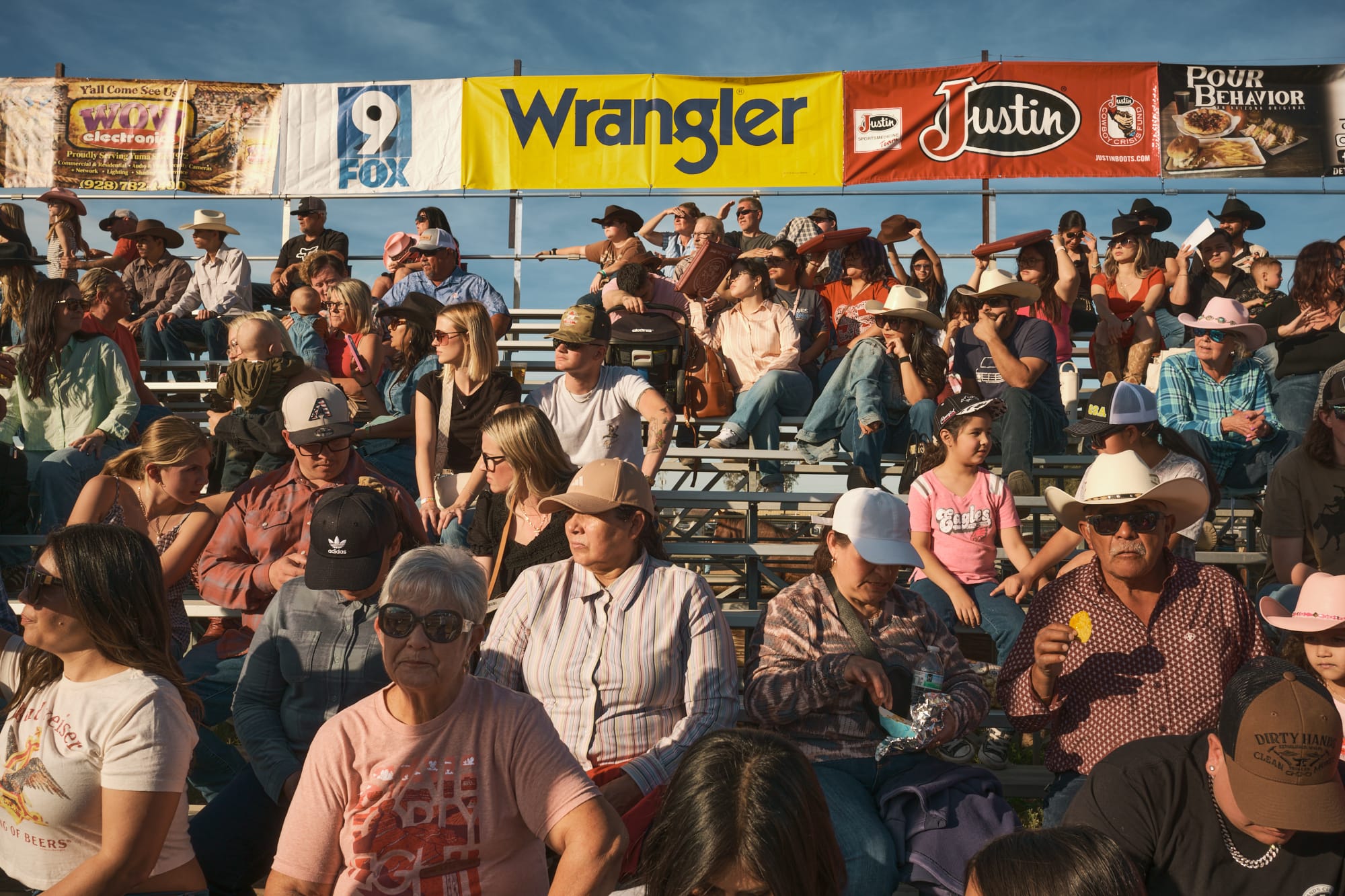
The rodeo itself was great. I found it very entertaining as a sport. It's a competition with a very high degree of difficulty and danger. It takes real skill, bravery, and serious confidence to compete and do well in it.
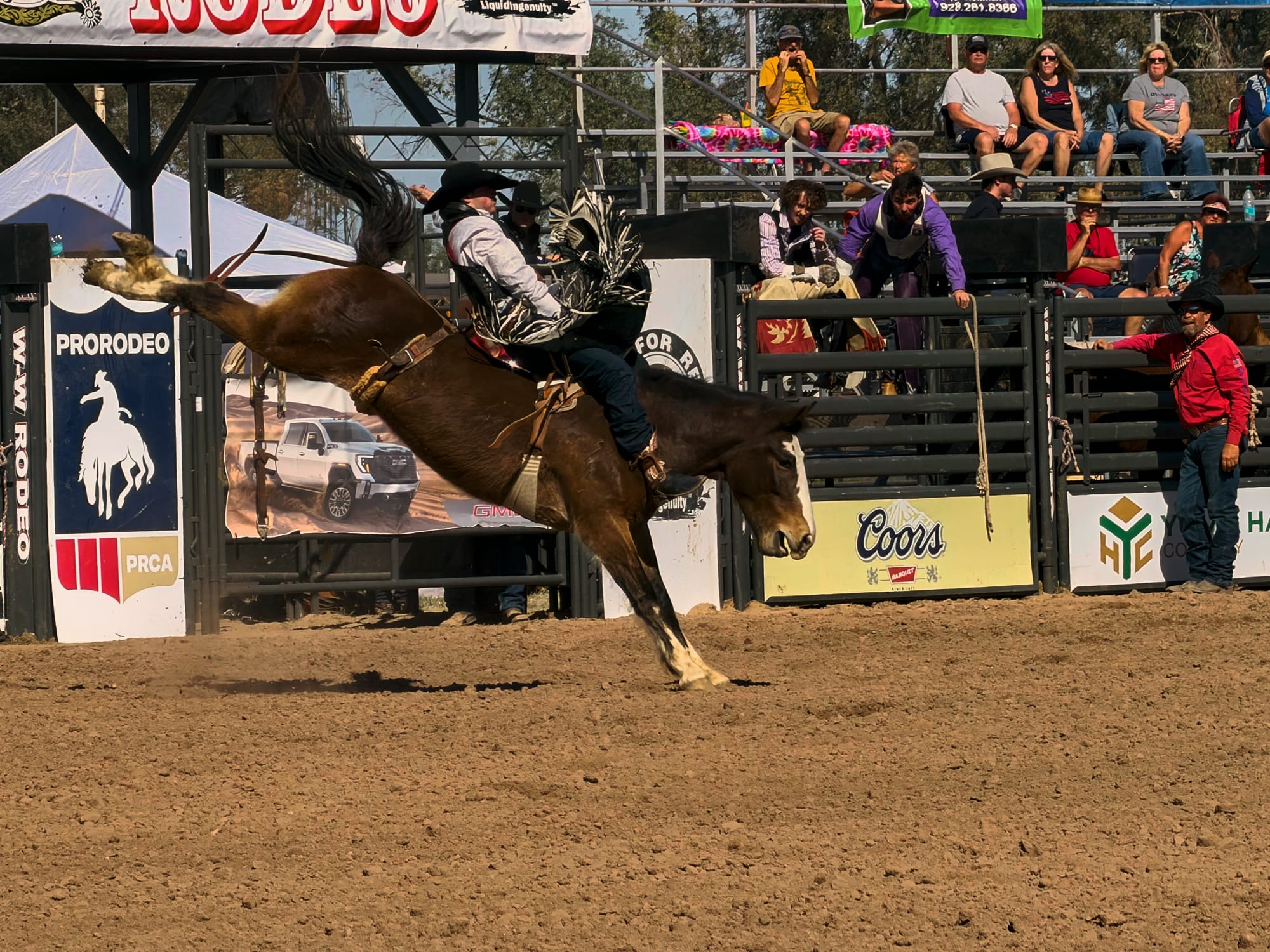
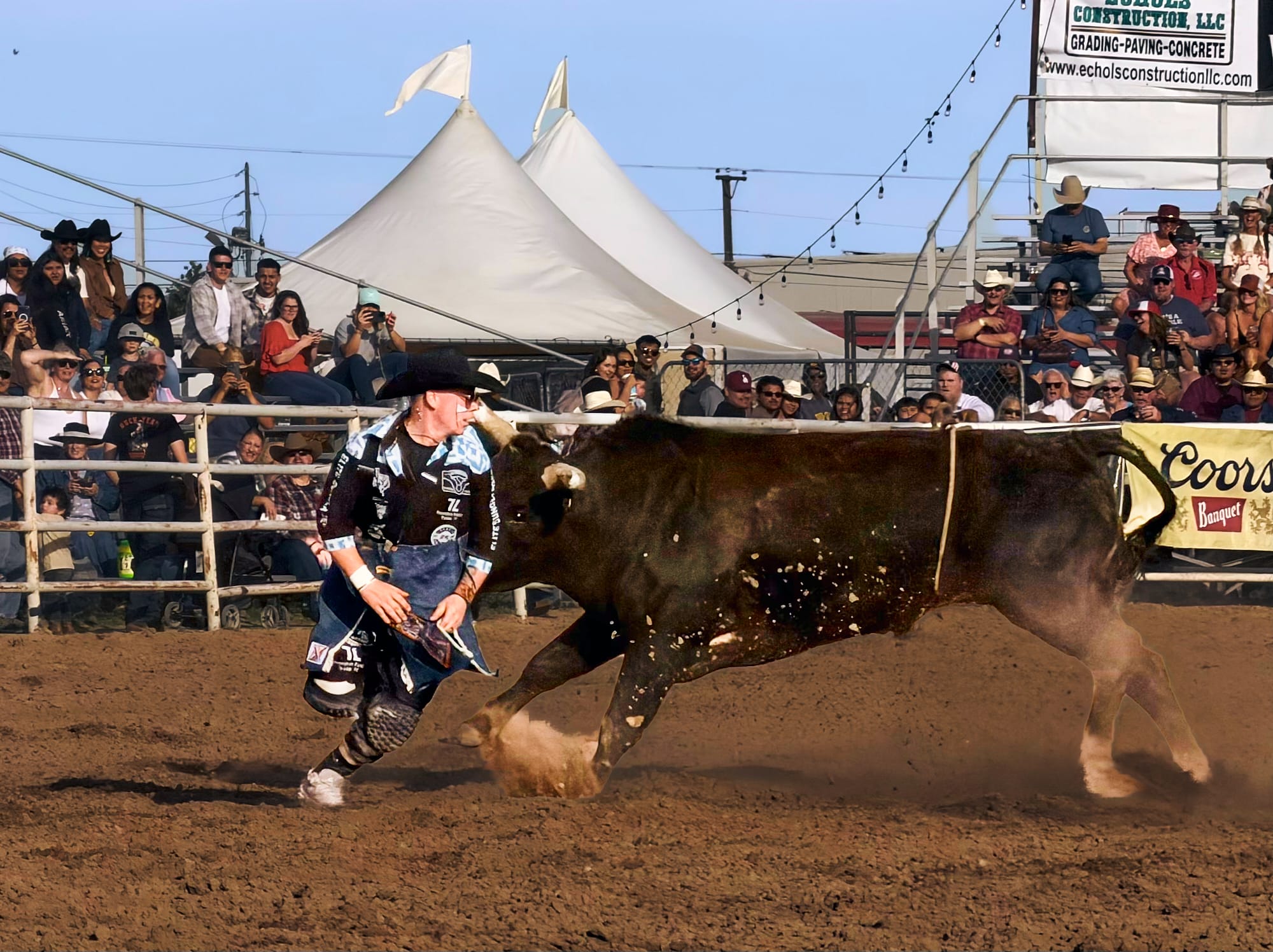
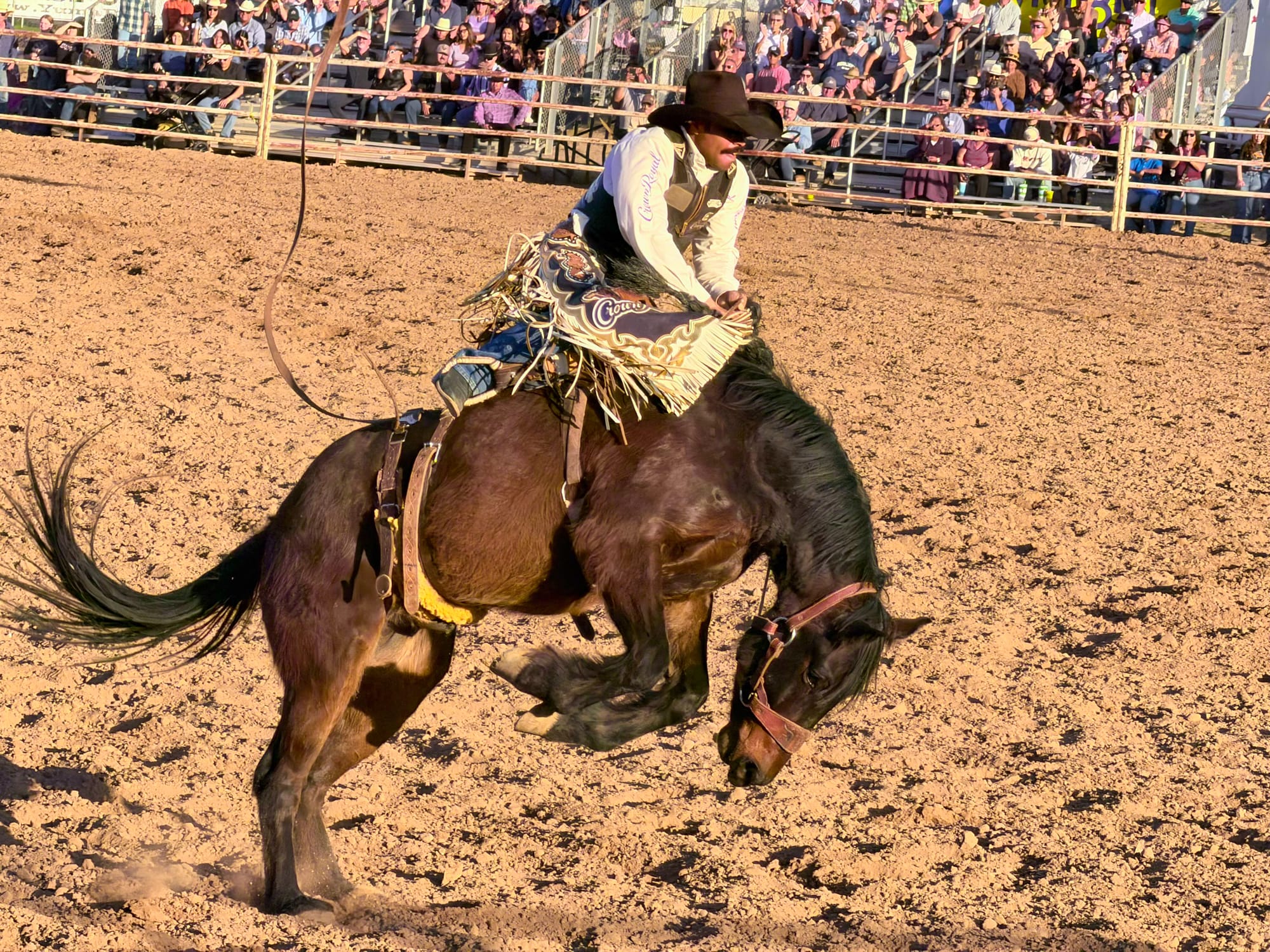
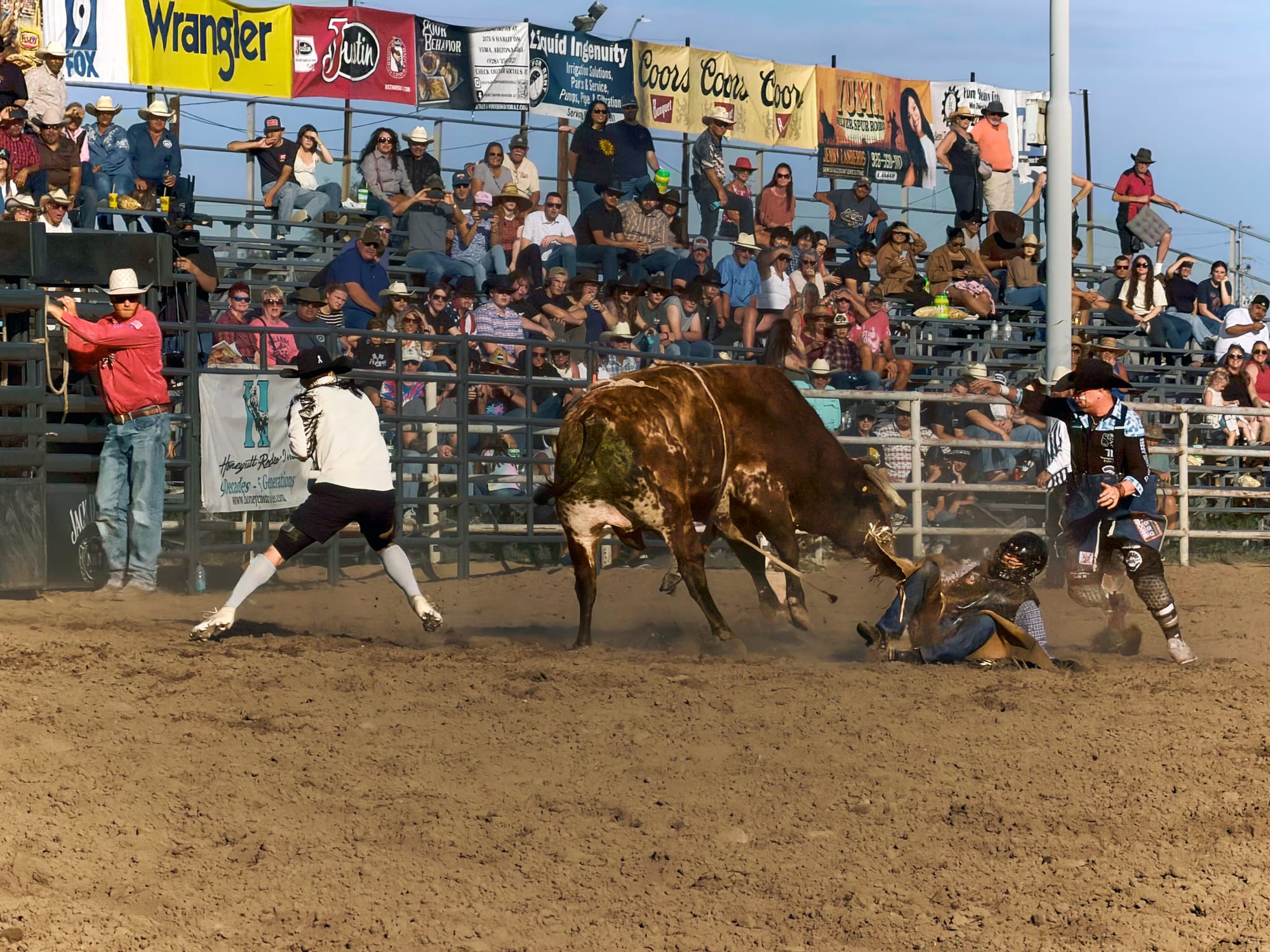
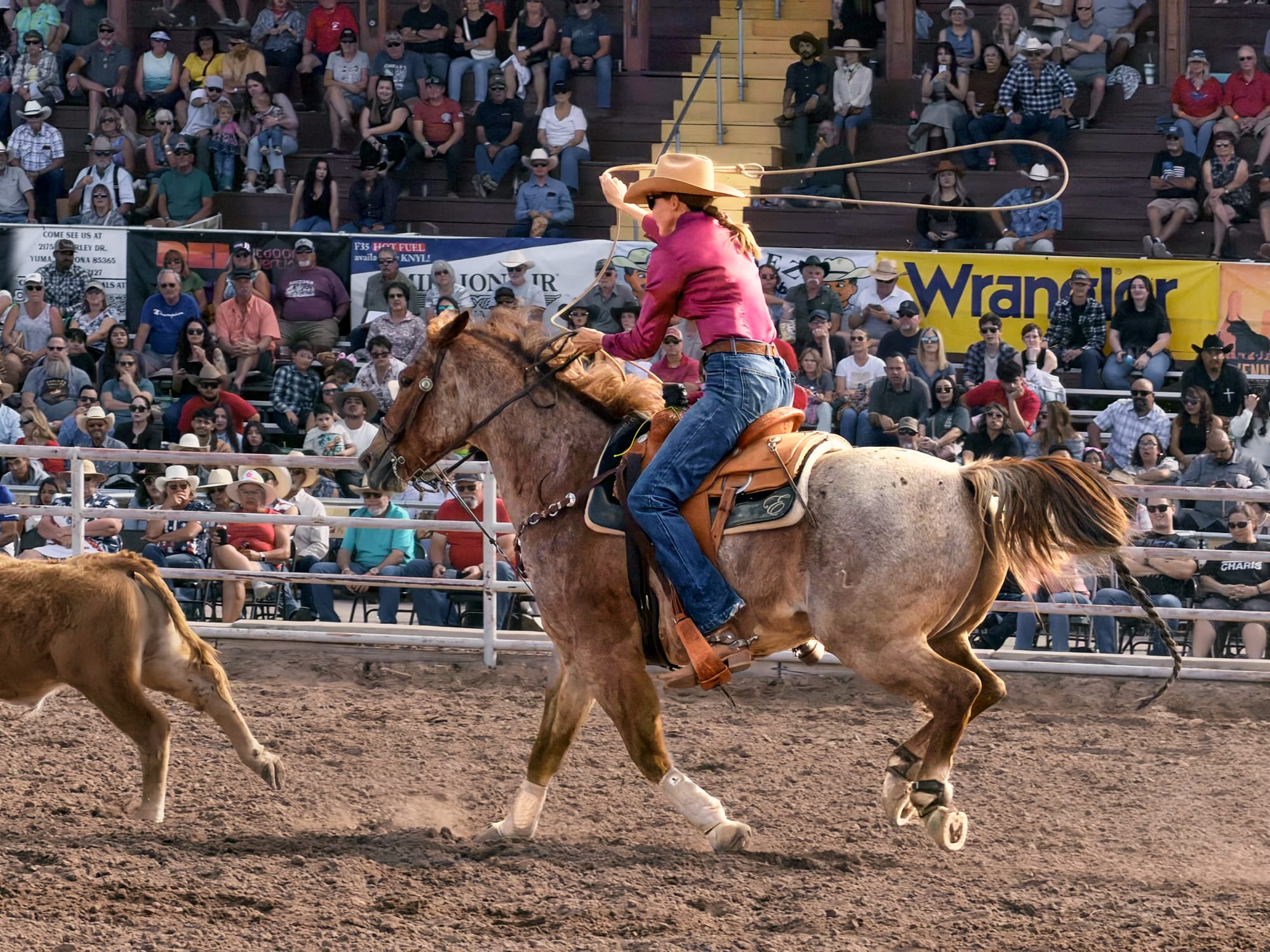
The bull riding is the apex event. Some of those bulls have thrown the rider every time they've been ridden over several years. Those bulls throw the riders immediately and then try to kill them. The sharp end of their horns have either been cut off or ground down so there is apparently no danger of getting gored, but there are other means by which a raging bull can severely damage a human and they make every effort to do just that. The bucking broncos are similar. Steer wrestling takes great horsemanship, timing and strength. Calf roping the same plus great skill throwing a rope while hauling ass on a horse. Barrel racing and other riding skill events the girls do is fun to watch. All the girls in the girls events are 16 or younger. What's up with that?
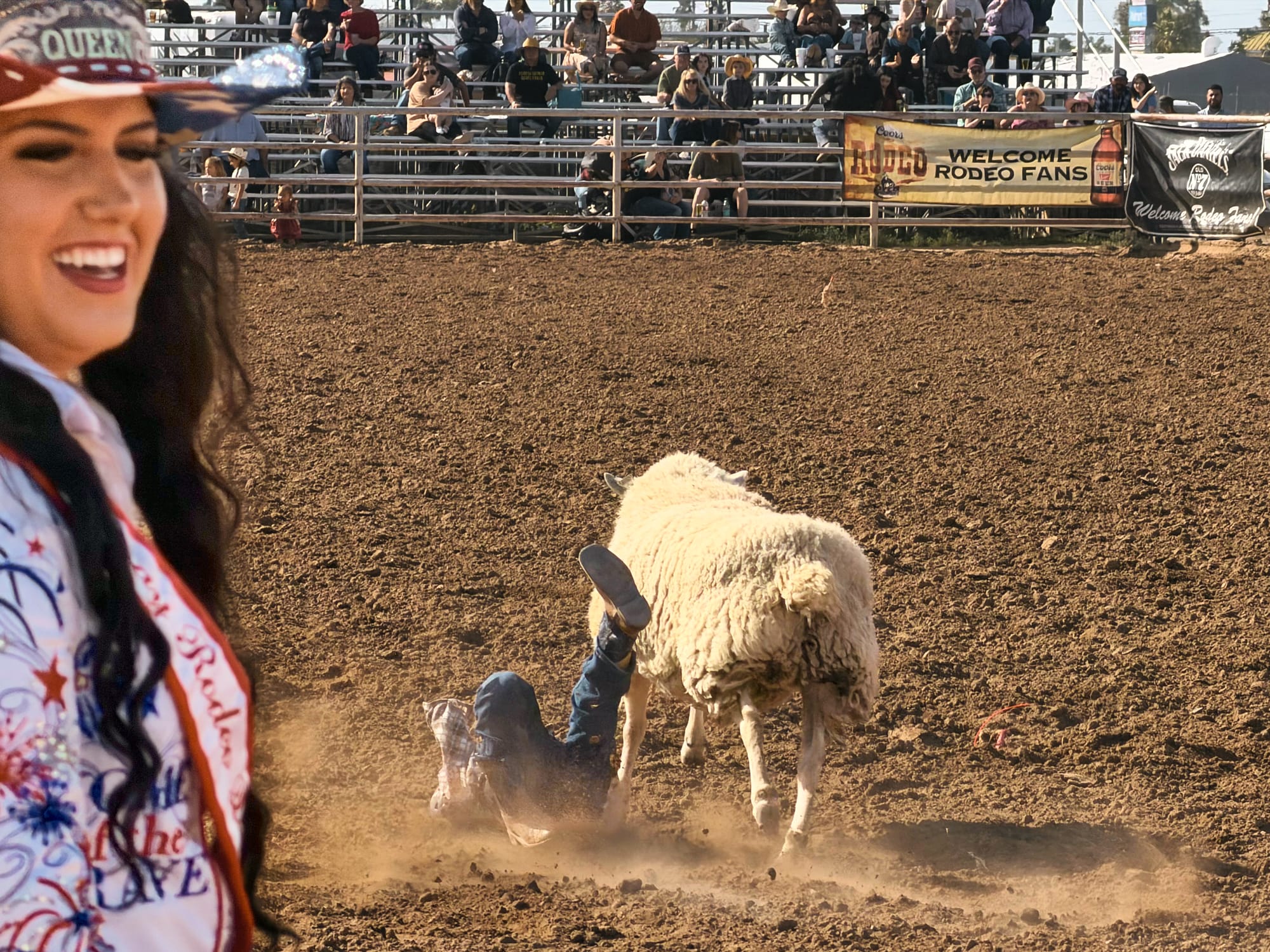
And there's a totally insane event where young kids try to ride, hang on actually, to a sheep that's scared shitless, running for its life and bucking like a bronco. All the kids were 8 and under, probably averaging five or six. One poor kid was three. They all get thrown violently, some are trampled, and a lot of them are crying when it's over. I'm sure I would have wanted to do it when I was eight, and maybe even six, but someone should call child protective services on the idiot that did that to a three year old. That's just horrible parenting.
All in all though, I really enjoyed my first rodeo. But after all that far right political and religious crap, I realized I no longer want to be a rodeo cowboy and will have to find something else.
Maybe I'll be a Baptist preacher, instead. That way, I won't have to work. Or maybe Pentecostal. I'll look into that next.