Not My First Rodeo
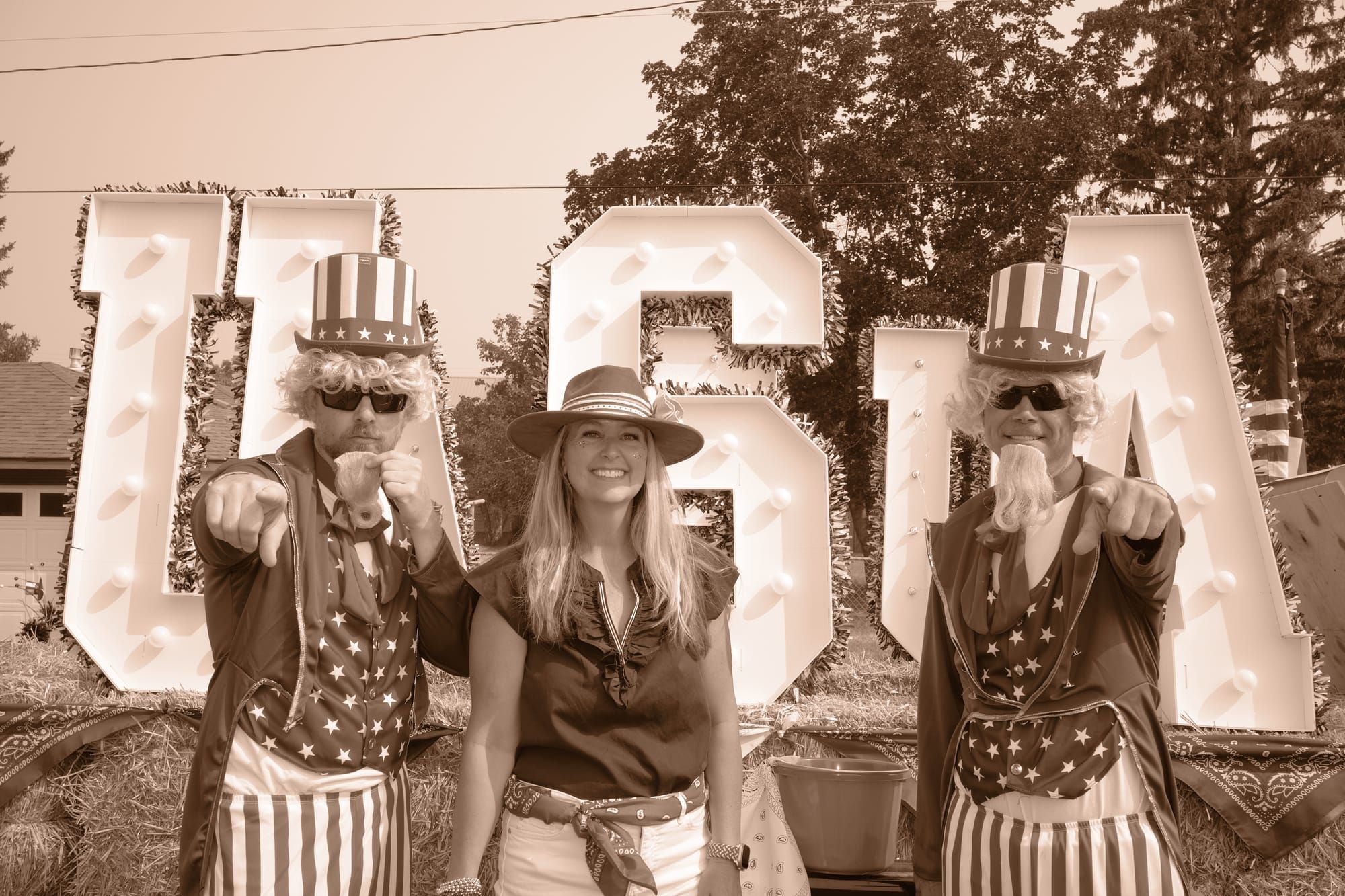
Ed. Note: Trigger warning: this is long, nearly 5000 words. so plan your reading accordingly. Or not. You can just scroll down and look at the photos if you like, they pretty much tell the same story. But be advised, they look like shit on the phone so best to view this on a computer.
"We were contented to let things remain as the Great Spirit Chief made them. They were not; and would change the rivers and mountains if they did not suit them."
Chief Joseph, An Indian's View of Indian Affairs, The North American Review, April, 1879
The town of Joseph was created on a map in the Wallowa Valley in northeastern Oregon in 1883 on land that was taken from a band of Nez Perce Indians led by Chief Joseph who were defeated after three months of winning an epic series of battles during a strategic retreat across 1300 miles through the mountains of Idaho and Montana, just short of sanctuary in Canada. The year 1883, coincidentally, is the same year the Code of Indian Offenses made much of what remained of their culture illegal.
Joseph's surrender speech is what made him famous and eventually resulted in a rodeo being named after him. It was considered a rhetorical masterpiece and widely taught in mid-twentieth century classrooms as a model of dignified, achingly spare rhetoric.
"It is cold, and we have no blankets. The little children are freezing to death.
My people – some of them – have run away to the hills, and have no blankets, no food. No one knows where they are – perhaps freezing to death.
I want to have time to look for my children, and see how many of them I can find; maybe I shall find them among the dead.
Hear me, my chiefs; my heart is sick and sad.
From where the sun now stands, I will fight no more forever!"
After the defeat, Joseph spent the rest of his life lobbying for his people being allowed to return to the Wallowa valley and the town that was named after him, but he died and was buried on the Colville reservation in Washington with his people still in exile. The attending physician said he died of a broken heart.
In 1946, the town of Joseph inaugurated Chief Joseph Days, an annual tourist event and rodeo pegged to his fame and legacy. Chief Joseph Days takes place during the last week in July and features what's considered one of the better rodeos, perhaps the best medium-sized one. Along with the nod to honoring Chief Joseph and the Nez Perce, the town and rodeo celebrate the regular version of western heritage, which emphasizes rugged individualism – cowboys, ranchers, loggers, miners, and the like.
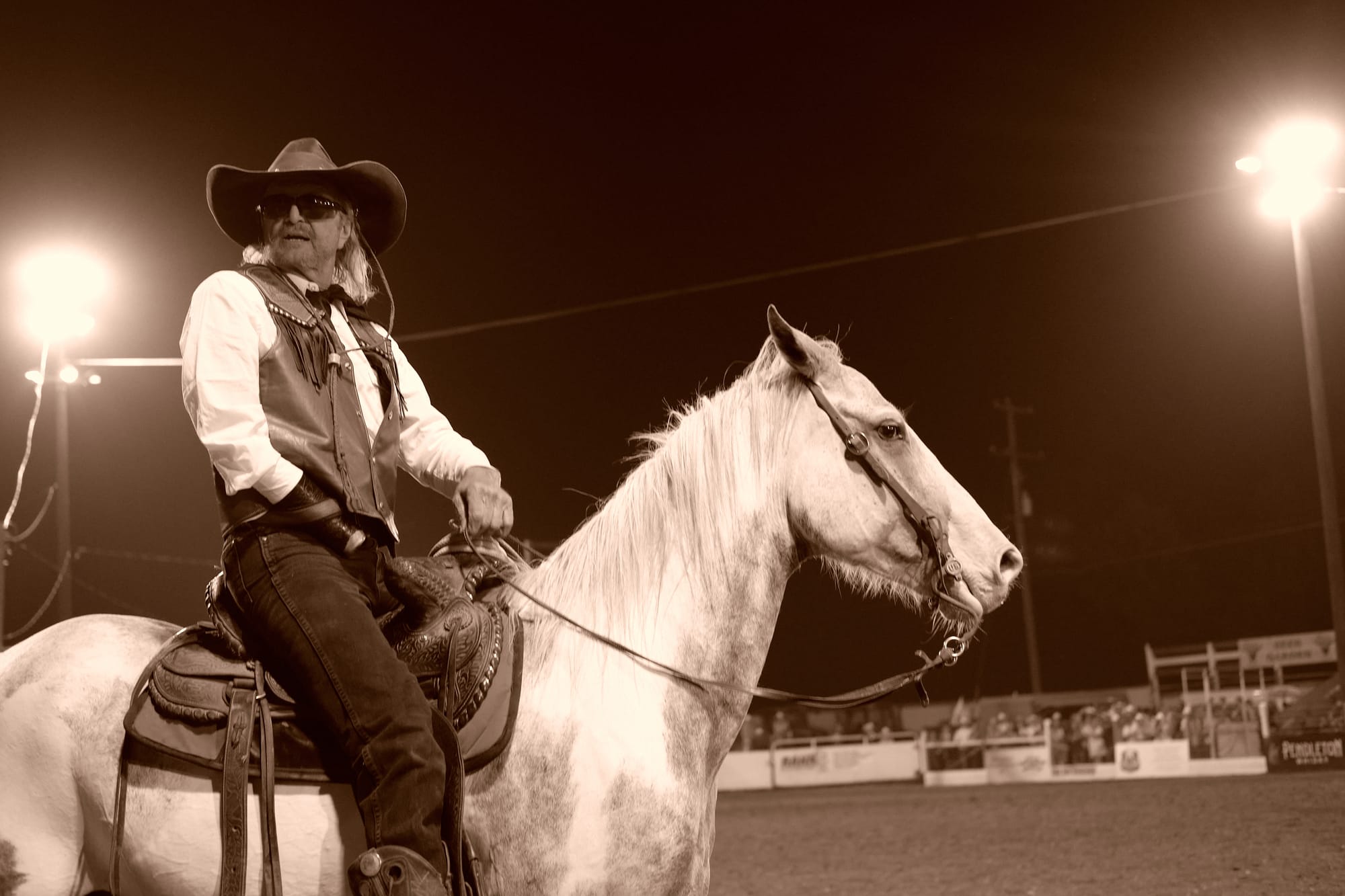
Of course the actual western heritage of the Wallowa valley is that the Nez Perce Indians and their forebears lived there for millenia, settler's came in, were allowed to live there by the Nez Perce and treated as friends, then when gold was discovered in the surrounding mountains, the US Army came in and made them leave, killing most of them so their "friends" could take their land. Chief Joseph's band never signed any kind of treaty or took any money for the land. The settlers went on to become ranchers and eventually the Wallowa valley became an attraction for outdoor enthusiasts and adventurers, tourists, and retirees. Chief Joseph's people were not allowed to return to Oregon, or even the Nez Perce reservation where the other bands were settled in nearby Idaho. They were sent to Kansas and Oklahoma as punishment for all the trouble they gave the U.S. army, on the orders of General Sherman of Civil War fame no less, and ended up in eastern Washington.
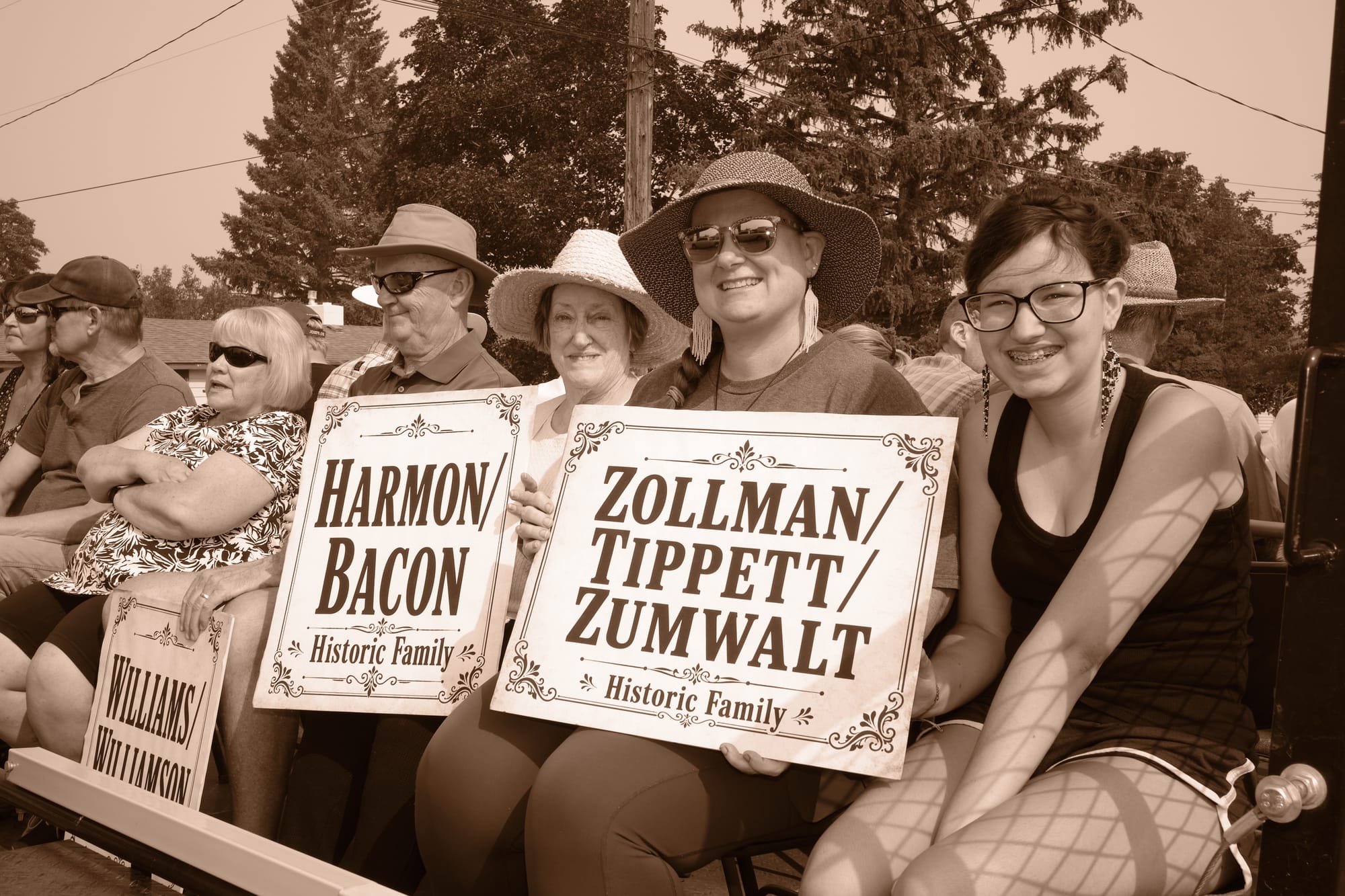
But unlike most western heritage stories about the murders and displacement of Indians that would end with the chief dying of a broken heart far from his homeland, this one has a positive twist. In 1997 a collaboration among the tribe and the local community, many of whom were decedents of the settlers who originally stole the land. A trust for the Nez Perce was created providing them with thousands of acres near the town of Wallowa. Some of the tribe returned. Many make annual pilgrimages.
The public story was about reconciliation and the settler's desire to right a wrong they'd inherited. Several descendants of the original settler families were involved in the land trust effort and spoke about a sense of moral obligation. One said that the valley felt incomplete without the people it had been built on displacing. There was a monetary aspect as well. Throughout the west, association with Indians draws tourists. As the town of Joseph and the valley in general's identity is tied to Chief Joseph and the Nez Perce, it was a good PR move. They figured having actual Indians present and participating in tourist events like the rodeo is better than a historical marker.
After experiencing my first rodeo in Yuma, which was a militant right wing Christian propaganda fest, to put it mildly, I thought I'd see what a rodeo that purports to honor the name of an Indian and his tribe was all about.
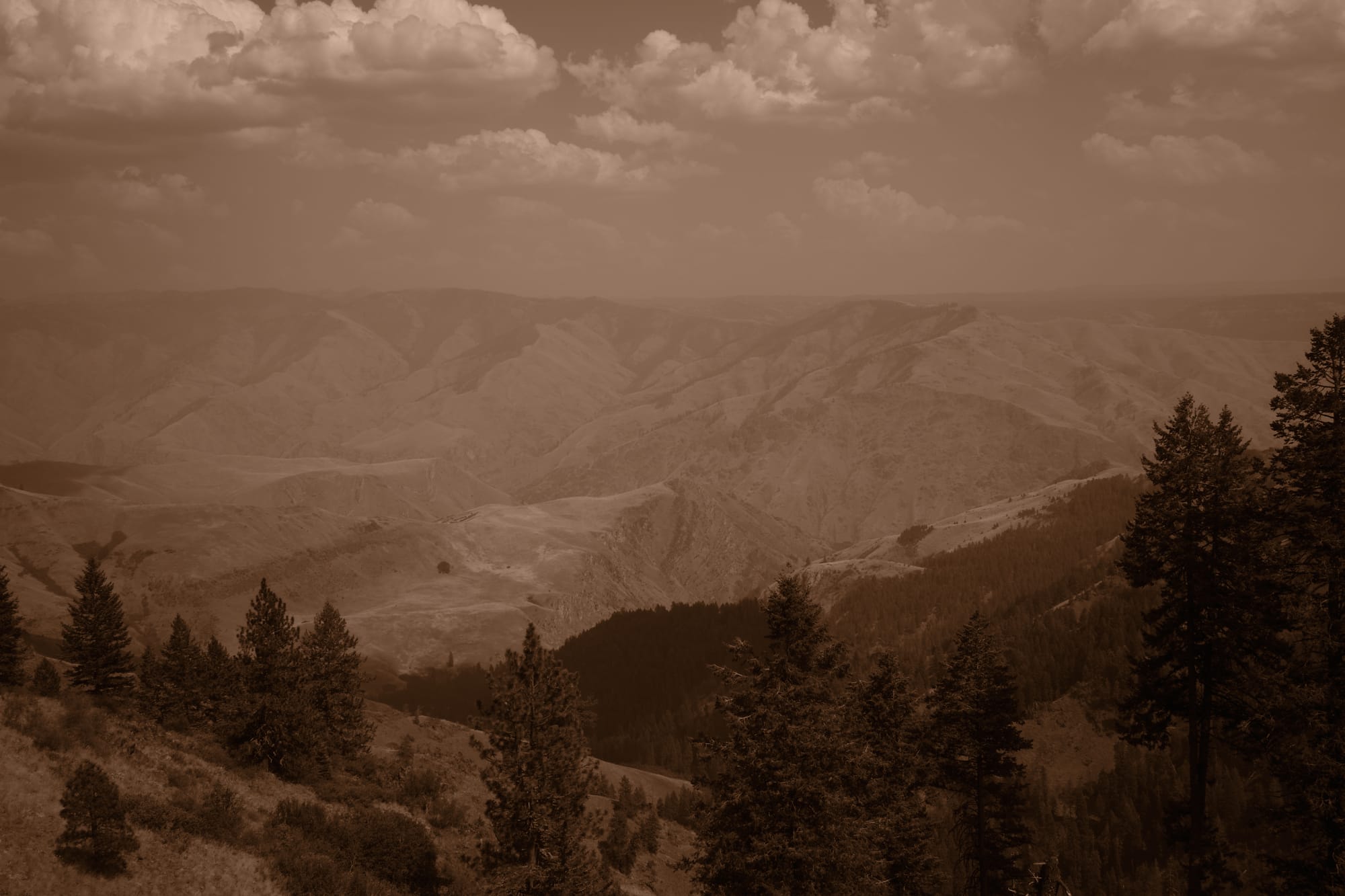
There is no easy way to get to Joseph. The town is ringed by tall peaks in the Wallowa Valley. The three routes in all involve steep climbs and harrowing descents on narrow roads. Once there, rolling hills of brown grass and grazing cattle lead the eye up to the Wallowa range that tops out at nearly 10,000 feet. Sacajawea Peak (the Nez Perce helped, probably saved, Lewis and Clark) is the highest at 9,838 feet.
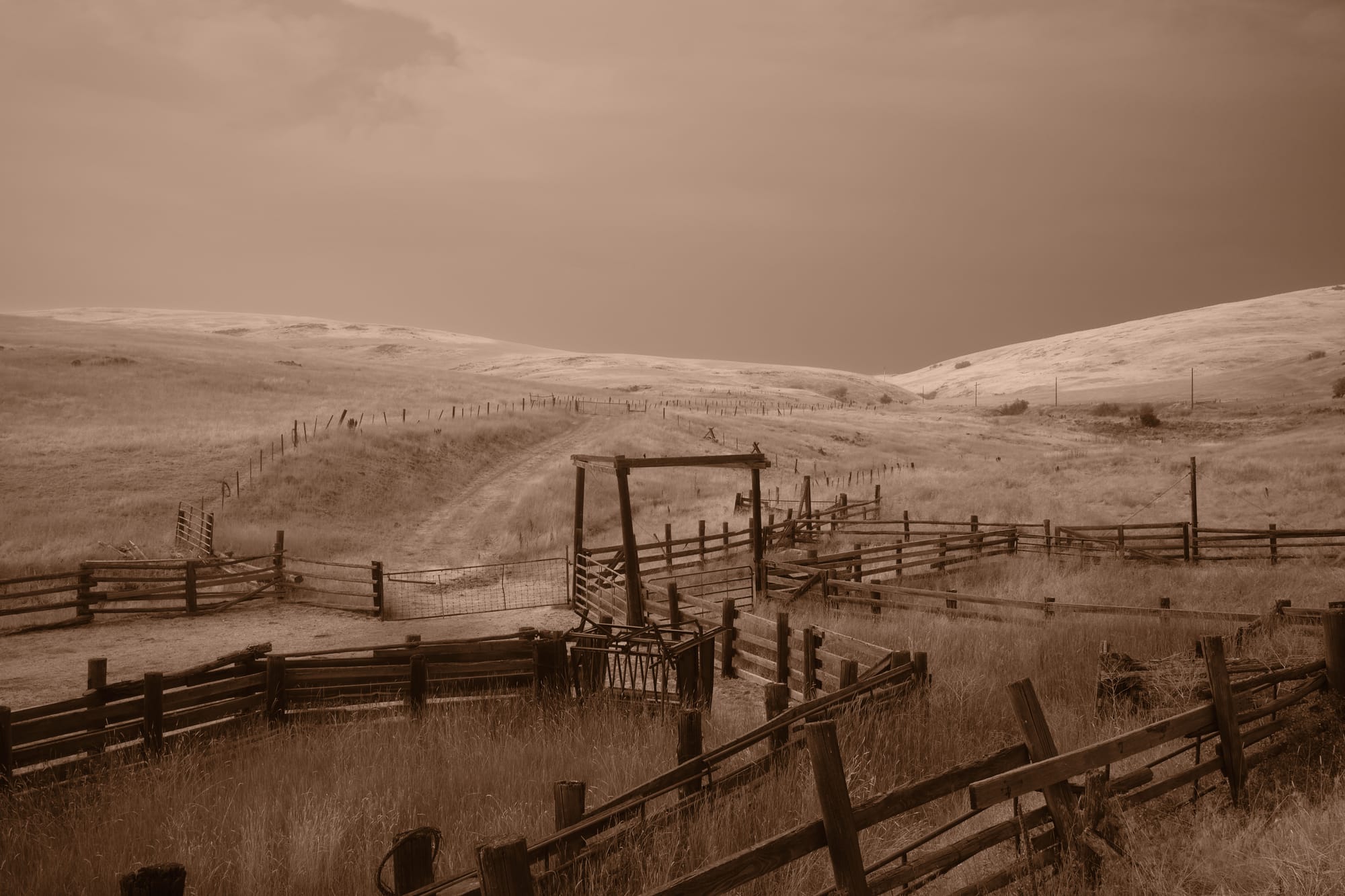
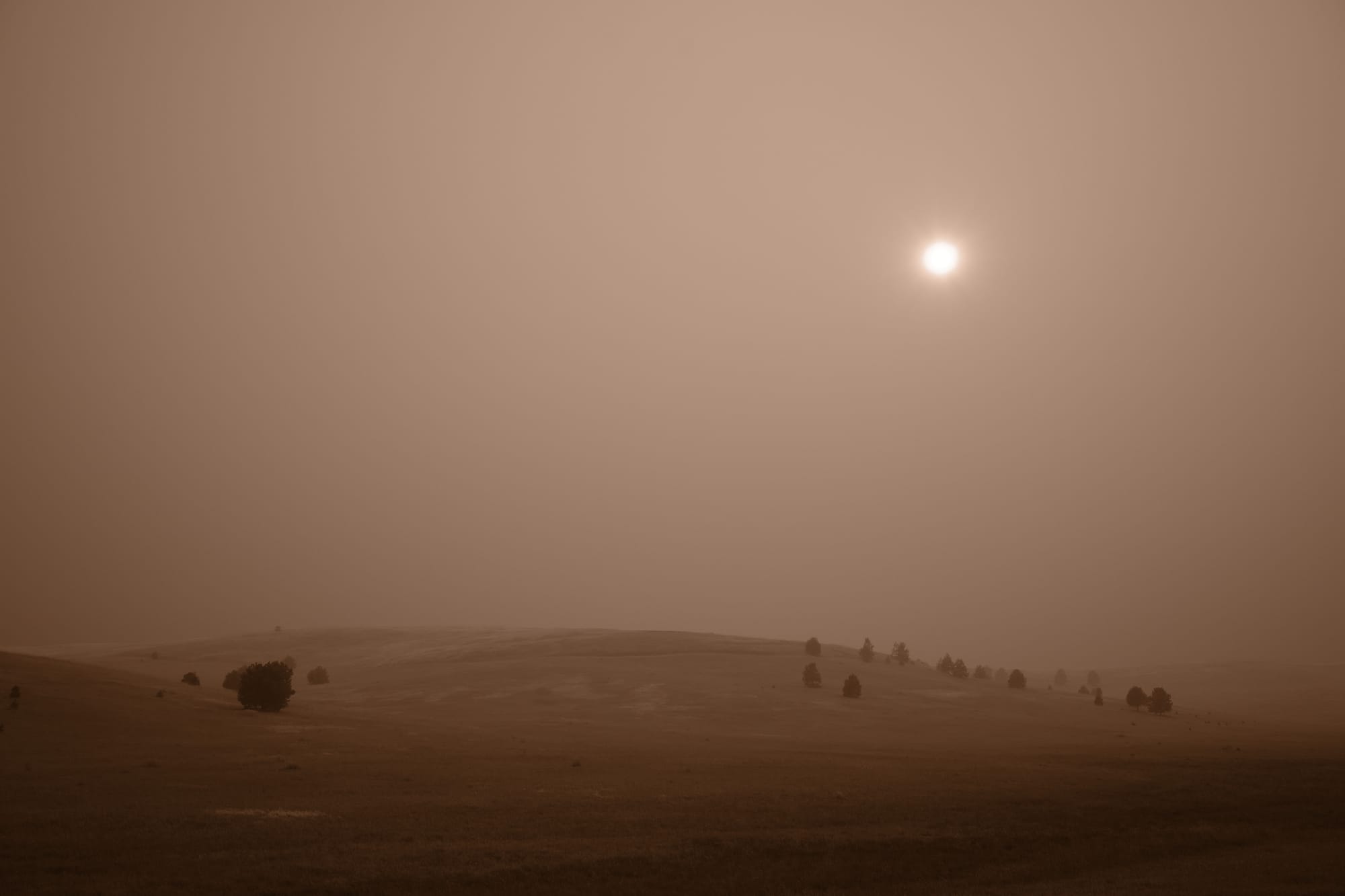
When I cleared the pass coming out of La Grande and the grand scope of the valley opened up before me, I felt like I was entering a hidden land. It wasn't that time had forgotten it, but that time's memory was perhaps a bit hazy, though maybe that was just the smoke from the wildfires burning out of control in the surrounding mountains.
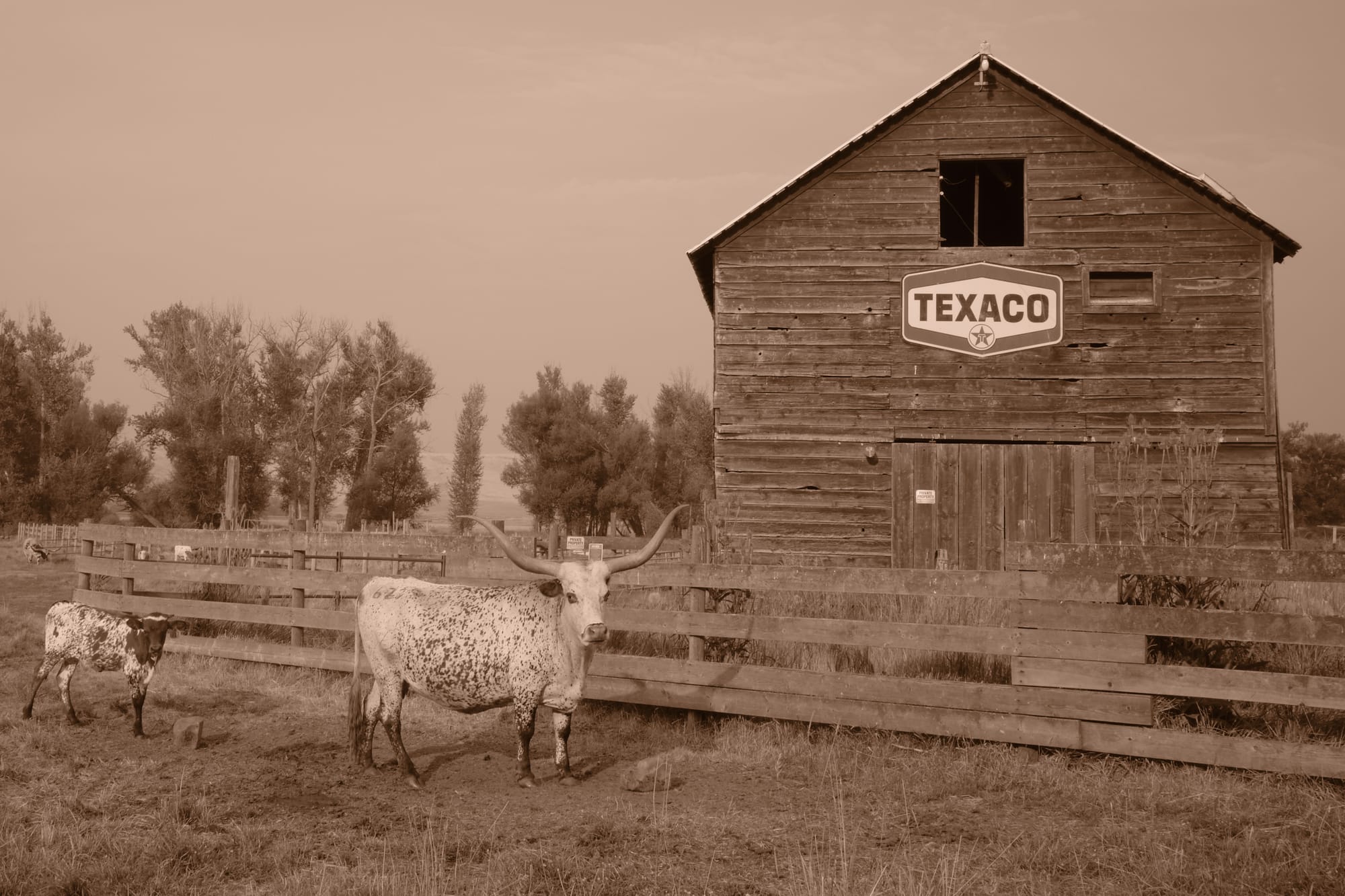
Still, it wasn't just the smoke and ash that produced that effect. There is no Walmart. There are no strip malls, no McDonalds, Taco Bells or other fast food chains, no gas station convenience stores. Other than a relatively small Safeway in the county seat, no large grocery stores. As a result, everything is very expensive. Eggs were still over $5 a dozen And gas was nearly a dollar more than outside the valley. But it's scenic and no doubt worth paying more for that kind of lifestyle if you can afford it.
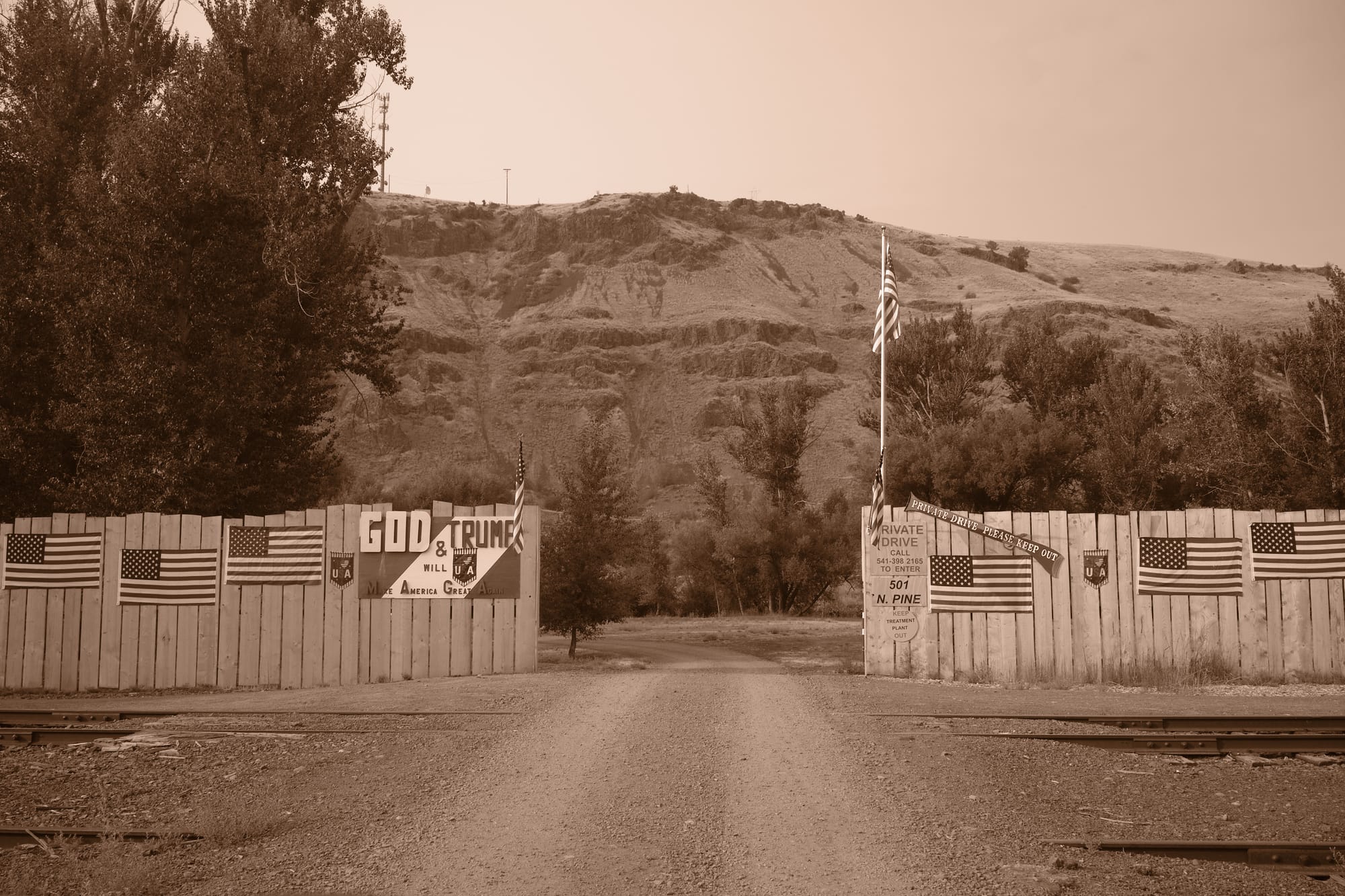
Joseph's population is just over 1000. Wallowa County, where Joseph is located, has a population of about 7500. According to the 2020 census, the county is roughly 90% white, 0.8% American Indian, 0.4% Asian, 6.3% two or more races, about 4% Hispanic, and 0.1% Black. Less than 2 percent are immigrants and 99.5 percent are U.S. citizens. The crime rate is one of the lowest in the country.
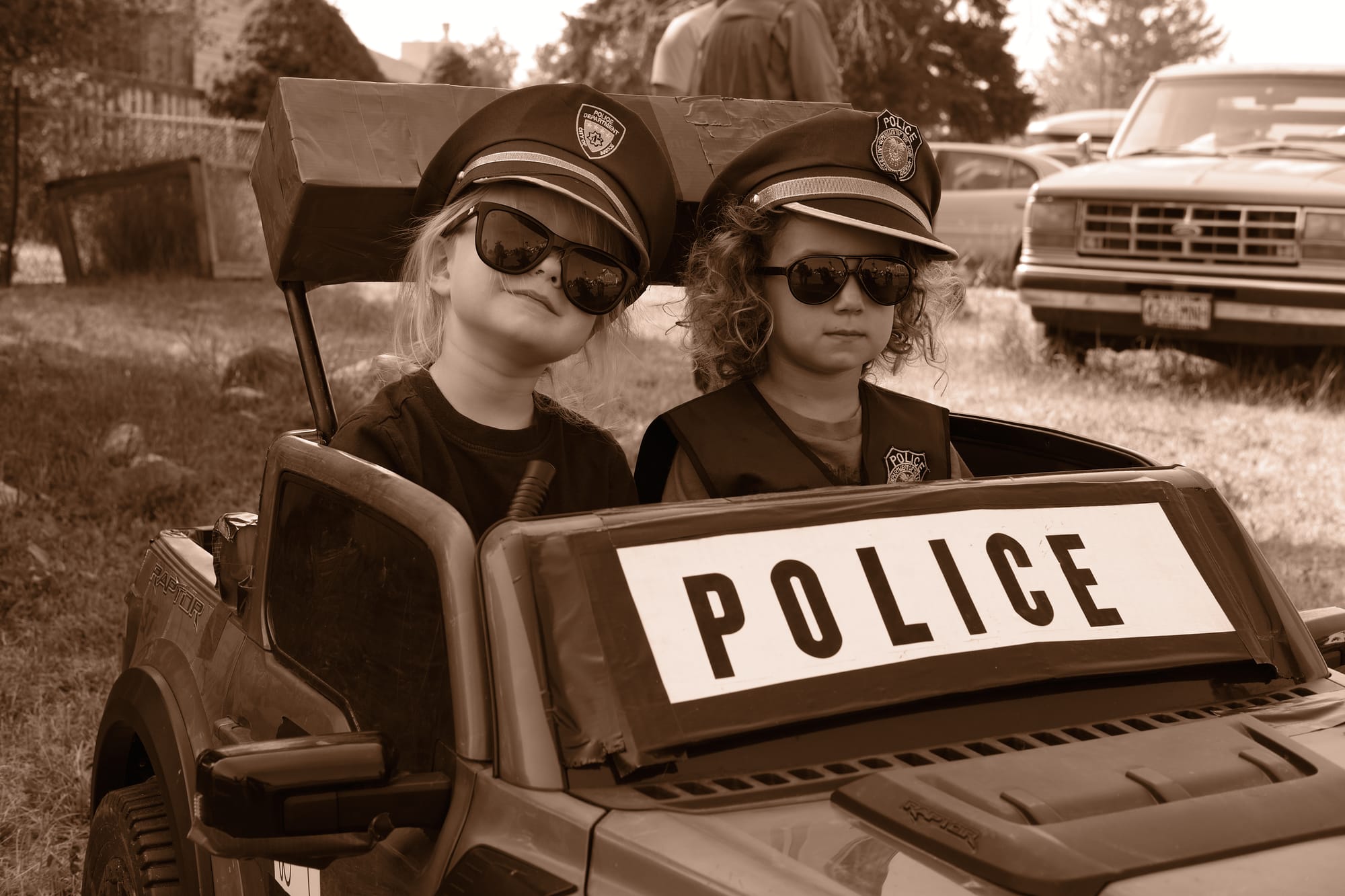
The median age is 52 and the average price of a house is around 400k. Home ownership is 72 percent. There are few, if any, apartment buildings. The population is declining by 1.5 percent a year. It's a place for old people with money. The medium age of 52 is high, 38 being the national average. Somewhere between 30 and 40 percent of the population is likely retired.
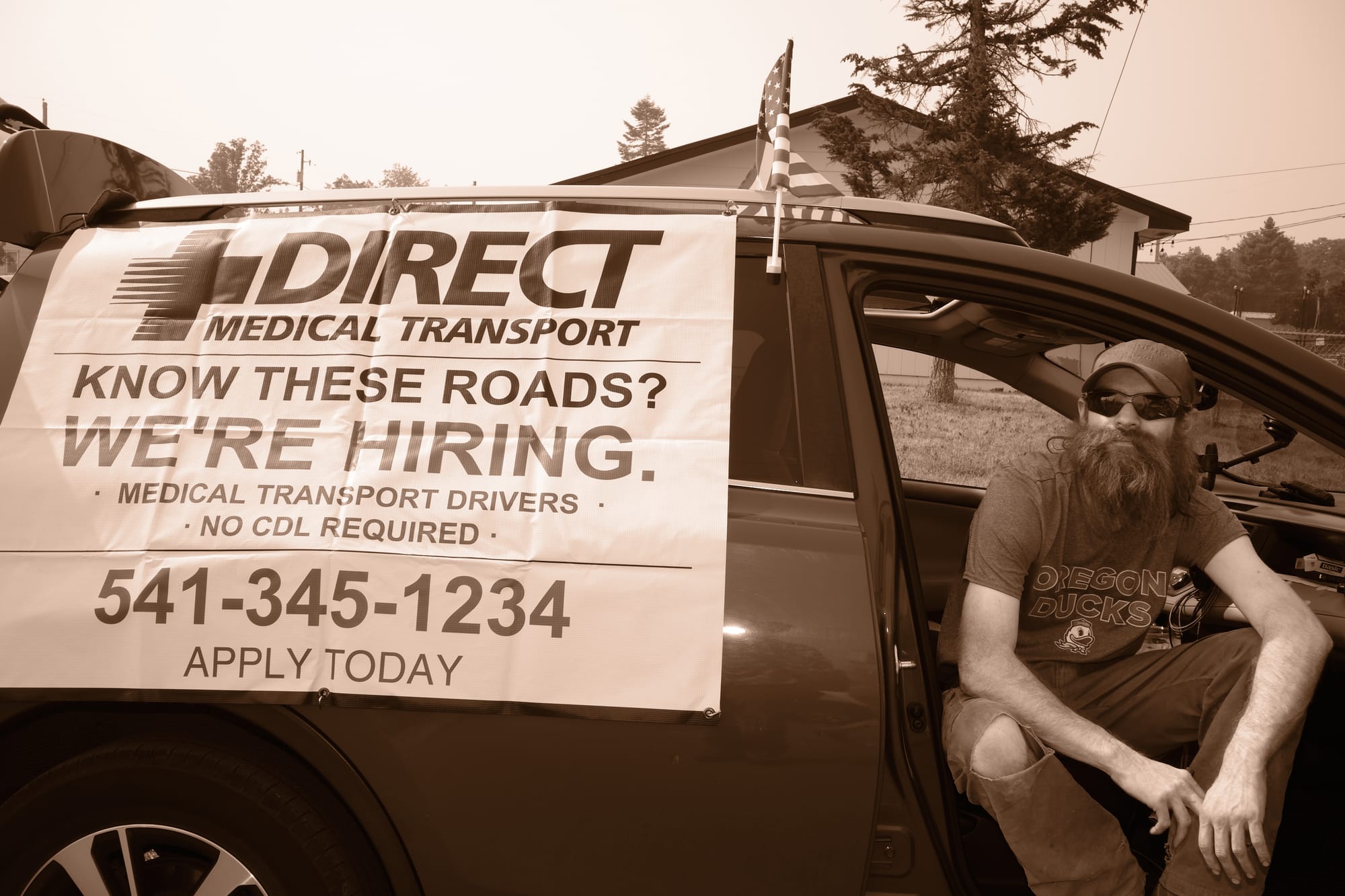
For younger people, wages are crap and home ownership is mostly impossible without an inheritance. There are few jobs, many of them tourist related and seasonal, and the few places to rent have rates almost as high as New York or LA. I couldn't find information specific to Joseph, but other rural counties in eastern Oregon report weekly wages are just over half the national average of $1589. The largest employers are health care and social assistance, followed by agriculture and forestry. Median household income is about $65,000, which skews high because of all the wealthy families and retirees. Somewhere between 60 and 70 percent of the county's land is federally owned and managed. Ranching families own most of the rest.
For wealthy people and retirees, it's a beautiful place that hasn't been discovered yet. The views are fantastic and the demographics comforting. For the young, it's more complicated.
Of the 7500 citizens in the county, 6300 are registered to vote. Population is often undercounted in rural counties and voter rolls aren't always updated to account for people who have died or moved away, but still it appears that just about everyone who is eligible to vote is registered.
Wallowa County is among the Oregon counties receiving the most government assistance. Biden-era programs for federal energy and environmental protection and the Secure Rural Schools program, which gives a handout to counties with a lot of non-taxed federal land and was championed by Ron Wyden, the Democratic senator, count for towards a lot of their budget.
Along with help from Biden and Wyden, the widely detested Portland subsidizes Wallowa County through both state and federal taxes. The people of Portland pay roughly 59% of Oregon’s taxes with only 47% of the population.
In the 2024 general election the vote in Wallowa county was 72.8% for Trump. In the 2022 midterm Wyden got under 35 percent of the vote to nearly 65 percent for Jo Rae Perkins, a QAnon wacko. By similar numbers, the county voted to secede from Oregon and become part of Idaho, which they believe better represents their values and interests.
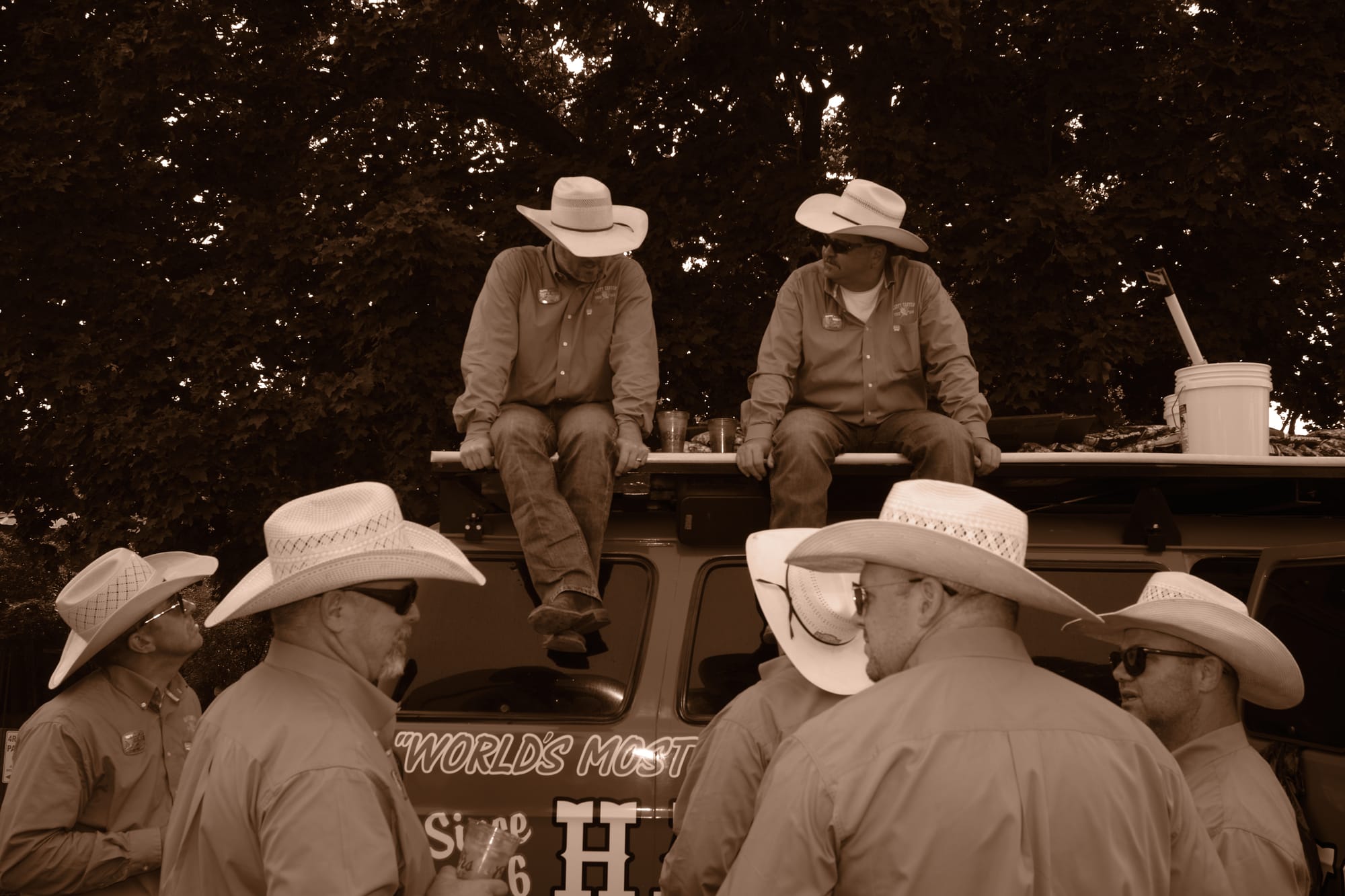
So Joseph is part of a county with next to no crime, no immigrants or minorities, a beautiful landscape of mountains, lakes and streams and all the outdoor recreation that entails. They live on massive government subsidies, mostly paid for by people they despise in urban areas that enable their lifestyle, yet they vote overwhelmingly for candidates who want to take as much of that income away from them as possible, and who don't blink at destroying the health of their environment if there's any profit in it.
I'm a little unclear why Oregon doesn't tell them not to let the door hit them on the ass on the way out to Idaho.
As I mentioned elsewhere, the rodeo writ large is the result of intersections among Spanish Colonial, modern Mexican, Indian and Anglo American cultures, with some black cowboy involvement as well.
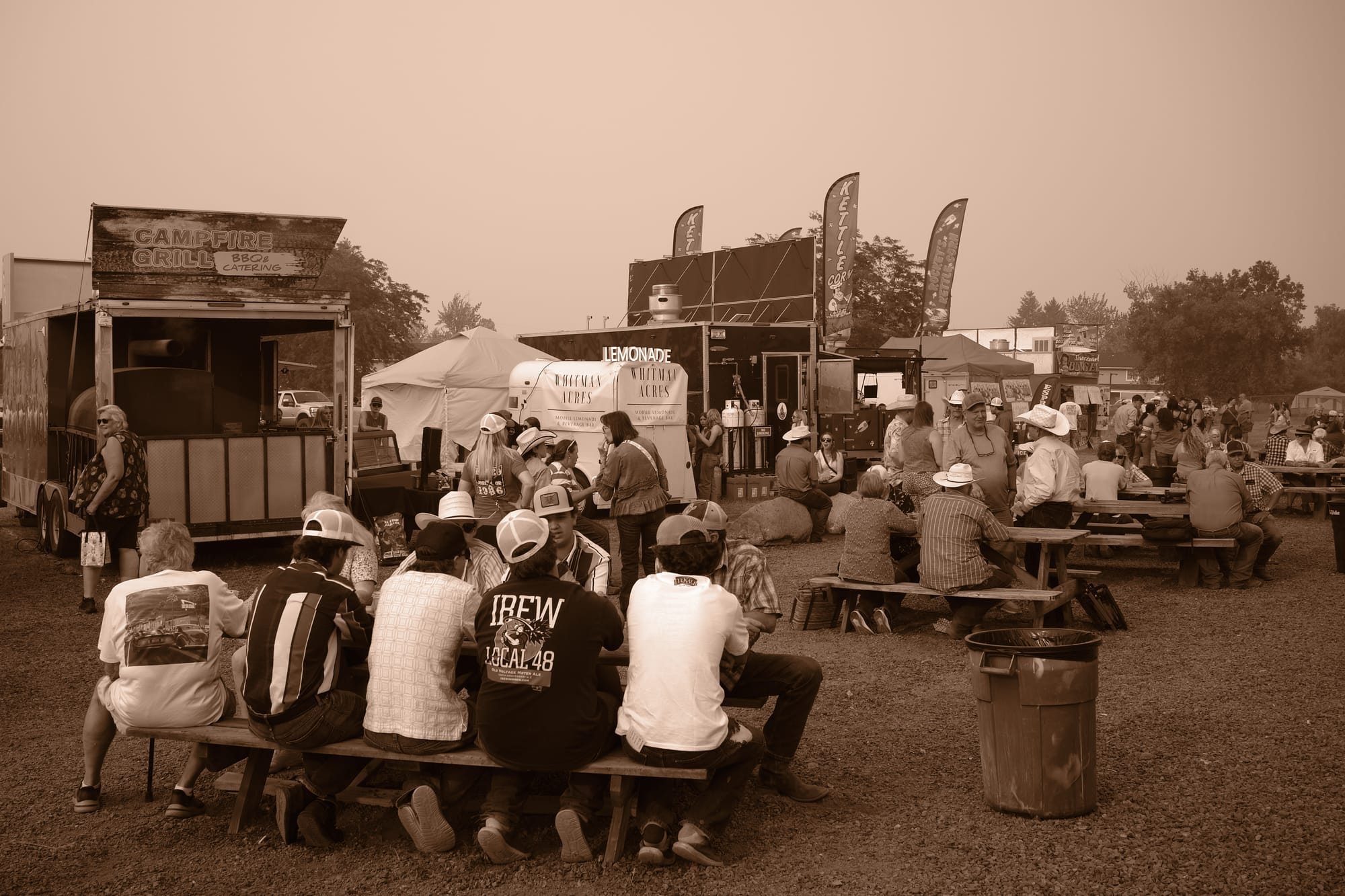
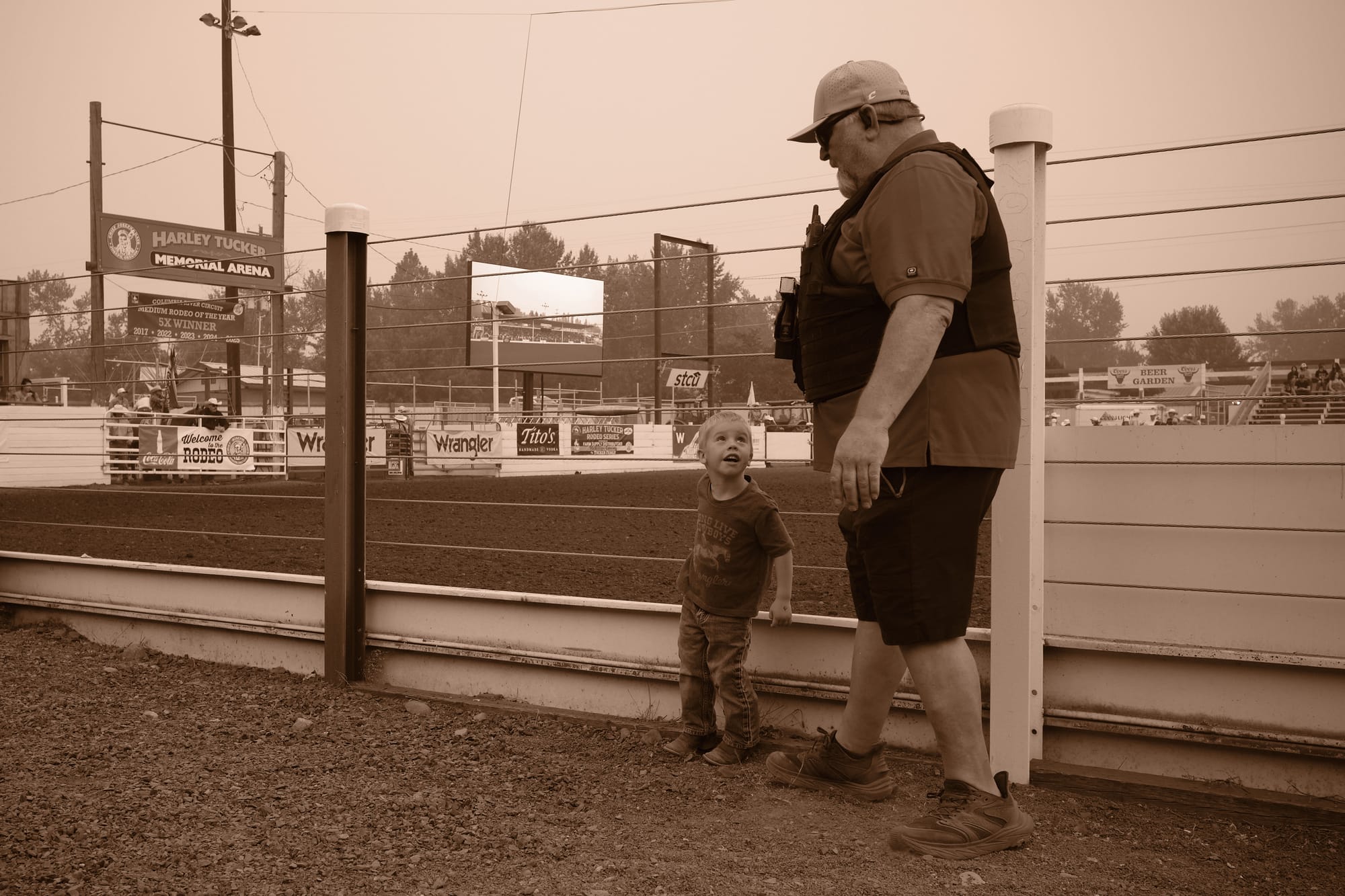
On the positive side, it is a community binding event and a wholesome family affair with parades and corn dogs and beer and small children running around having a great time amid a fascinating and dangerous sporting event that pits man and girl against livestock and the clock. But the way it is presented through the public address system is largely a propaganda fest of performative patriotism and far right Christian blather that celebrates cultural divisiveness and exclusivity regarding who has access to the American identity.
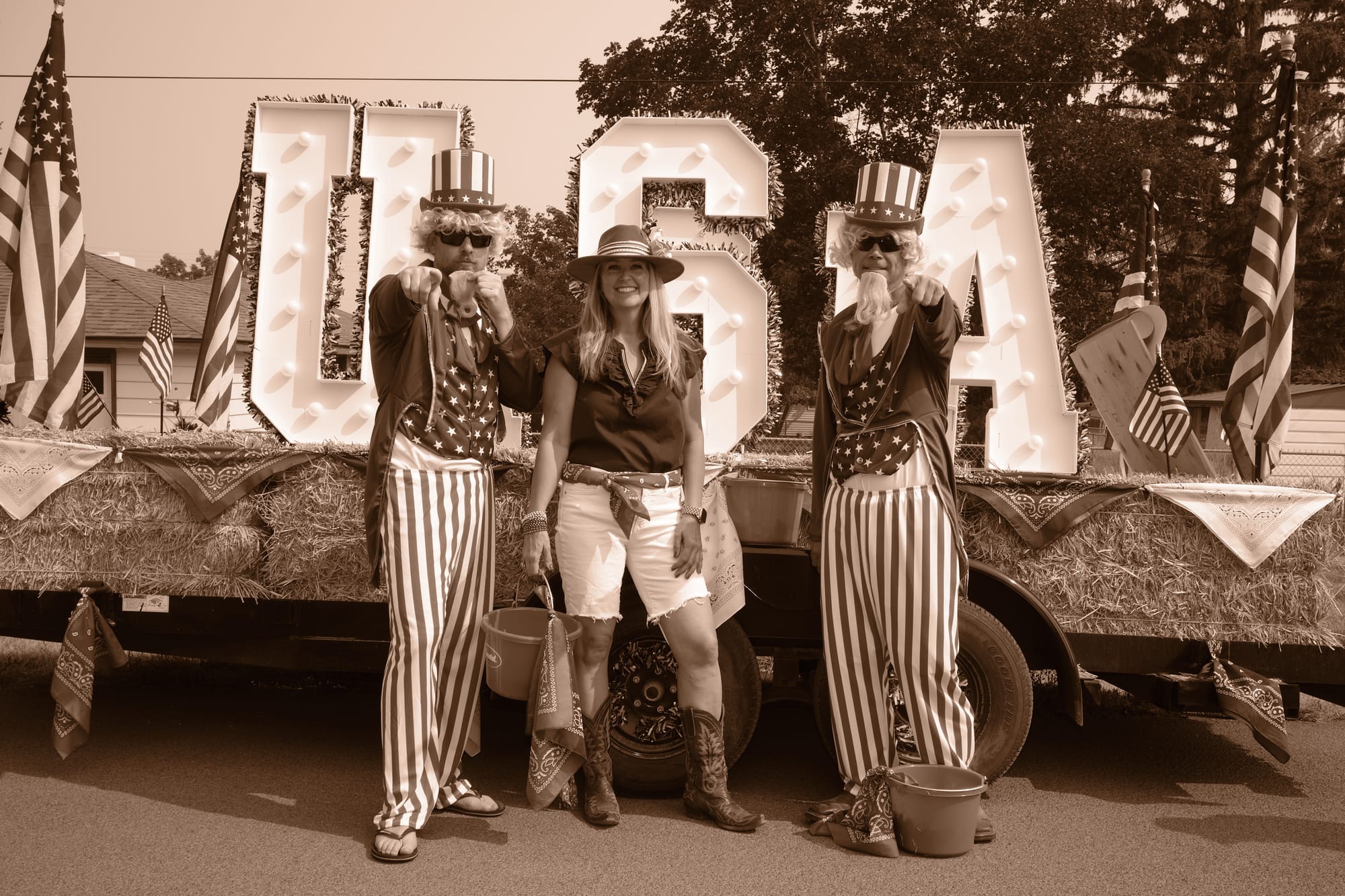
The Professional Rodeo Cowboys Association (PRCA) is the sanctioning body that standardizes the rules, events, judging criteria, and the prize money structures across member rodeos, which is most of them. Outside of that, individual rodeos differ on how they present themselves. As Yuma is home to a large army base on the Mexican border, its rodeo was predominantly about worshipping the military, border patrol, police and other first responders with a heavy subtext of far right Christian domination and a few nods to western cowboy traditions.
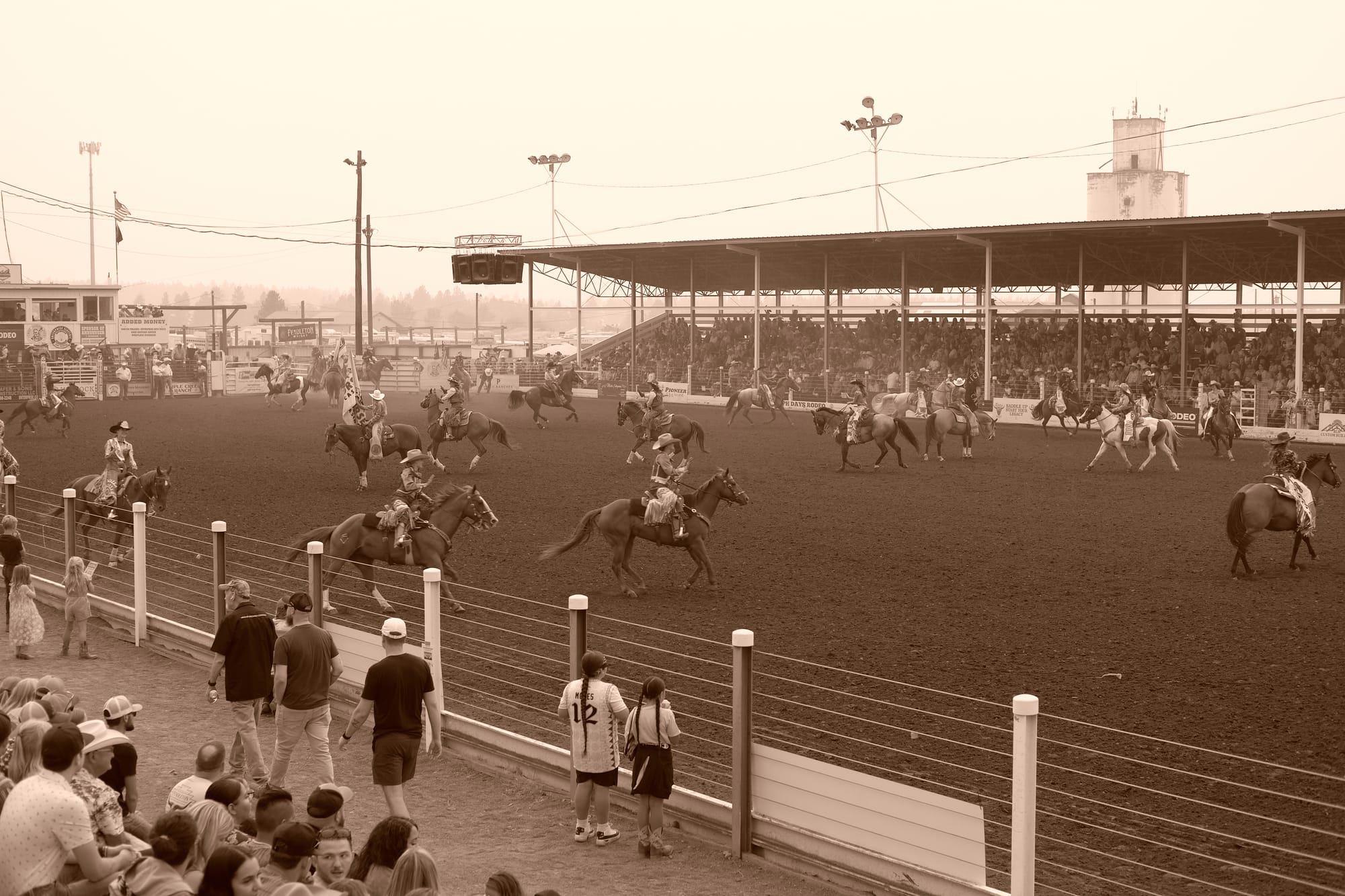
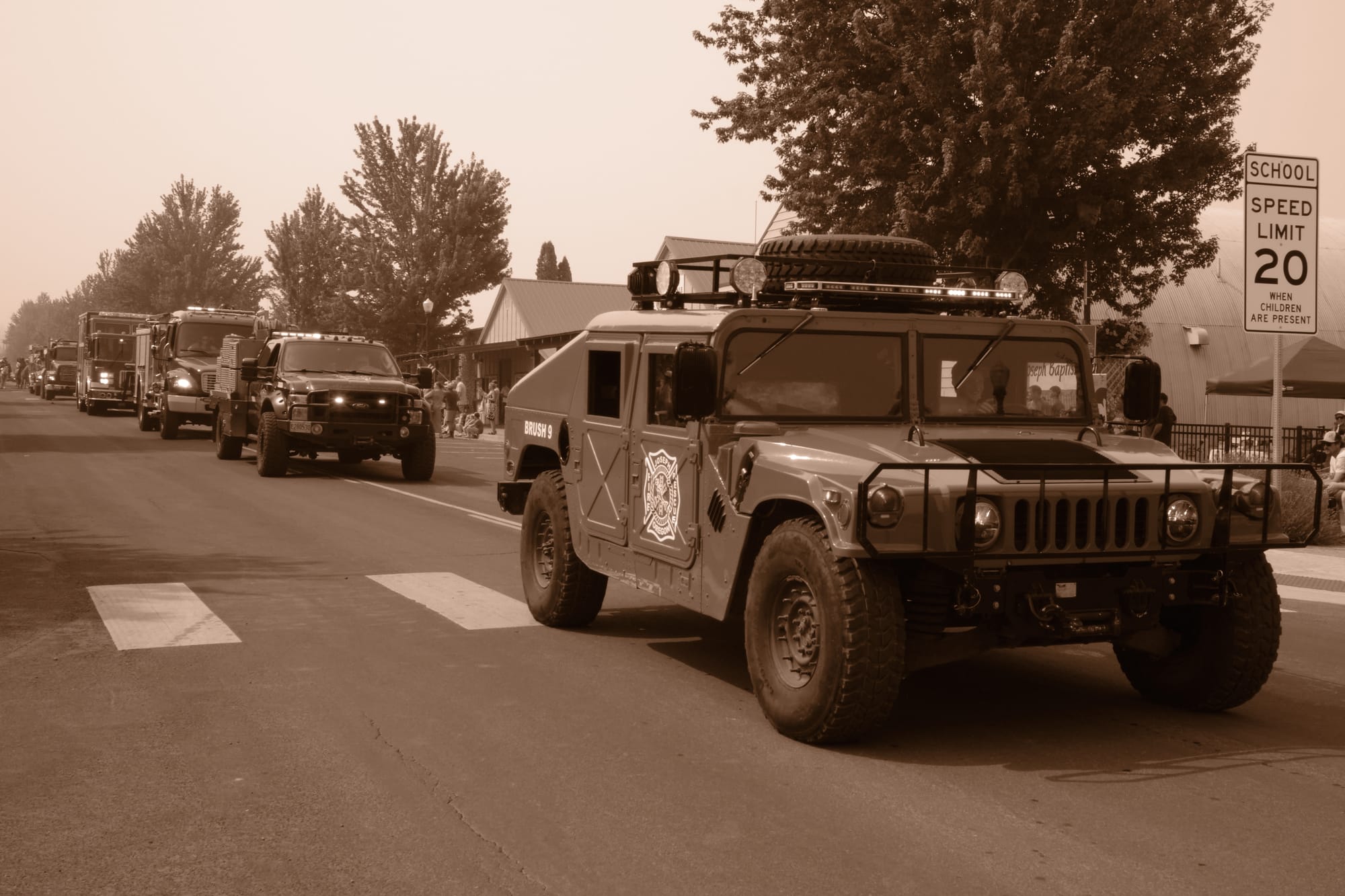
The Chief Joseph Days rodeo was much more inclusive compared to Yuma's low bar. The performative patriotism and right wing Christian blather was still over the top by any reasonable standards, but it prioritized first responders like EMS, which makes sense as we were surrounded by nearby wildfires and the arena was choked with smoke and ash.
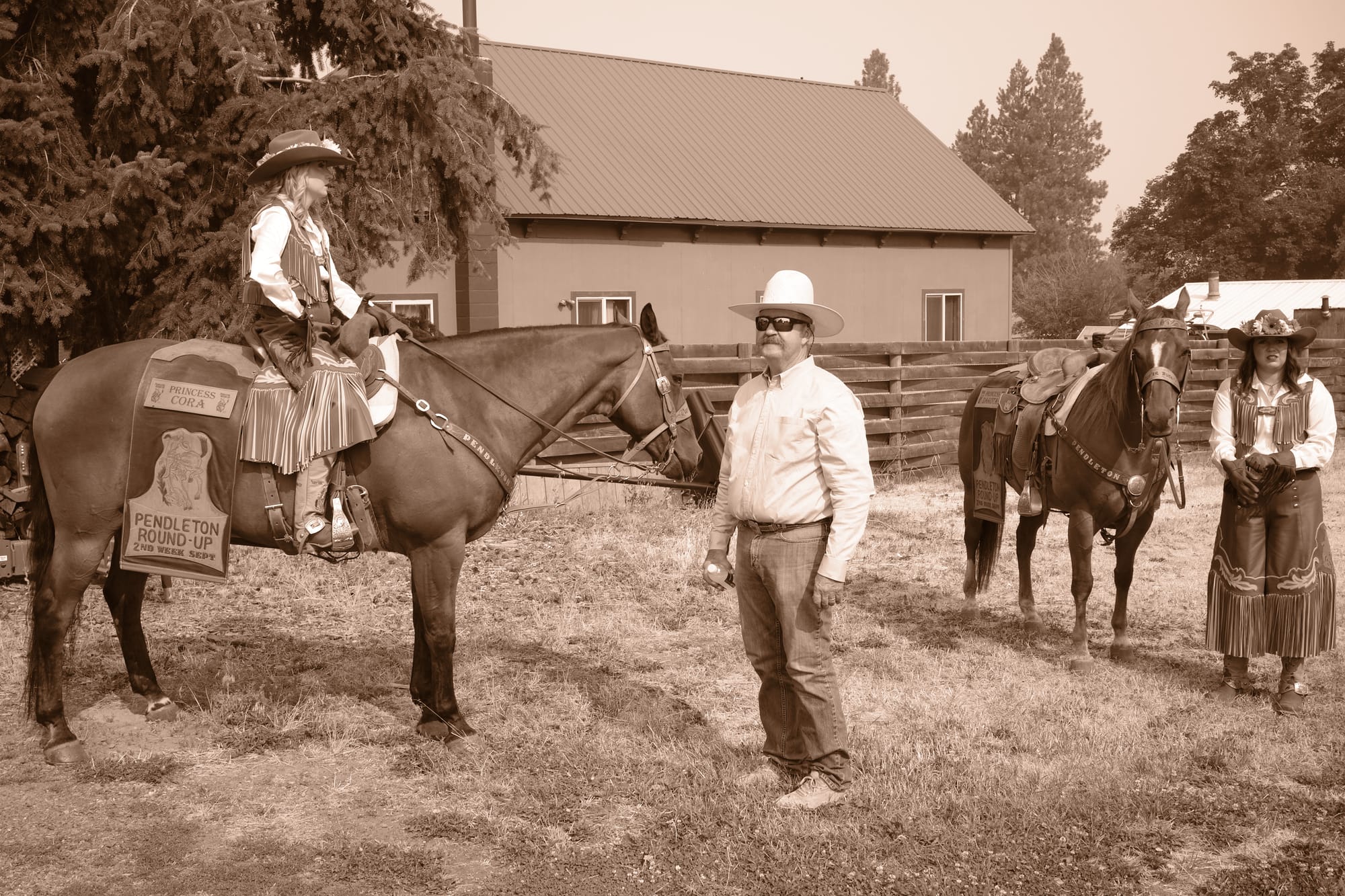
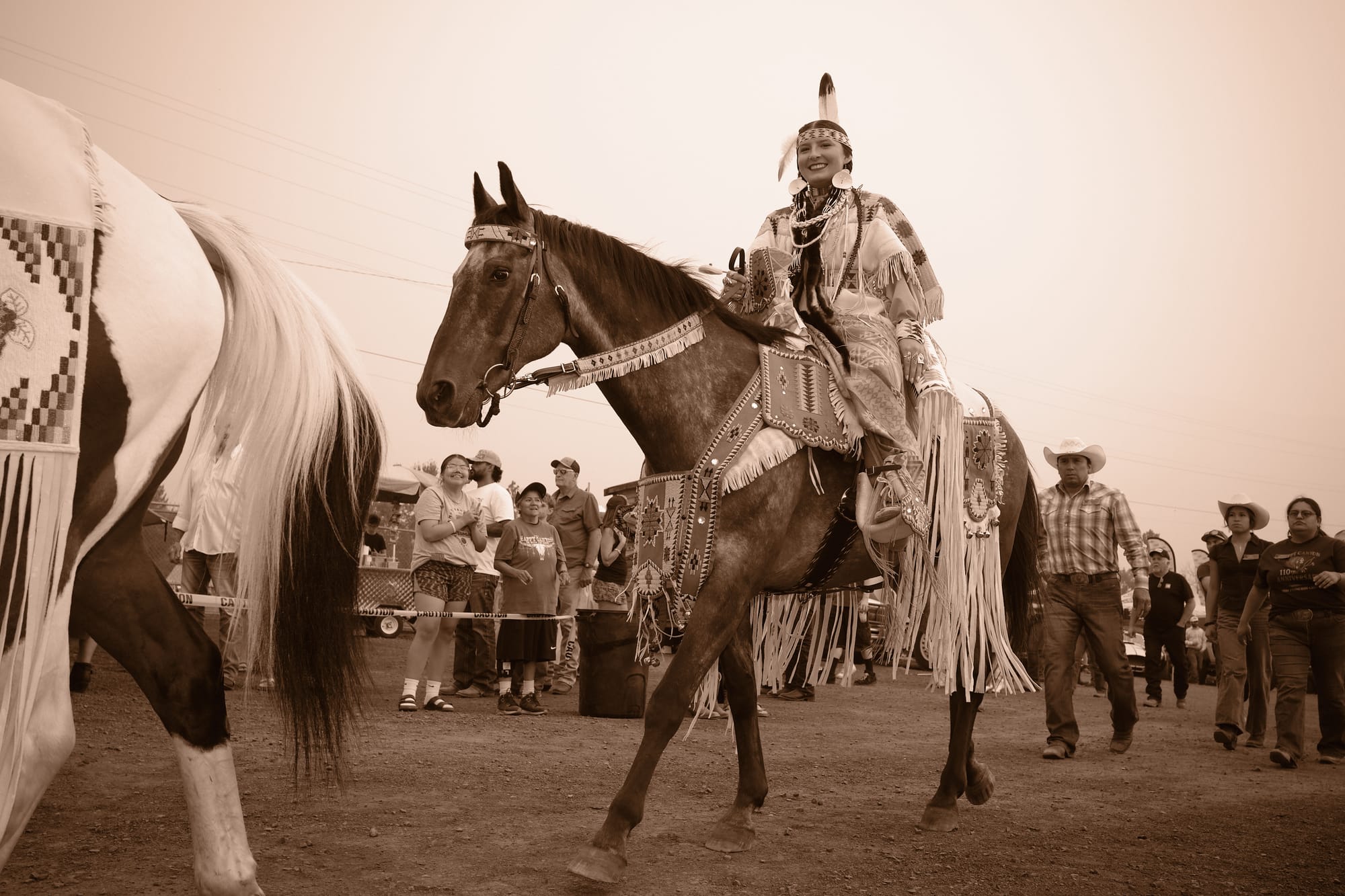
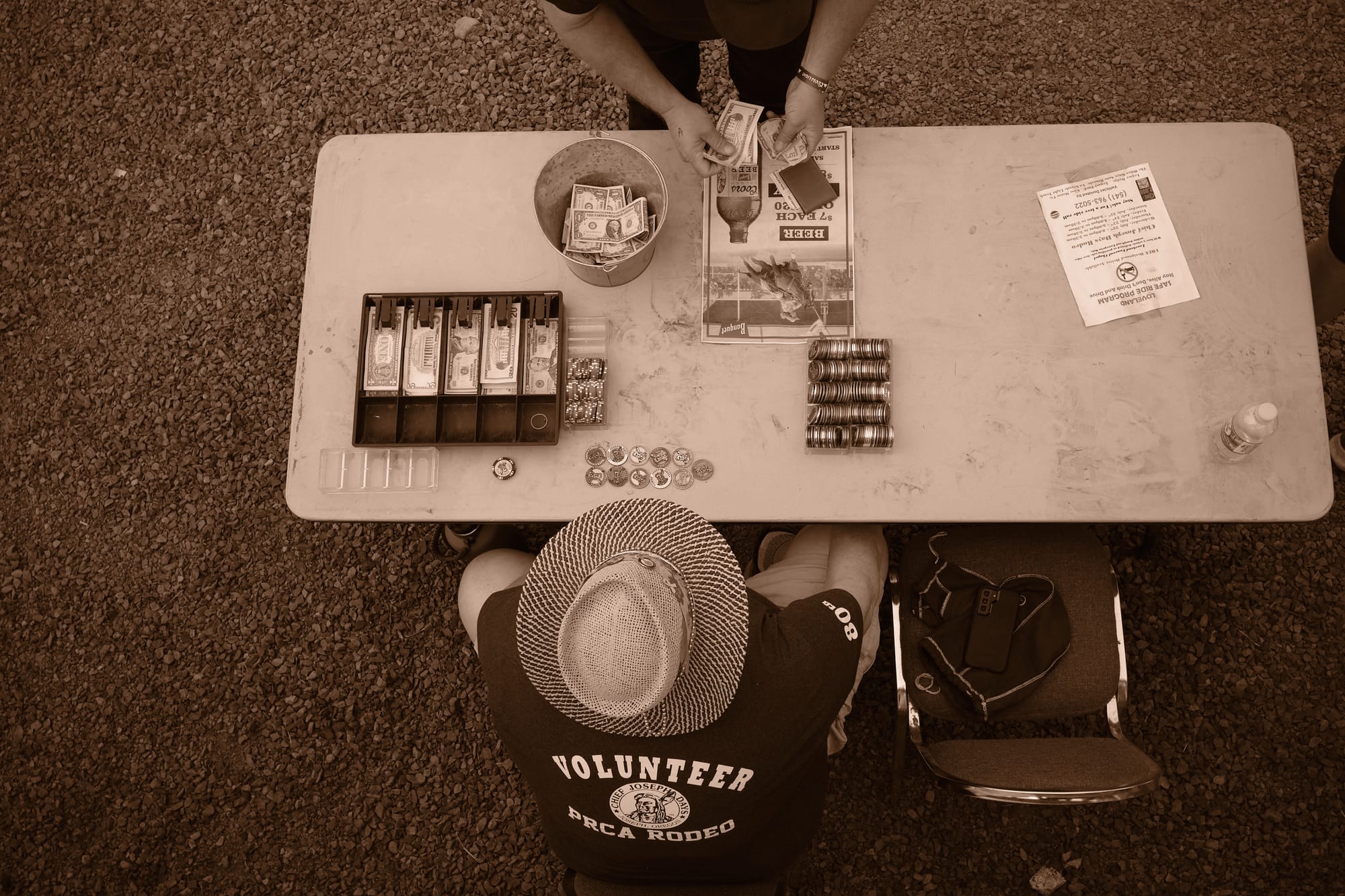
The rodeo and surrounding events do include the Nez Perce. They lead the Saturday morning parade in town and then circle the arena on horseback in full tribal regalia before the start of the rodeo. After the parade, they throw a free friendship feast for the public that includes Salmon and Buffalo, followed by a powwow.
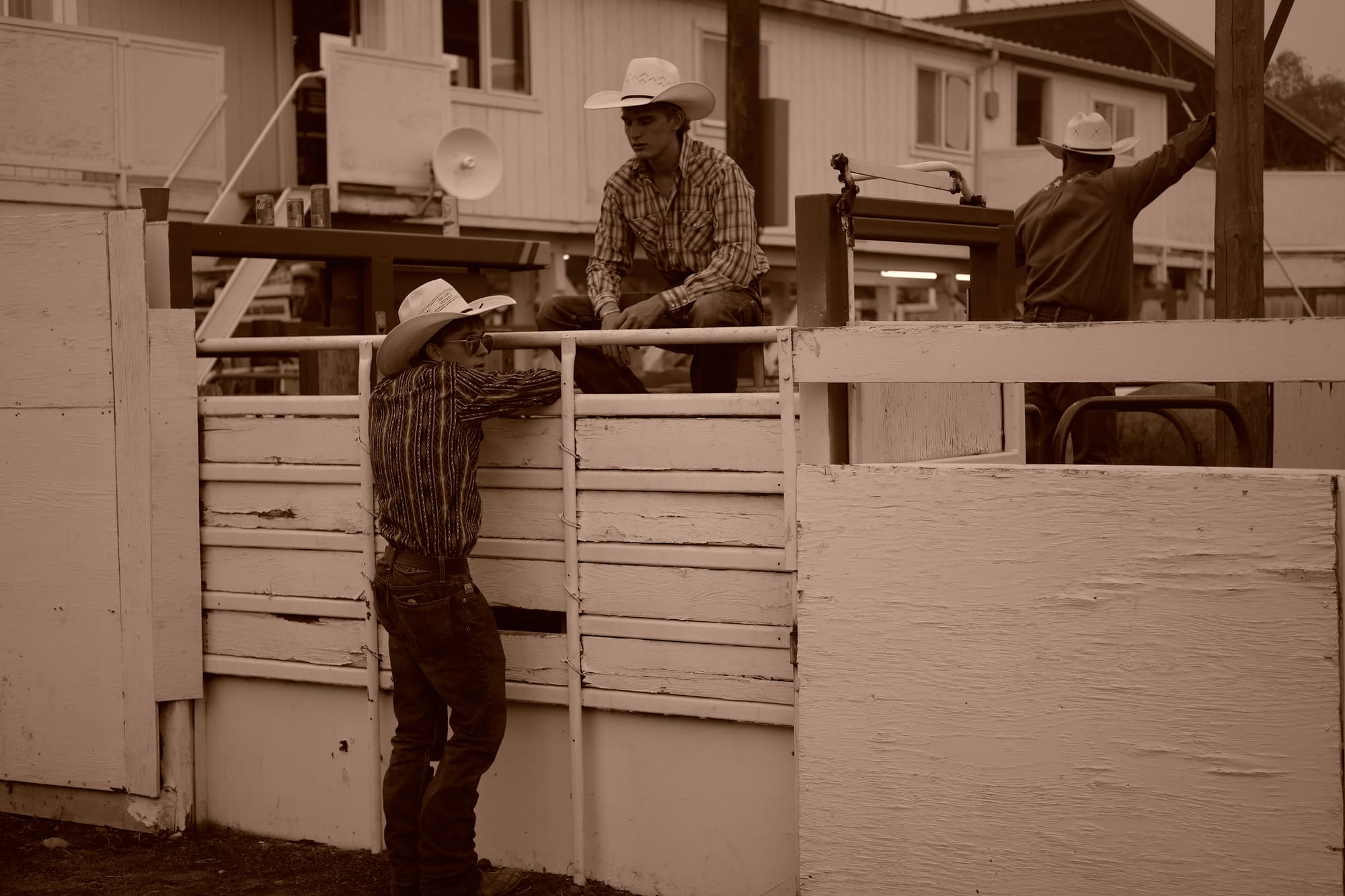
The rodeo officially begins with a long ode to first responders:
"Before the dust starts to fly, we tip our hats to the men, women, who live in a world tougher than this arena. They run toward the fire, and the danger, so the rest of us can run home. They don't ride for trophies, or the roar of the crowd. They ride for their neighbors, for strangers, for all of us. First responders are the ones who show up at the worst moments to protect life, property and public safety."
And more along those lines. So far, so admirable.
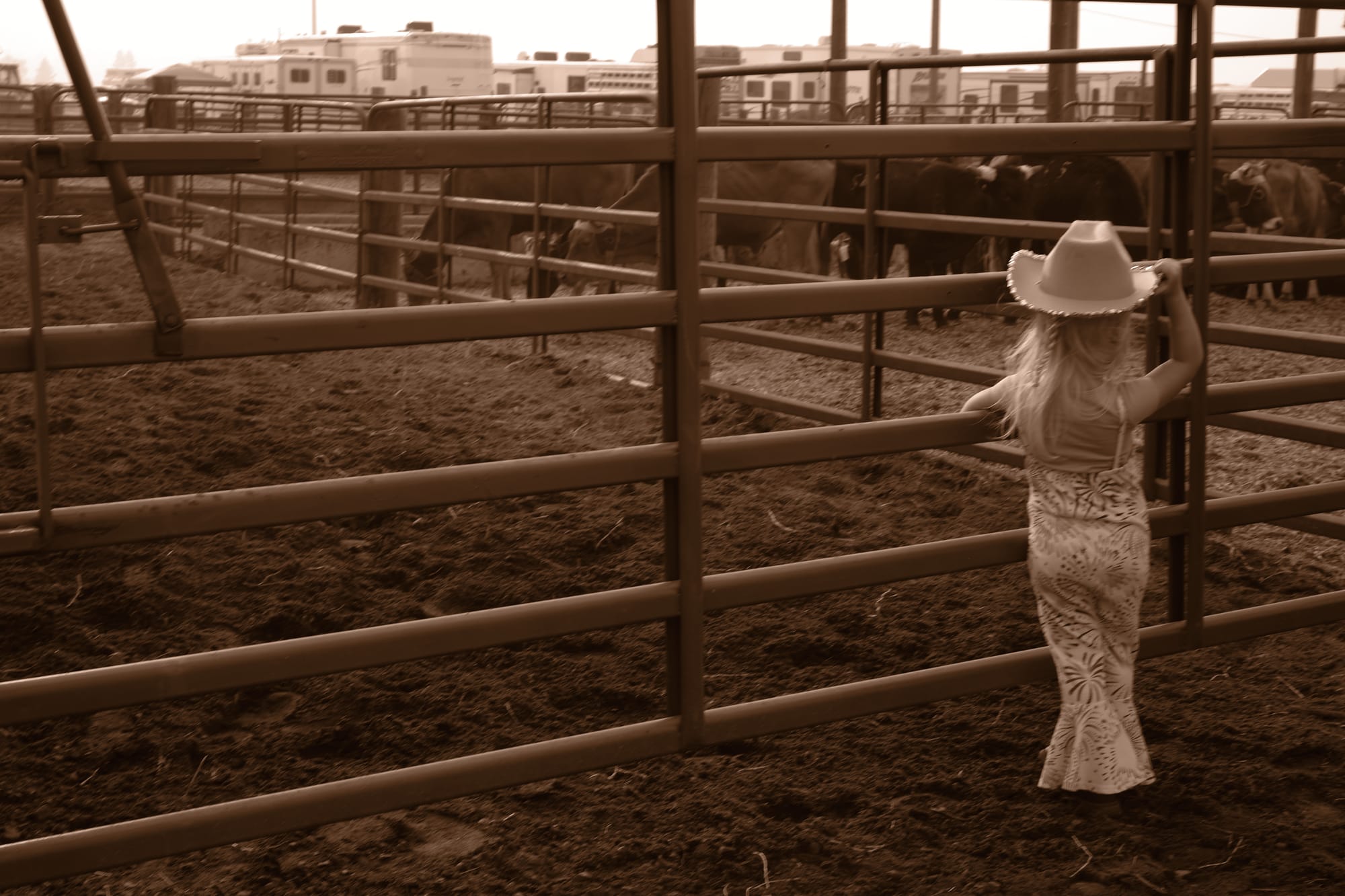
Next we're asked to remove our hats, which in rodeo parlance are referred to as "coverings," and stand.
"How many people here tonight still believe in the power of prayer? (wild applause) Tonight that prayer, along with the national anthem, is brought to you by the American Hat company."
First time I recall hearing that a prayer and the national anthem were sponsored and I am shocked, not because it's so ridiculously crass, but because now that I realize it's possible to be that shameless, I'm surprised everyone doesn't do it.
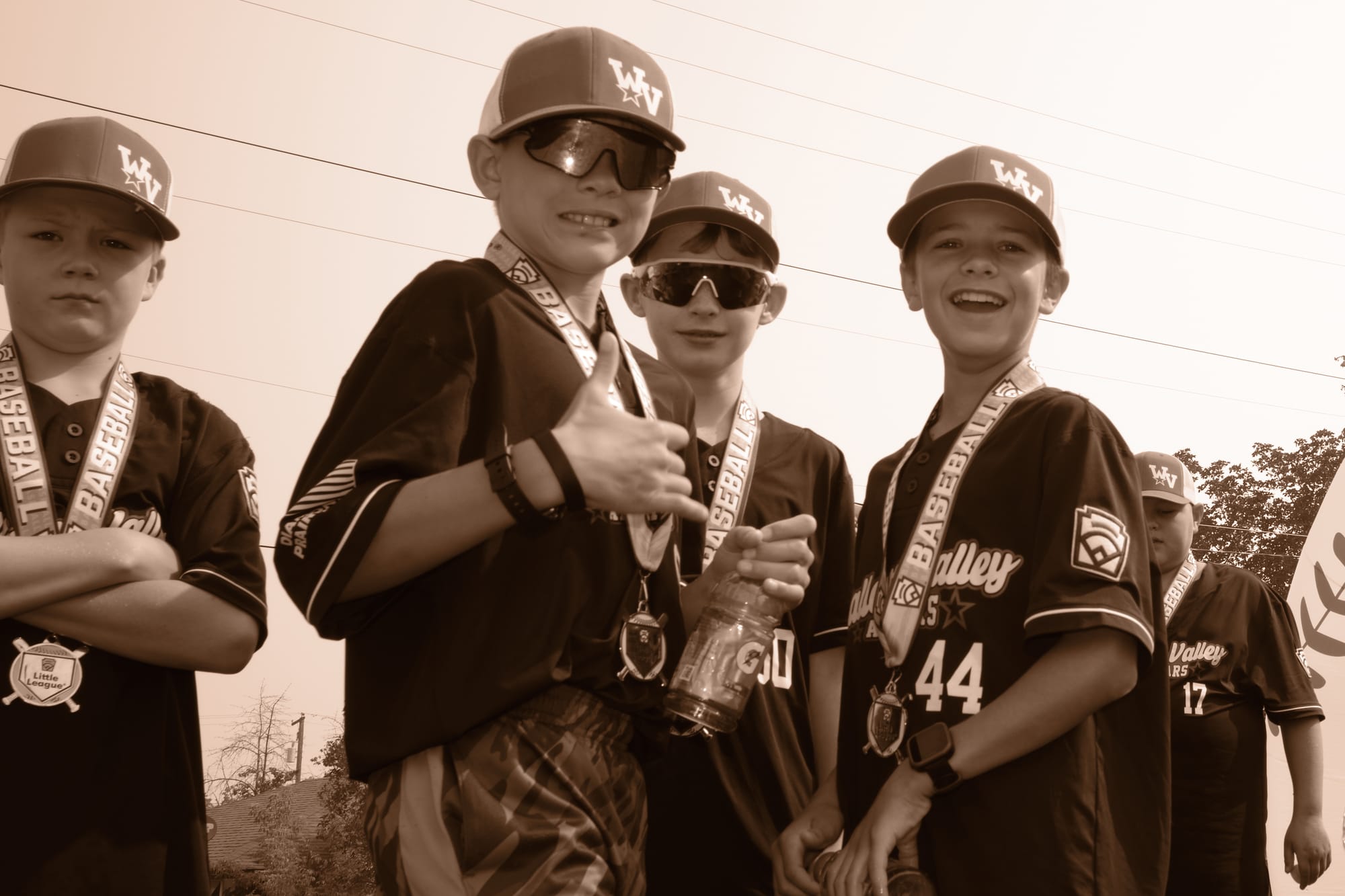
Unlike Yuma, there's nothing wrong with the prayer itself though:
"Dear Lord, we thank you for bringing us together in Joseph. We ask you to look over these cowboys and cowgirls, we ask that no harm come to the great livestock they compete on. And Lord, please hold our troops and first responders in your loving hands.Protect them as they protect us. Bless them and their families for their selfless acts they perform for us in our time of need. And dear Lord, thank you for all the blessings you bestow upon us. Forgive us for our many sins. May the Lord smile down on all of us. In Christ's name I pray. Amen."
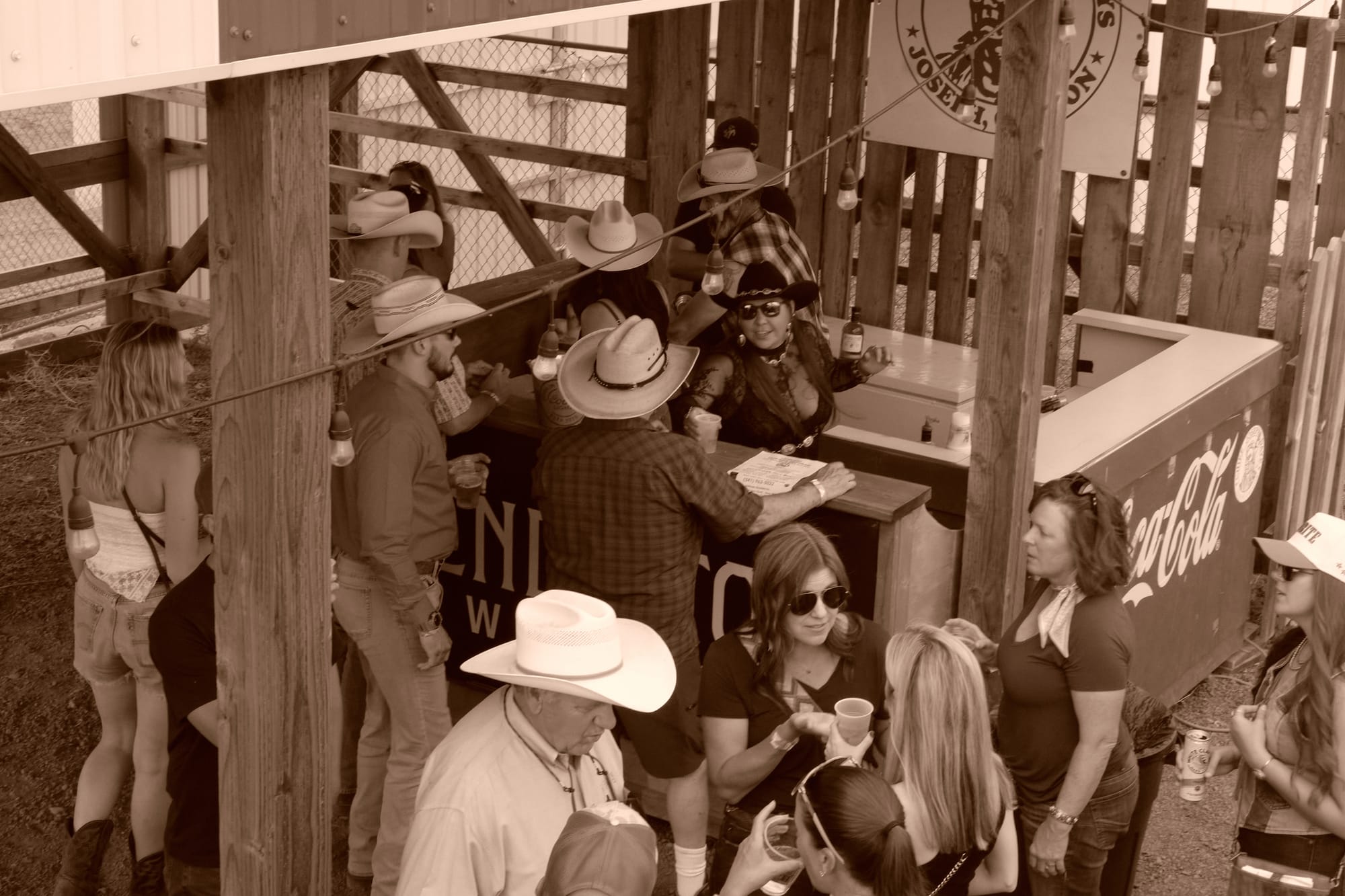
Then:
"Are there any Americans in the house? (more wild applause). Time to meet the greatest symbol in the world."
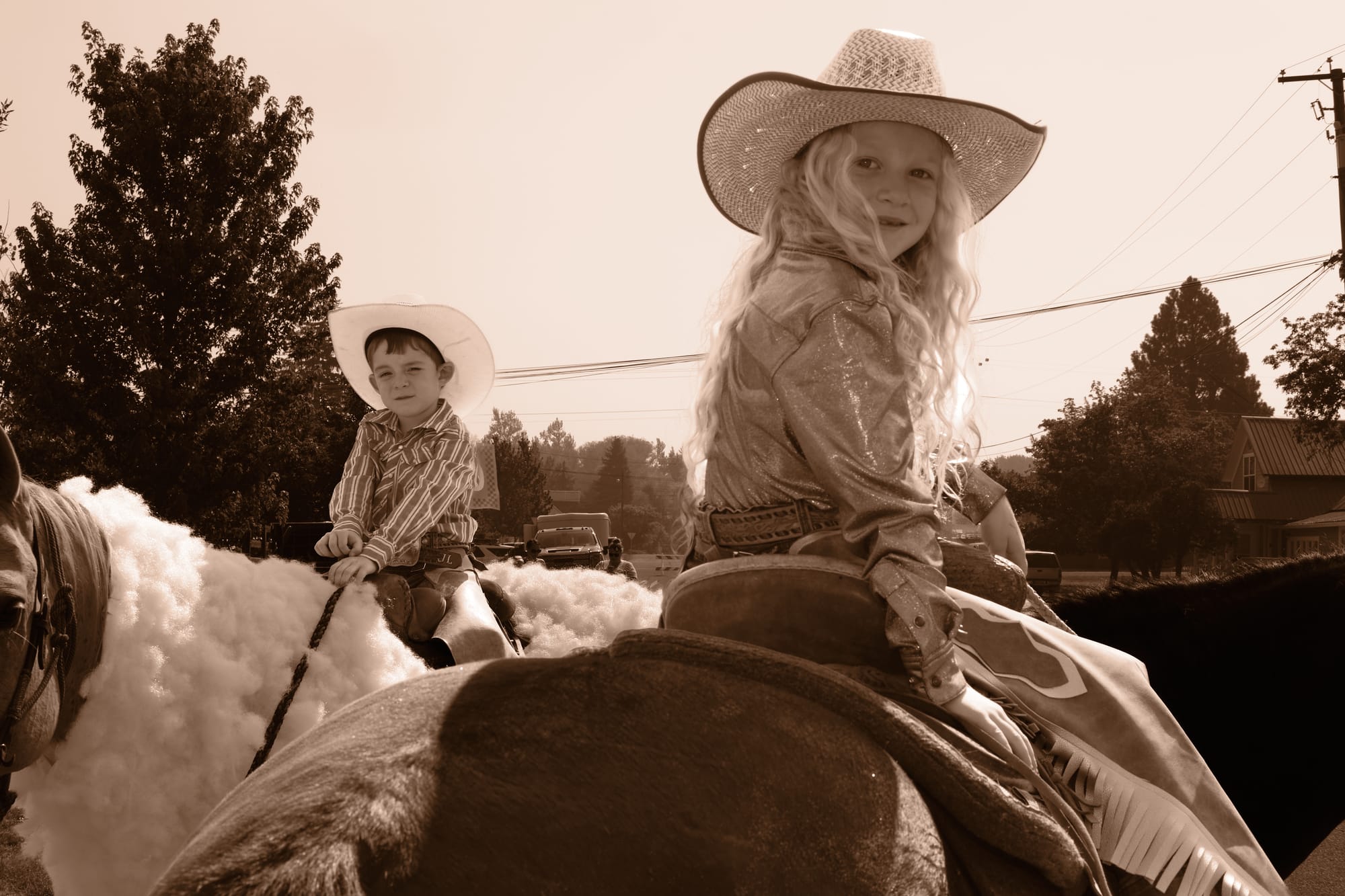
A young blonde girl on a horse with a big American flag gallops furiously around the arena as Toby Keith's "Courtesy of the Red, White and Blue (The Angry American)" blasts from the loudspeakers.
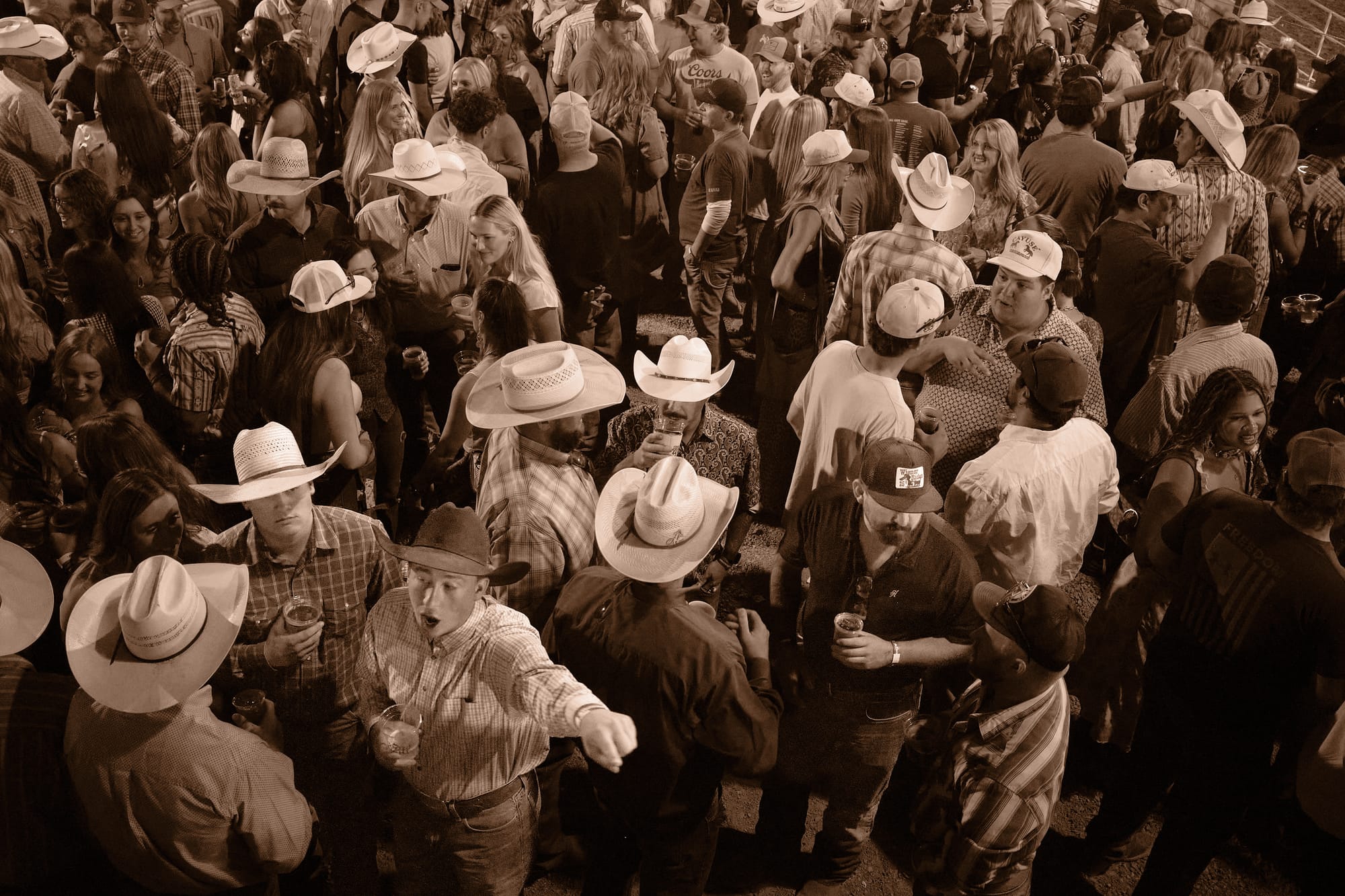
It’s unclear if he means the flag, the blond girl, the horse, or the horse shit is the greatest symbol in the world. Probably the flag. Maybe the blond. Personally, I’d be more inclined to go with the horse shit.
Nevertheless, w no e are required to keep standing with our hats off for the Toby Keith song. That's a new one for me as well. Who knew Toby Keith now comes before the National Anthem?
"Oh, justice will be served and the battle will rage:
This big dog will fight when you rattle his cage.
An' you'll be sorry that you messed with the U.S. of A.
'Cos we'll put a boot in your ass, it's the American way."
The crowd goes wild and the girl spurs the horse to gallop even faster at the "boot up your ass" line.
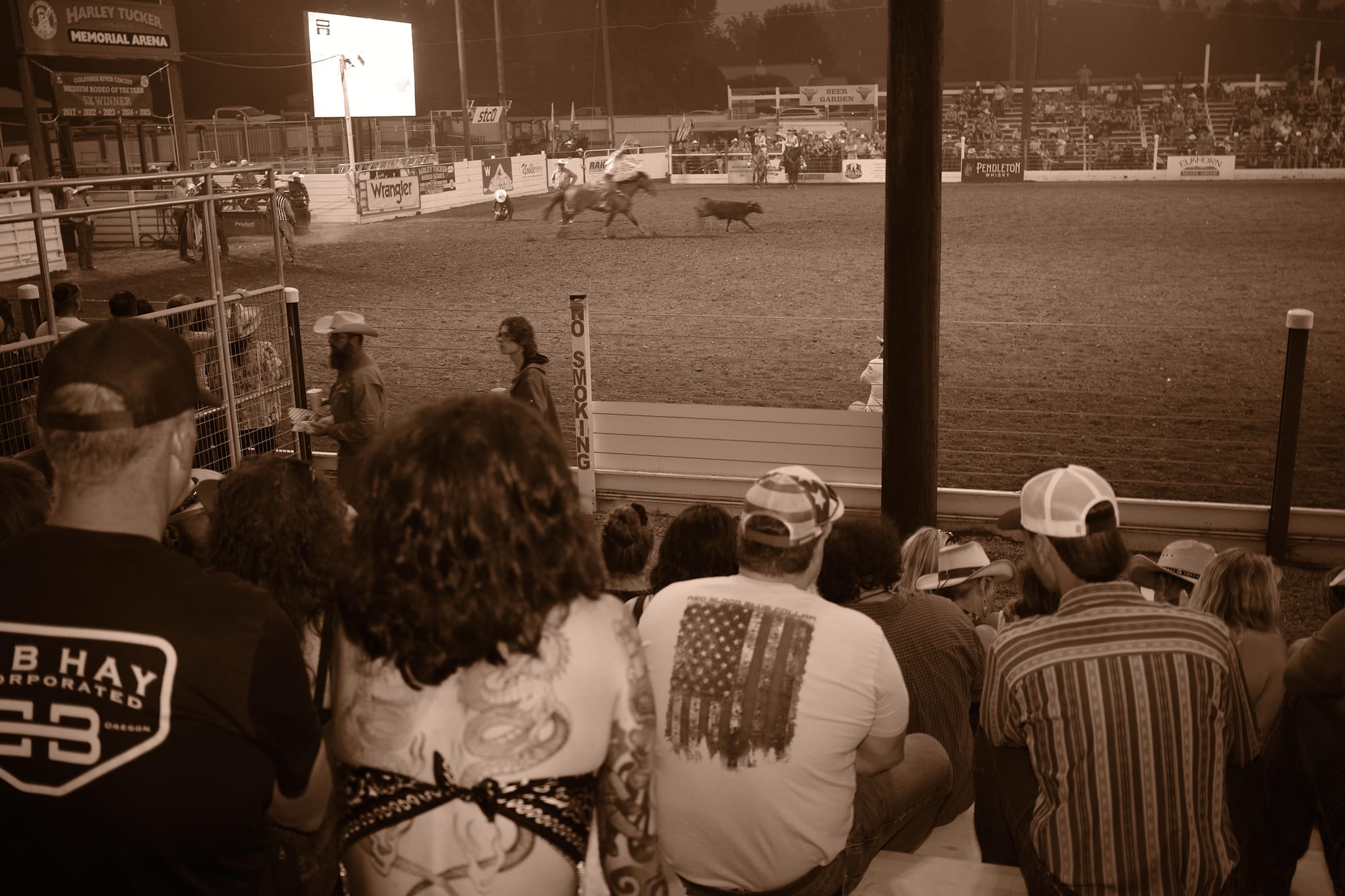
The song was released just after 9/11 and went to number one. That they are playing it at the rodeo reveals a lot about the mindset being sold to the crowd, one of grievance, self-pity, misinformation, anger, and violence against outsiders. Later there will be a video celebrating the 250th anniversary of the Declaration of Independence that makes the same point about lashing out after 9/11.
What they don't tell the crowd is that the people who got the boot up their ass, the Iraqis and Afghans, had nothing to do with 9/11. Estimates of Iraqi civilian deaths range from about 200,000 to over 650,000. Estimates of civilian deaths in Afghanistan range between 45,000 to 50,000 with a total death count of over 240,000.
So we killed between a quarter million and a million people in two countries in response to an attack that killed 2,977 people, carried out by 19 people, 15 of whom were Saudi and none of whom were from the two countries we invaded. All that at a price of over $8 trillion when you include the long-term costs of veteran care.
The national debt was 5.8 trillion just after 9/11. It's 36 trillion now. About 15-20 trillion of the debt is from those and other unfunded wars, the rest mostly for tax cuts, largely for the wealthy. Unfunded wars plus unfunded tax cuts plus interest. That's why they say we can't have decent healthcare, affordable education, housing, living wages, or much of anything else worth having.
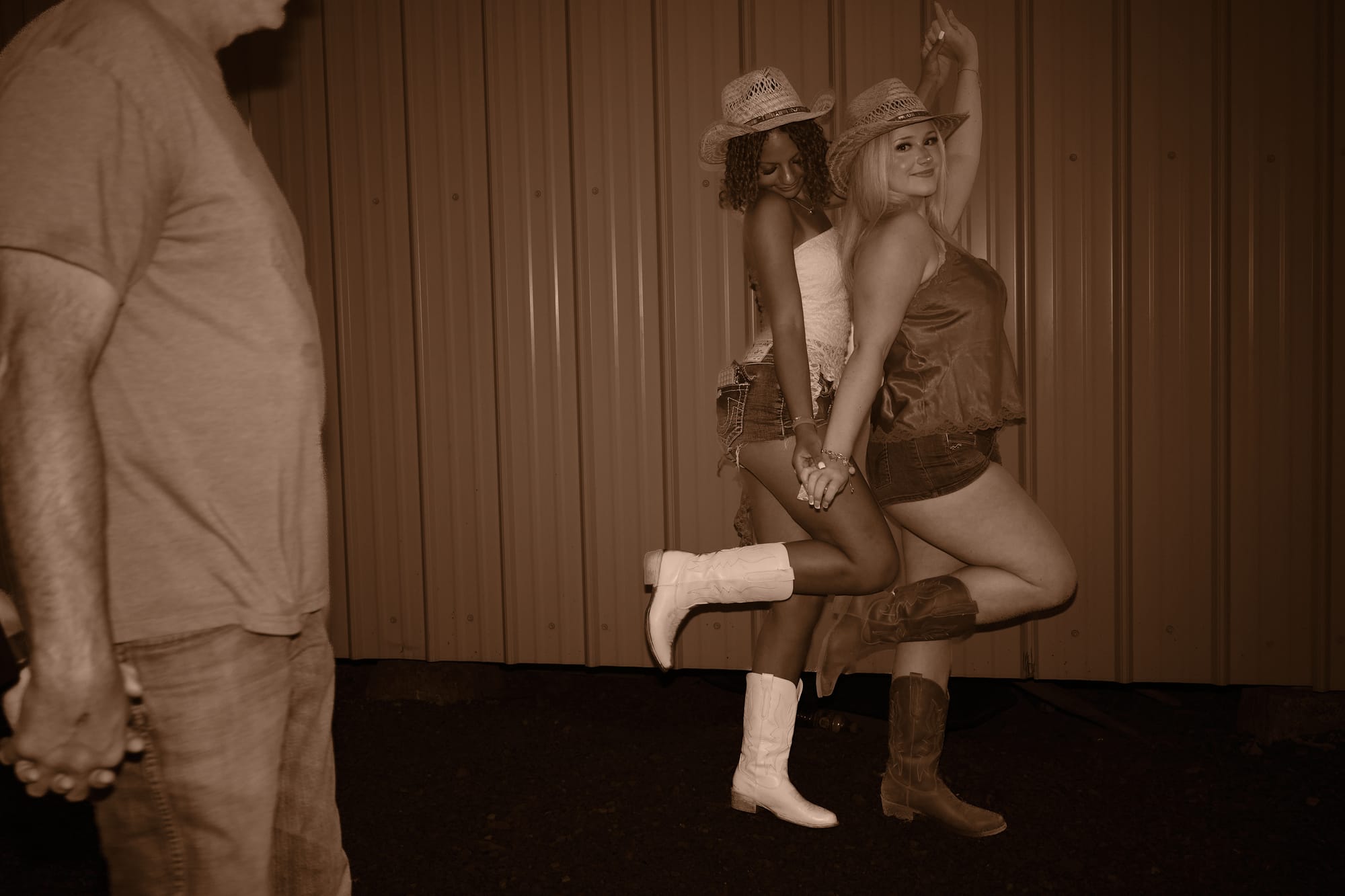
After Toby Keith:
"The national anthem, along with the American Hat company, is also brought to you by The Homestead..."
Umm kay. Later we would stand again and remove our coverings for "America the Beautiful." So essentially three national anthems. Then the video tribute for the 250th, again filled with fake patriotism and disinformation. Towards the end the announcer tries to get the crowd to do the U.S.A chant, but it seems by that time they are either worn out or have had enough.
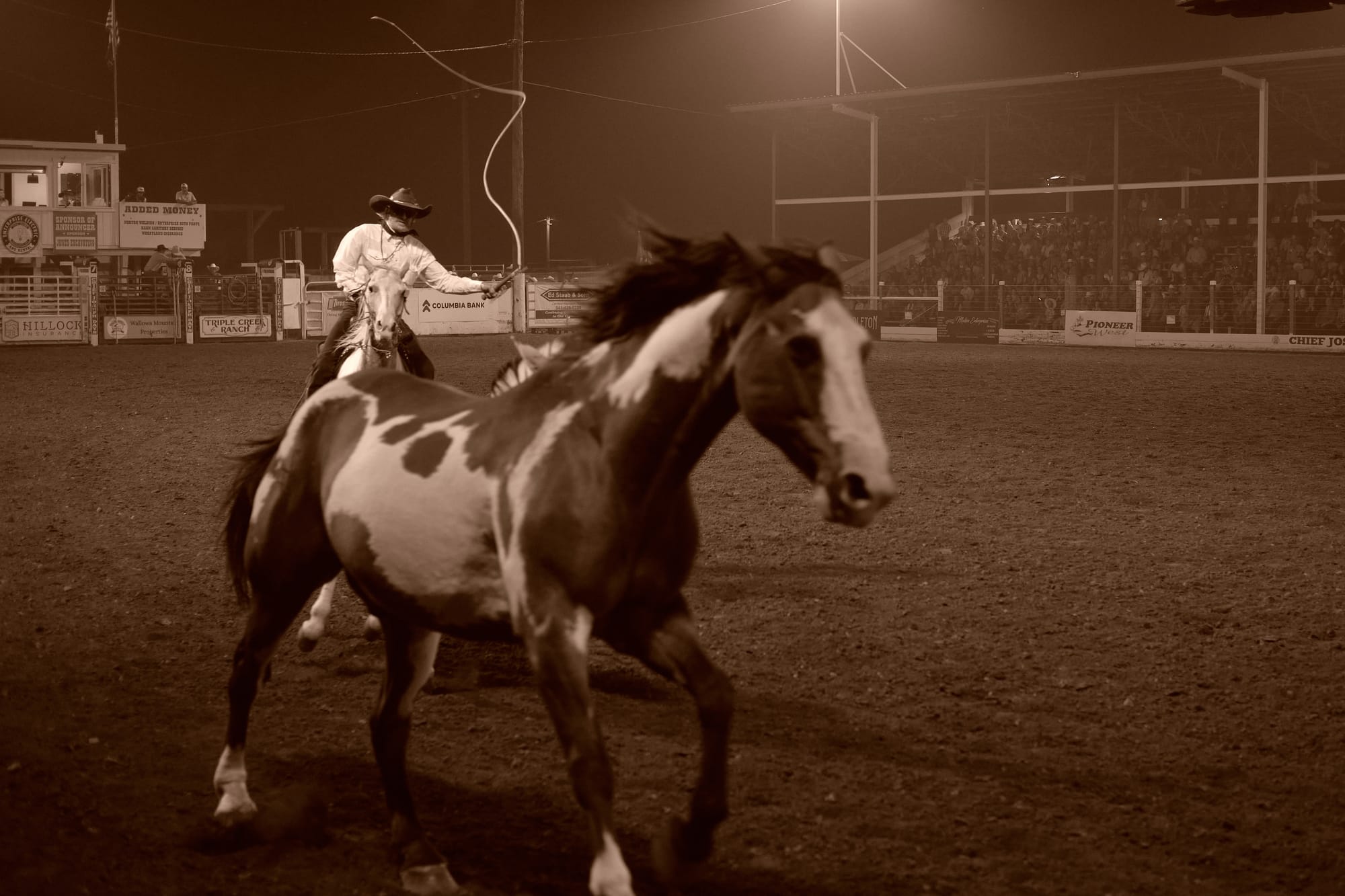
Other than all that horse shit, I enjoyed the rodeo.
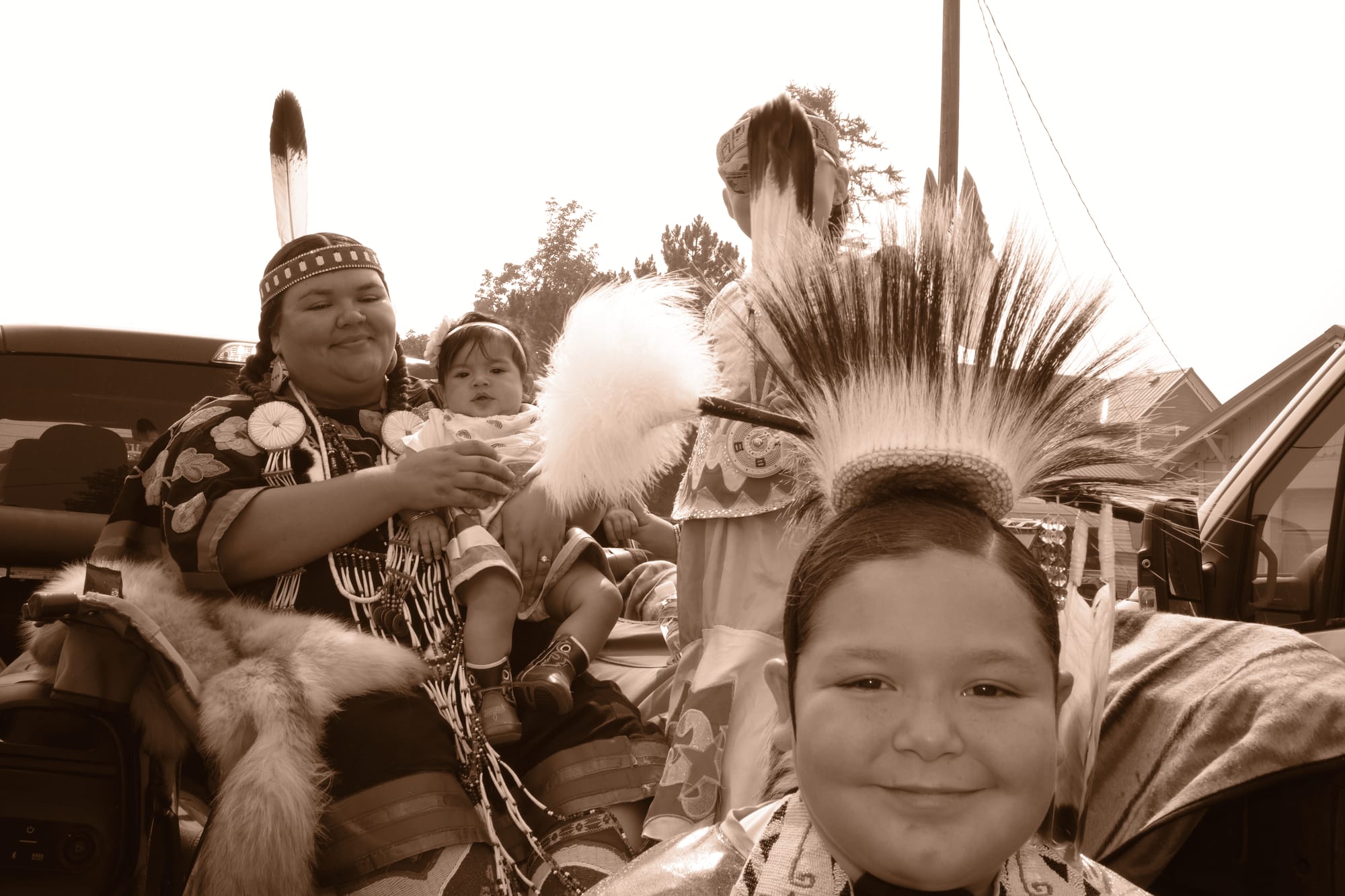
As mentioned above, on Saturday after the parade and before the rodeo, the Nez Perce invited the public to a friendship feast and powwow on some land they bought next to the rodeo grounds.
The friendship feast is based on a Nez Perce traditional religious ceremony. They had a table with a row of drummers holding feathers and singing. After each song the singers stood up, made a noise I couldn't understand, and turned around in a circle with a raised hand, which represented the turning of the earth and the changing of the seasons. On the tables were bottles of water and small bowls of potato salad, salmon, buffalo meat, hot dogs, strawberries, greens, watermelon, and fry bread. Behind that were tables laid out with big serving dishes of the same foods as well as cookies, chips, and sodas.
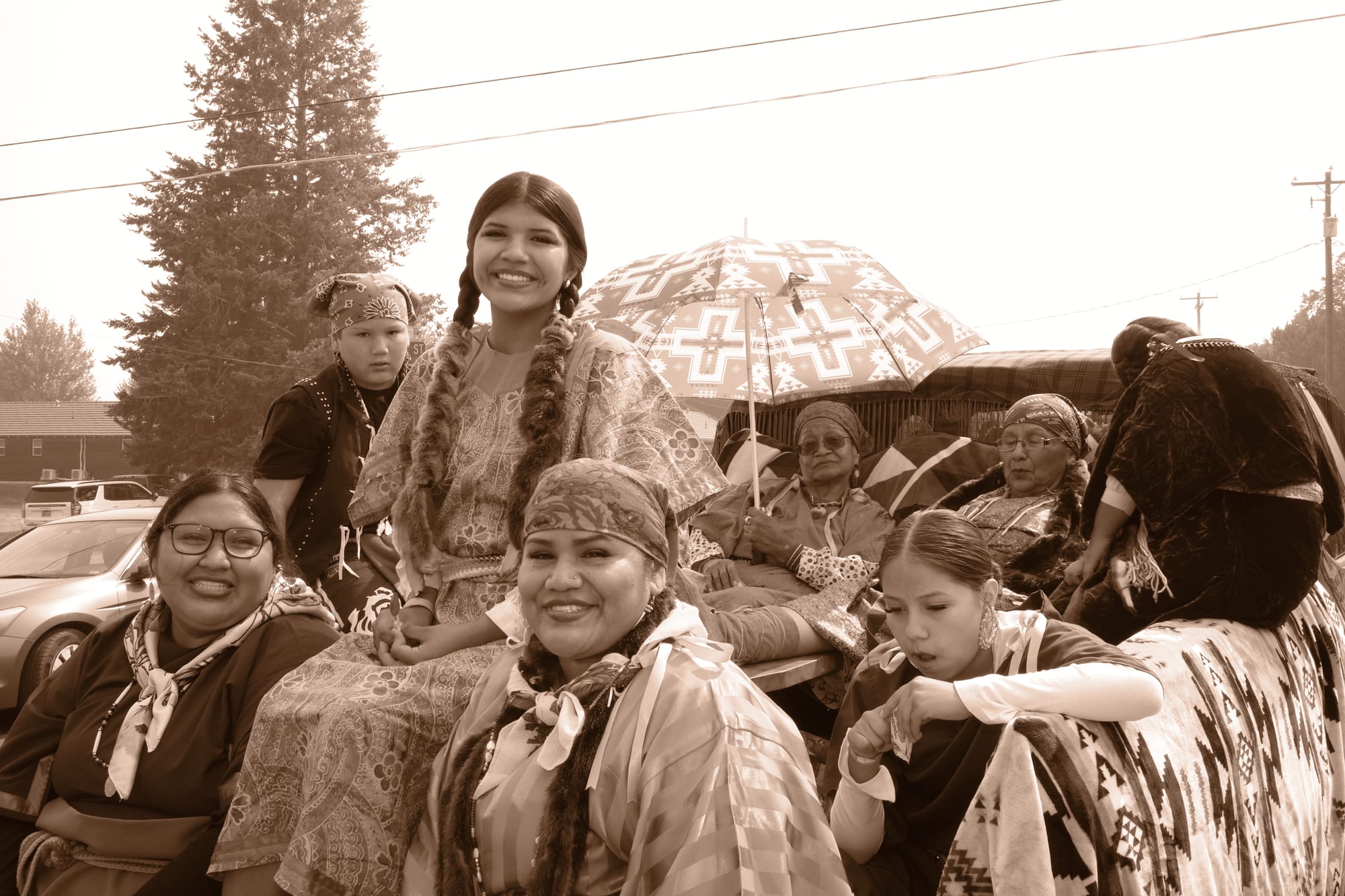
I was a bit late and the drumming and singing had already started, so if they explained anything about it being, or being related to, a traditional religious ceremony I missed it, but I'm sure it was.
The traditional religion is called the seven Drum Religion, the Longhouse Religion, or the Dreamer faith, though I'm told the terms are not quite interchangeable and that they don't really consider it a religion as we think of the term, but rather a way of life based on nature and its rhythms and needs.
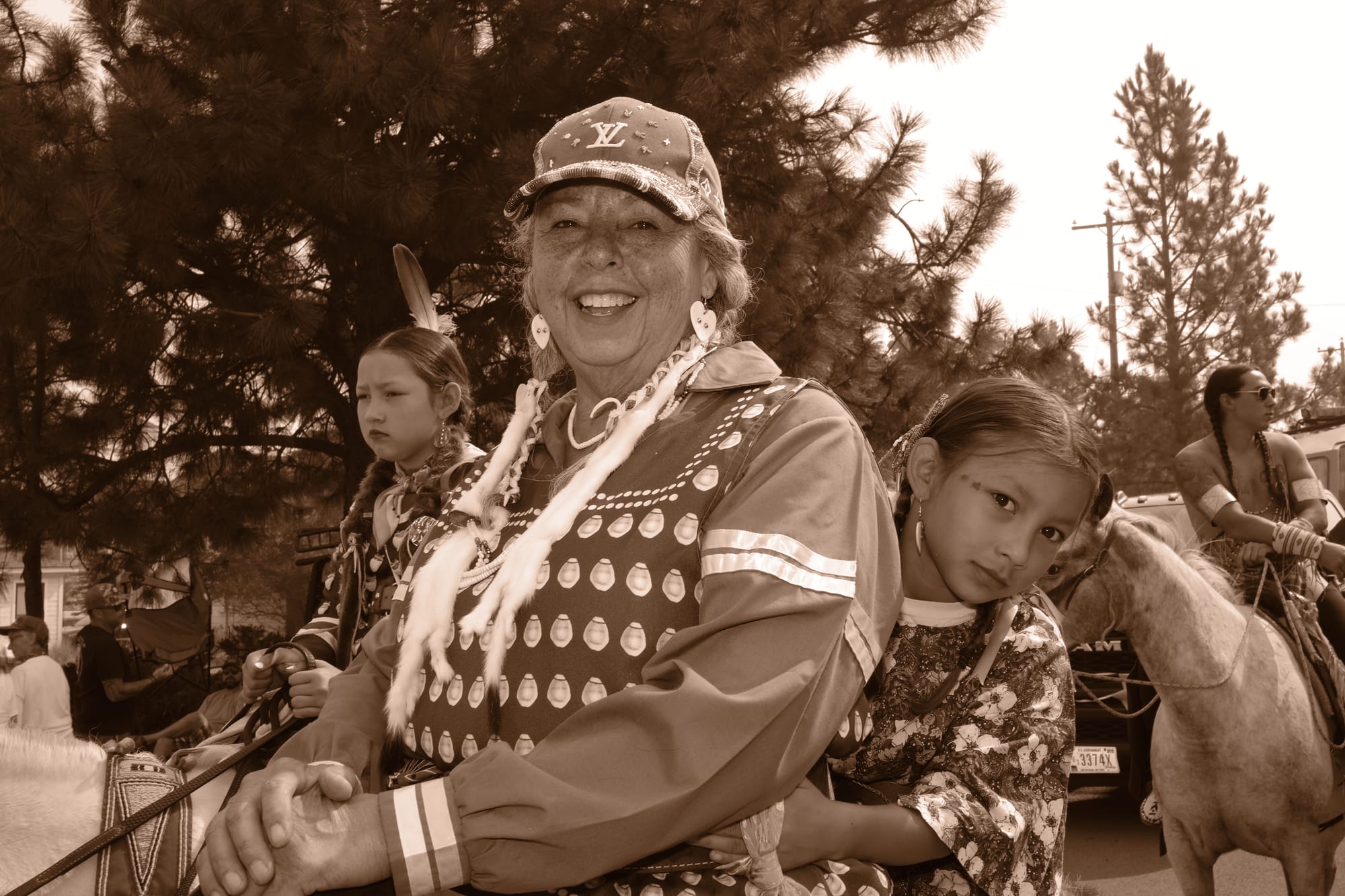
The seven drums in the ceremony represent life. The drummers hold feathers that represent the flight between human and spirit worlds. The songs were received through visions and dreams. The order of the meal follows the order that the foods become available in the natural calendar – first water, then roots, salmon, game, and berries. They see the earth is a living body, and believe humans have the obligation to keep it healthy. They see themselves as a part of the earth, and the earth as part of themselves, not something to be conquered or tamed. The ceremonies are designed to maintain the relationship with the natural world across not only living generations, but also across the boundary between the living and the dead.
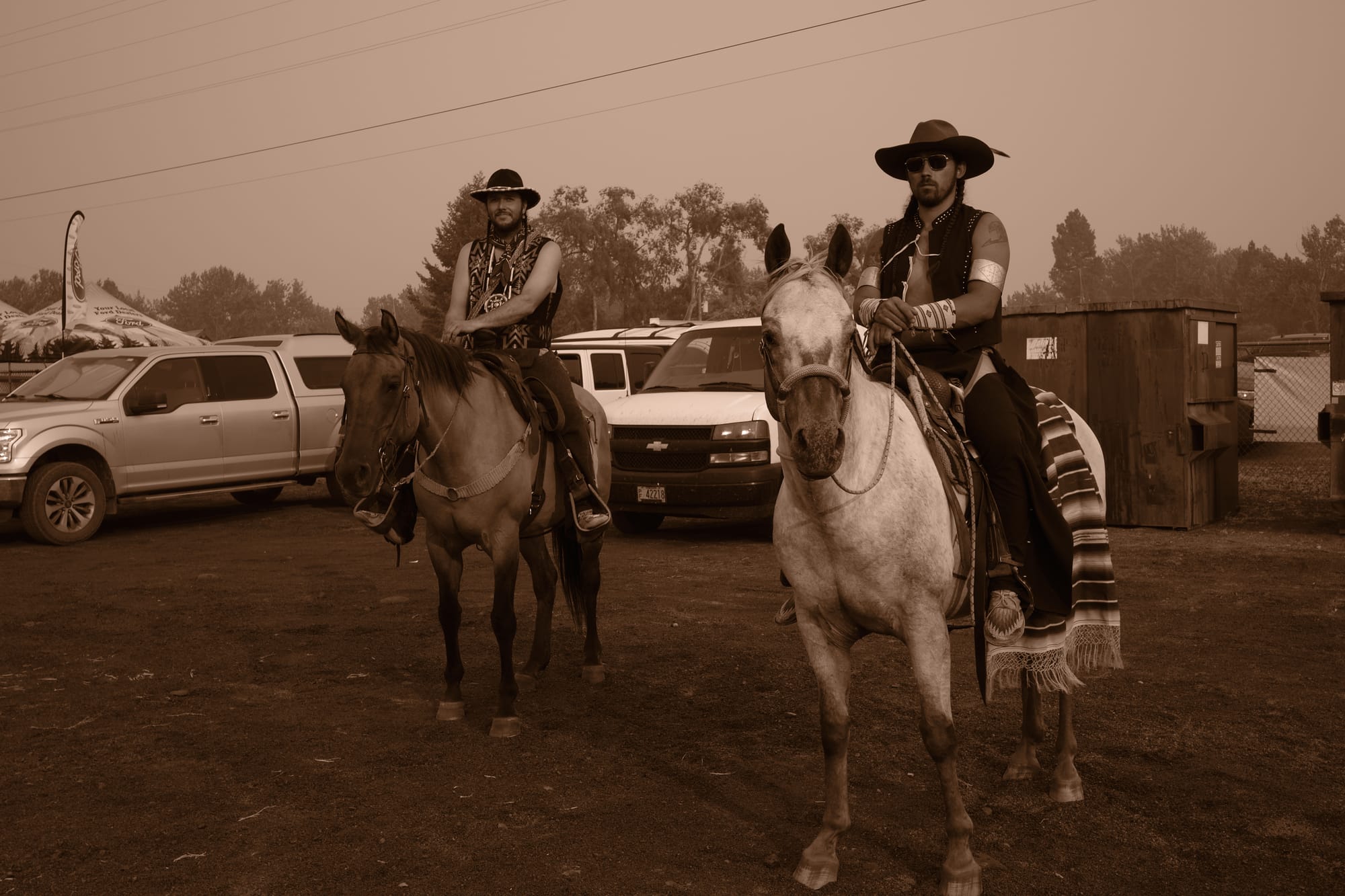
When the drumming was finished, the speaker alluded to those things and emphasized care for the earth and sharing with friends and family. When I was driving back to camp after the parade I stopped and spoke with a guy who was helping set it all up. Turned out he was a white guy who had married into the tribe. I asked him how much the meal would cost and he said it was free. I said, wow. Fresh salmon and buffalo with several sides and dessert. They could have charged $20 and no one would have blinked. He said that all the food had been donated. Maybe so, but charging for food at a friendship ceremony is not their way. After the meal, people were invited to stand up and say whatever they wanted to say. One man from the main reservation spoke of family and friends and the history of the place, how it meant so much to be able to return to their ancestral homeland and share food and music with the tribe and the guests. But it was hard to hear as most of the guests were talking loudly amongst themselves.
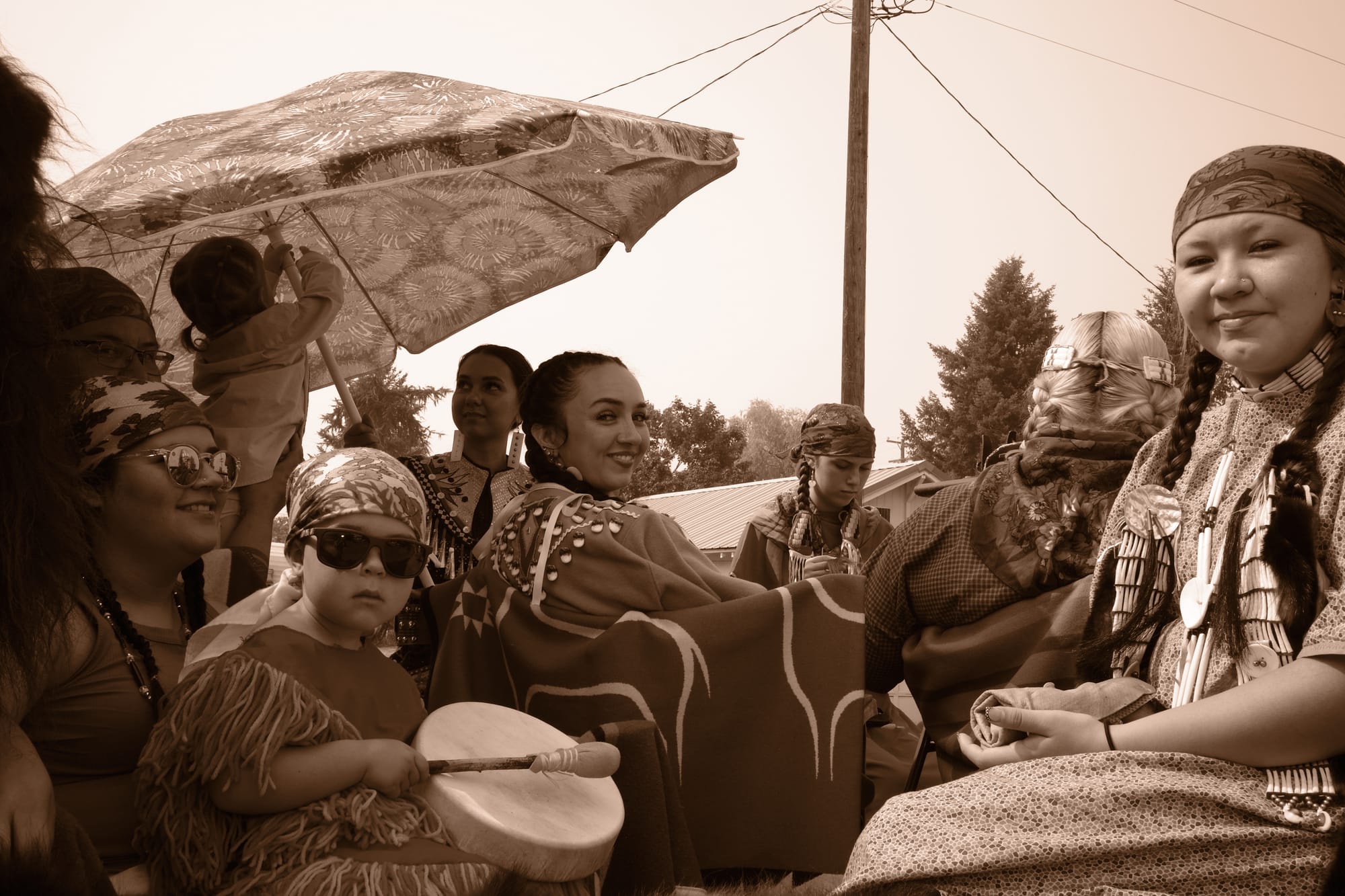
A powwow followed. I'll have more to say about powwows in another piece, so I'll leave it at that for now. Suffice it to say that a powwow consists of people in Indian regalia making music and dancing, the kind of activities the U.S. government tried to criminalize with the 1883 Code of Indian Offenses.
The 1883 Code of Indian Offenses, as well as other laws aimed at the Indians, was designed to outlaw communal and reciprocal ways of life and replace them with capital dominant economics. Only individuals could own land. They had to use money to buy or sell things or go into or repay debt. Things like friendship ceremonies with their free food, communal drums and dances are antithetical to that.
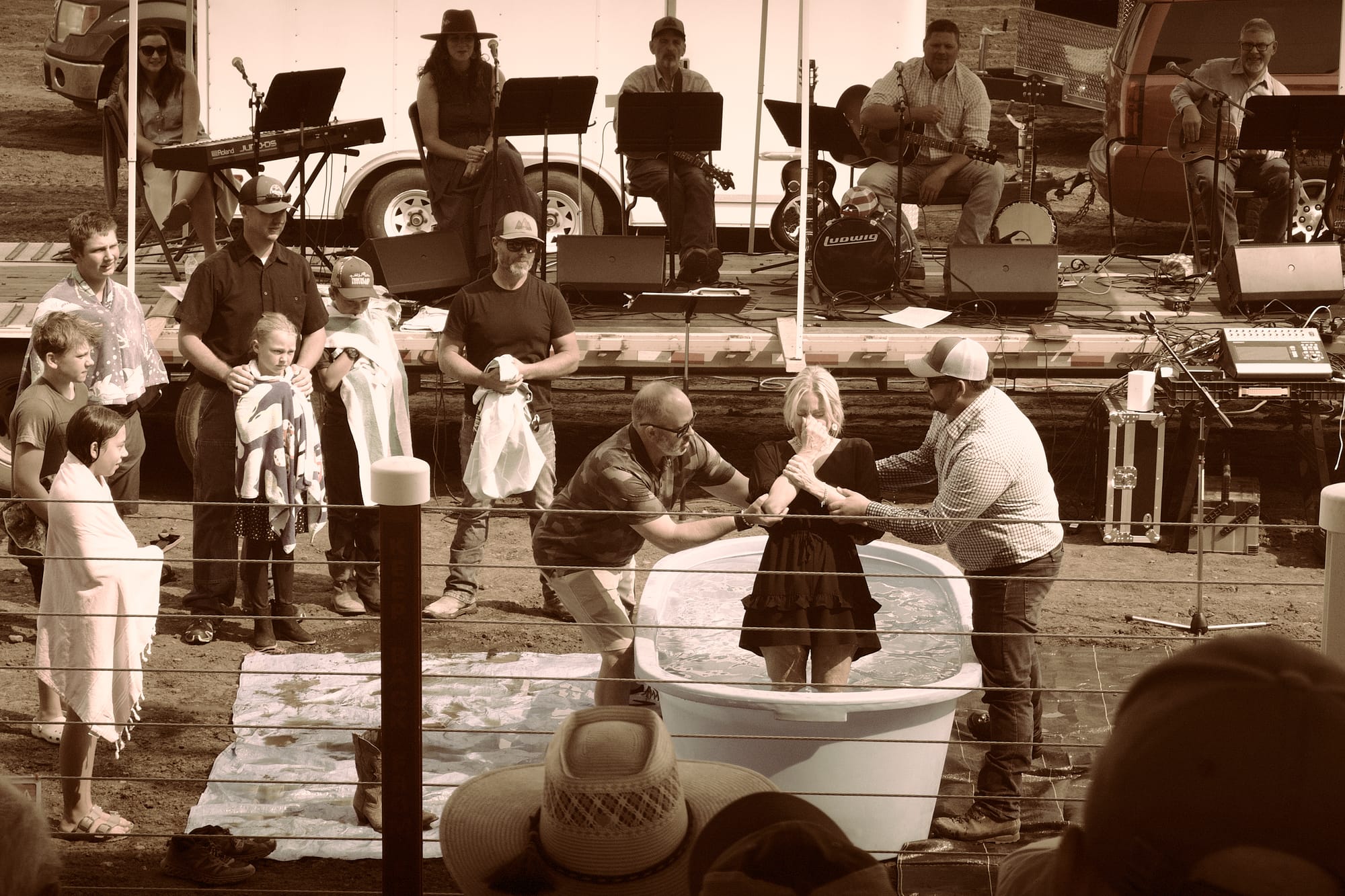
The last event of the rodeo, at least the two I've attended, is Cowboy Church. Unfortunately, I missed the one in Yuma as I hadn't yet picked up on the fact that the Christianity they were preaching was of the far right dominionist variety, the kind that wants to take over all societal institutions, especially the government, and make the U.S. a right wing Christian dictatorship. I figured it would be some happy cowboy themed horse shit and that it was directed by the PRCA. But no, turns out it's just a local church the local organizers pick to do the service and, at Joseph anyway, the only difference between Cowboy Church and regular church is that it takes place in the arena.
I'm not sure what denomination the church they picked for Joseph is. Baptist, I'd guess judging by the big tub of water they used to baptize people, but I think other evangelical churches do the same thing.
It turned out to be more a concert than a church service. We were asked to stand while the five piece band performed from a flatbed trailer. They played five very long songs before the sermon, and two more after. They weren't bad, but standing that long is painful for me and always has been. I can walk all day, but something about standing in the same spot just kills my legs. For that reason alone, I would never go to a church like that, even if I were the churchgoing type. But that's just me, and a lot of other old people I suspect. The service was very well attended. Unlike most church services I've been to in recent years, the audience was almost entirely under fifty, most in their thirties or early forties, and quite a few teens and twenty-somethings. Usually only old folk fill the pews, and “fill” is an exaggeration.
The pastor was affable and the sermon was good. He had a beard and preached sitting on the edge of the flatbed trailer in boots, blue jeans, and a checkered shirt and a trucker style hat. The sermon was commentary on John 5:1-9, which is about an invalid trying to get into a pool of healing water but healthy people always get there first, but then Jesus comes along and heals him. The preacher made up a lot of details to flesh out the story, but nothing that violated the spirit of the tale.
Surprisingly, his message was that if you were sick, old, or dying you couldn't count on Jesus to come along and do anything for you. Faith in the Lord would definitely lead to rewards in heaven, but here on earth you can't count on any kind of miracle or monetary gain from your faith. And all those people Jesus healed died eventually. He was making a point, not a promise.
Perhaps it was some coded metaphor against Medicare for all, but he didn't seem that sophisticated a rhetorician. Maybe he just internalized Republican talking points so thoroughly that it came out in his sermons. But there was no obvious tell about his politics that I could see. He could have been Republican, Democrat, or completely apolitical based on the words that came out of his mouth. He seemed like a decent guy and the people in the stands seemed like decent people as well, which in my experience is almost always true at churches, right wing or otherwise.
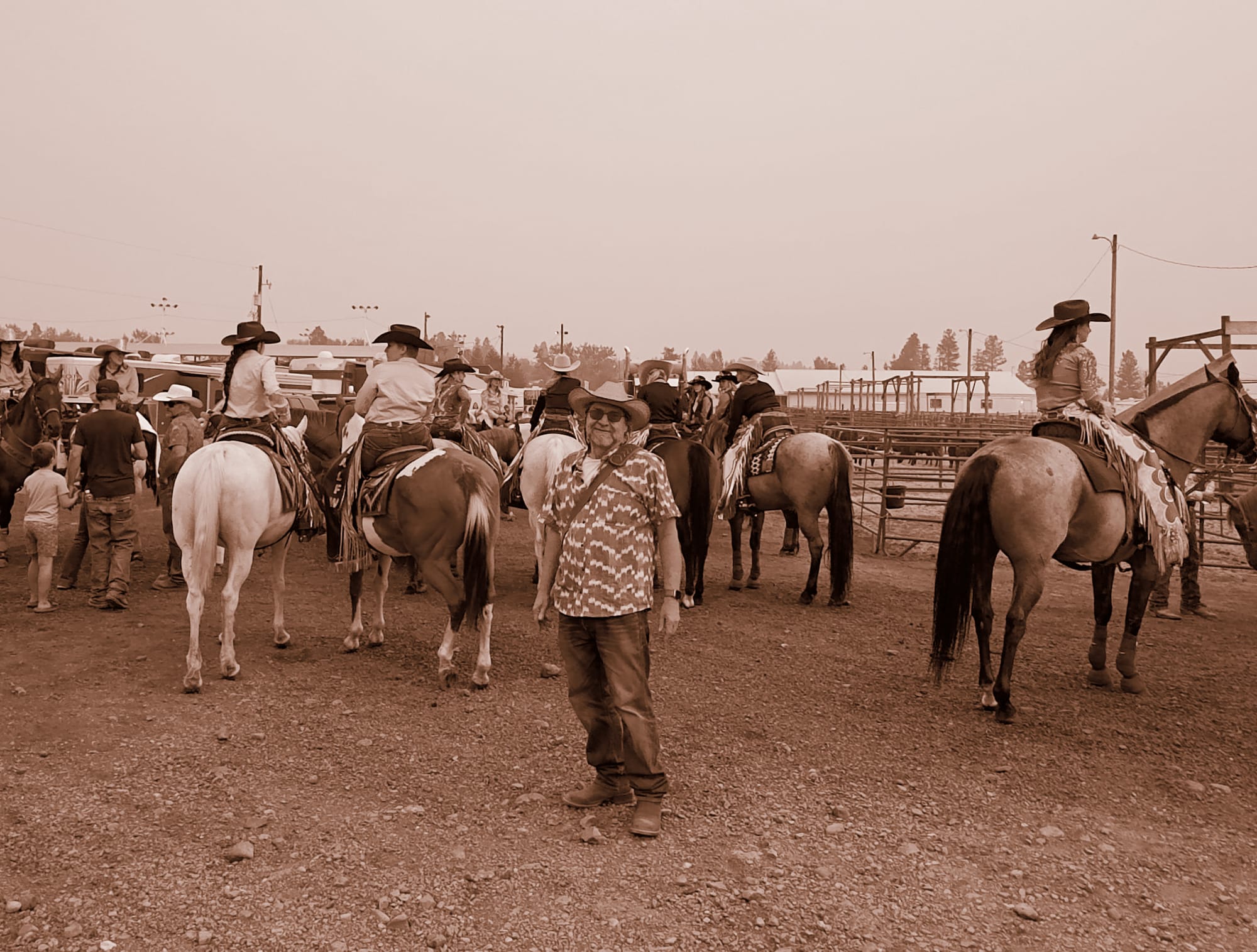
I had never seen an evangelical type baptism, so that was interesting. I briefly debated whether to take photos. A few other people took some, but they appeared to be relatives or part of the church administration. During my time at the rodeos, I've learned that wearing cowboy boots and hat, Levis, and a western shirt makes me invisible, and everyone takes phone pics, so I figured I could get away with it and that's how it played.
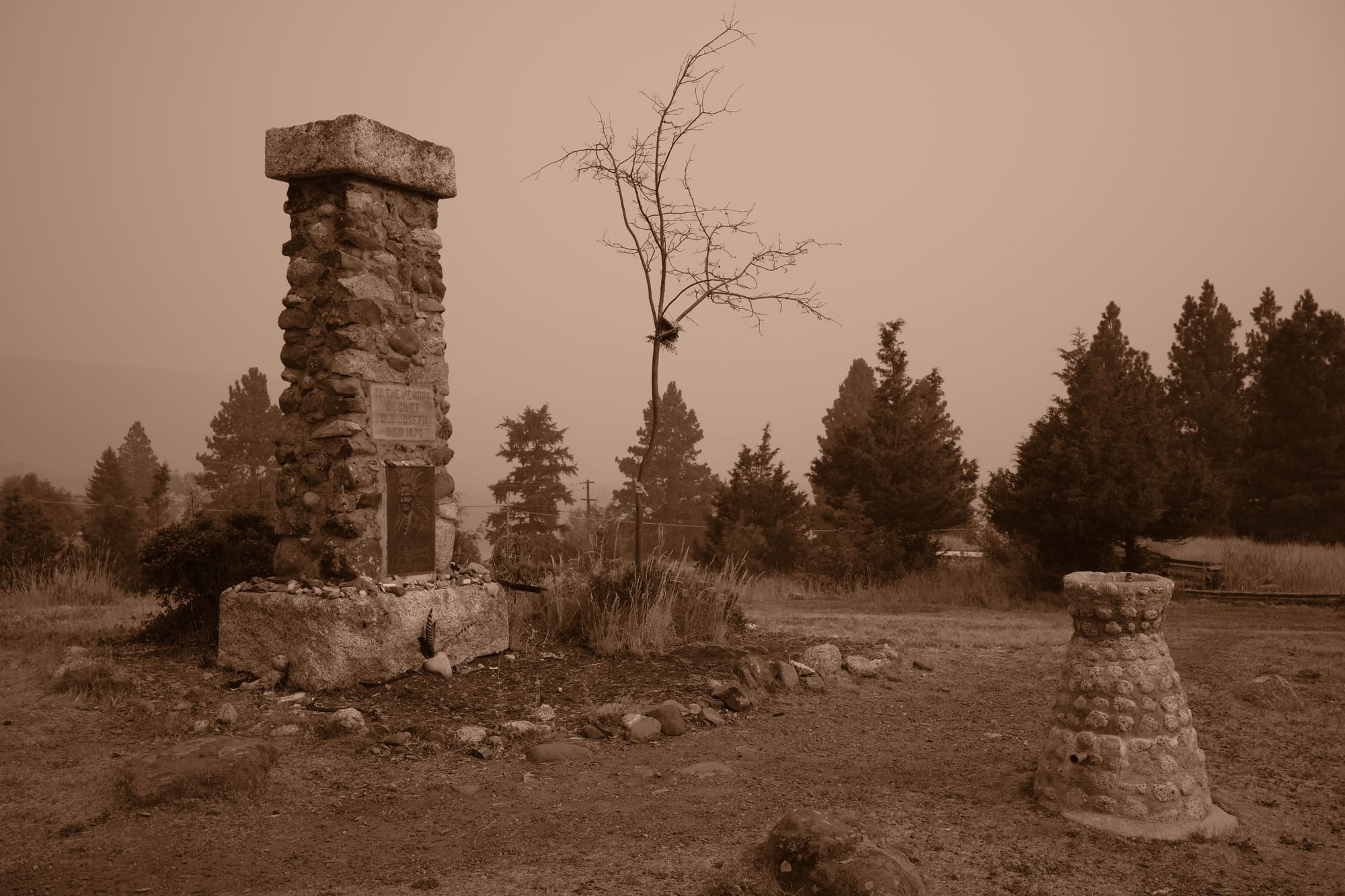
Old Chief Joseph was the famous Chief Joseph's father. On his deathbed he made his son promise to never sell their land in the Wallowa Valley, setting the wheels in motion for the battles and exile to come.
"My son, never forget my dying words, This country holds your father's body. Never sell the bones of your father and mother."
And he never did.
After the war, the old chief's grave was desecrated and his skull stolen as a souvenir.
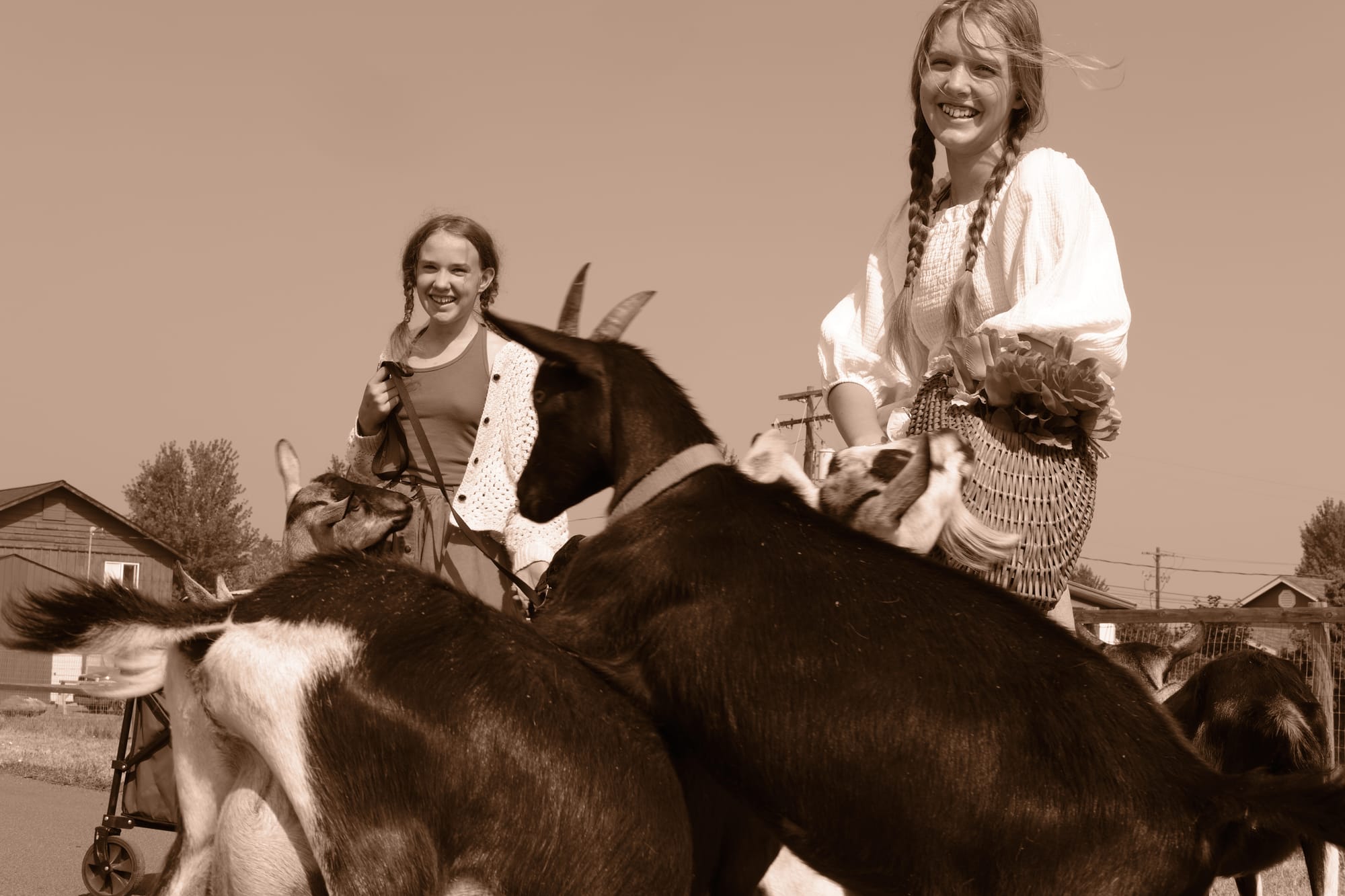
I don't like to get into "ism's." Minds clamp shut when they hear words like Capitalism, Socialism, Communism. Consumerism, Neoliberalism, or whatever ism.
The fact is that our current economic system – based on the belief that the never-ending accumulation of wealth is the best way to organize society and that any belief system that hinders that never-ending accumulation is wrong, if not criminal or a threat to national security, is destroying the planet's ability to sustain much of life on earth, including human life. The fact that we must extract the earth's resources - its minerals from the mountains, its nutrients from the soil, its carbon from the ground – in order to produce things we don't need, that don't make us happy or healthy and fund ever-more wars so an ever-fewer number of people can accumulate ever-more wealth is setting off a chain reaction of global warming that if unchecked could destroy us all, and will certainly lead to the collapse of civilization as we know it as the forests burn, diseases spread, seas rise, and much of the land that's densely populated today becomes underwater or otherwise uninhabitable. Could an economic system, or way of organizing society, fail any more catastrophically than this one? Forget isms. Look at reality.
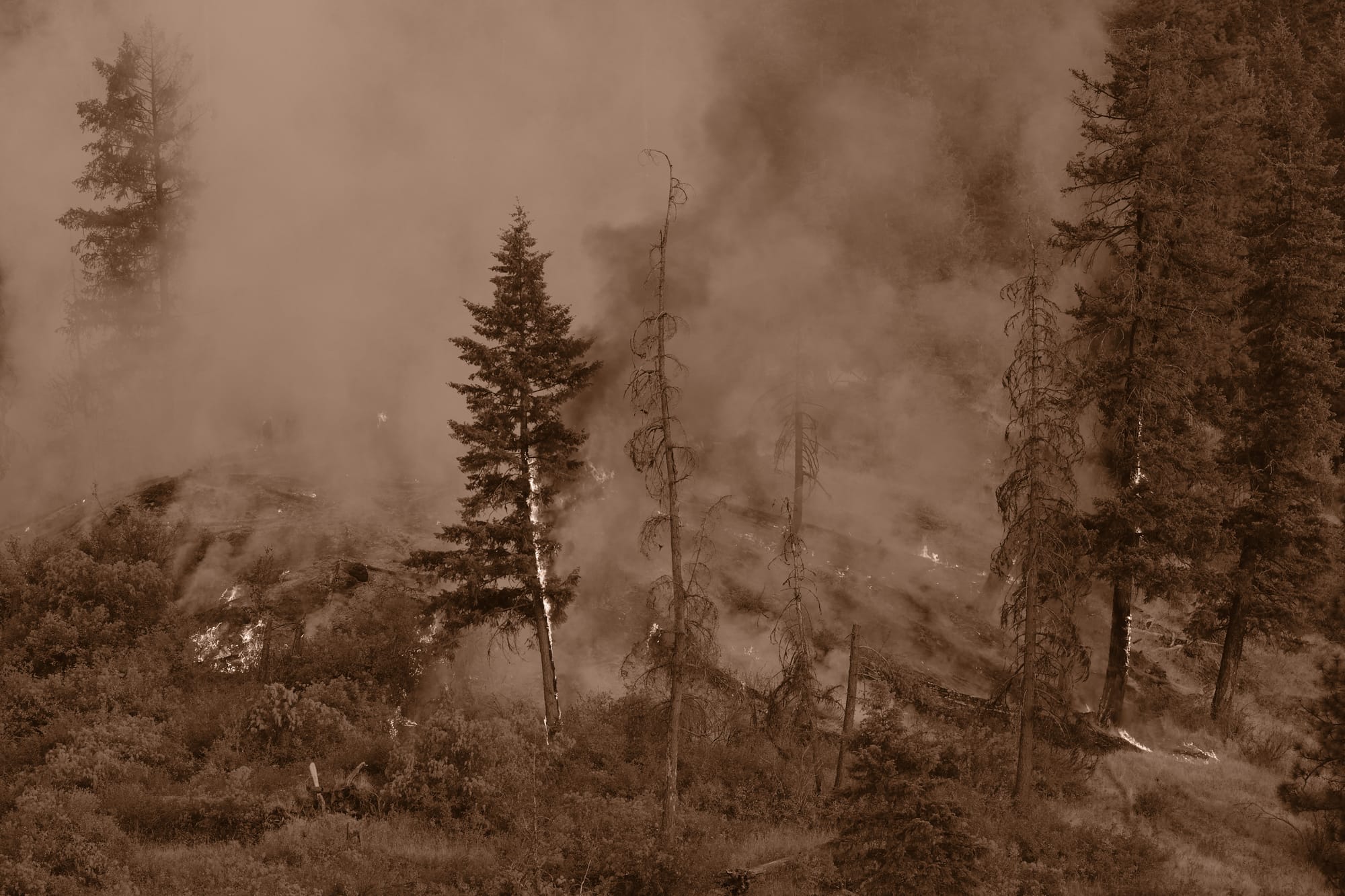
For us to have any hope of mitigating the encroaching disaster, we'll need to find better ways of organizing society. We'll need an economic system that prioritizes and rewards sustainability and survival rather than unlimited greed and accumulation.
The conceit of the 95 project is that the route along the highway that cuts through the western United States from Canada to Mexico illustrates much of what's got us to this point and may provide a few clues along the way as to how we might better organize ourselves going forward.
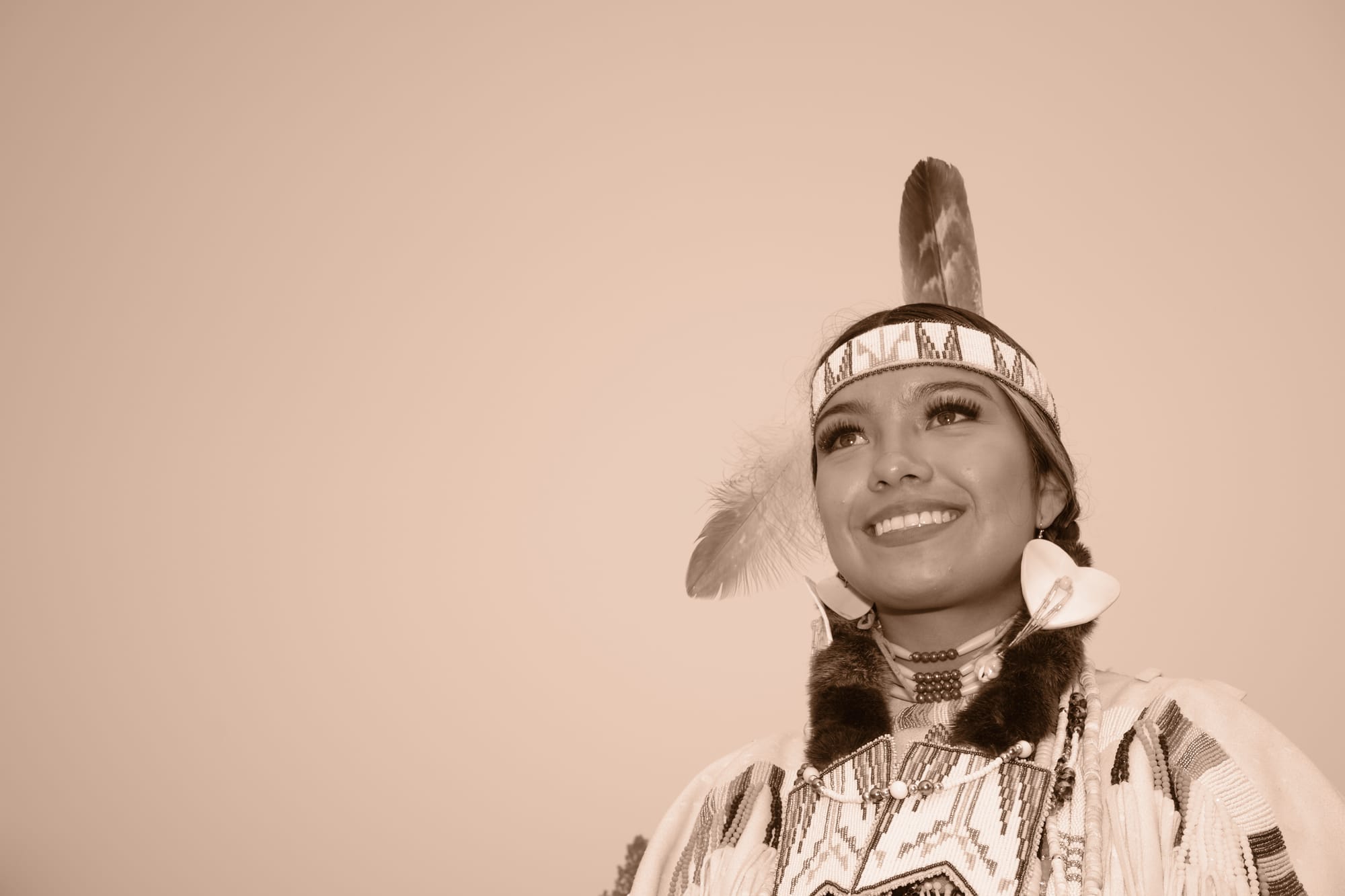
I never wanted to be one of those whites who "got into" Indians. Mostly I find those types sad and pathetic, if not vultures profiting from a type of cultural appropriation.
But when I started working on the 95 project, much of which concerns alternative ways of forming society such as Burning Man, the Bombay Beach Biennale, Slab City, the Aryan Nation, and even Las Vegas, I quickly realized that far and away the most alternatives along the route were, and are, practiced by Indians. So here I am, not wanting to be one of those people, but maybe it looks like I'm becoming one of those people? Nah, if I erased Indians from consideration of alternate societies along US 95, I'd be a much worse one of those people.
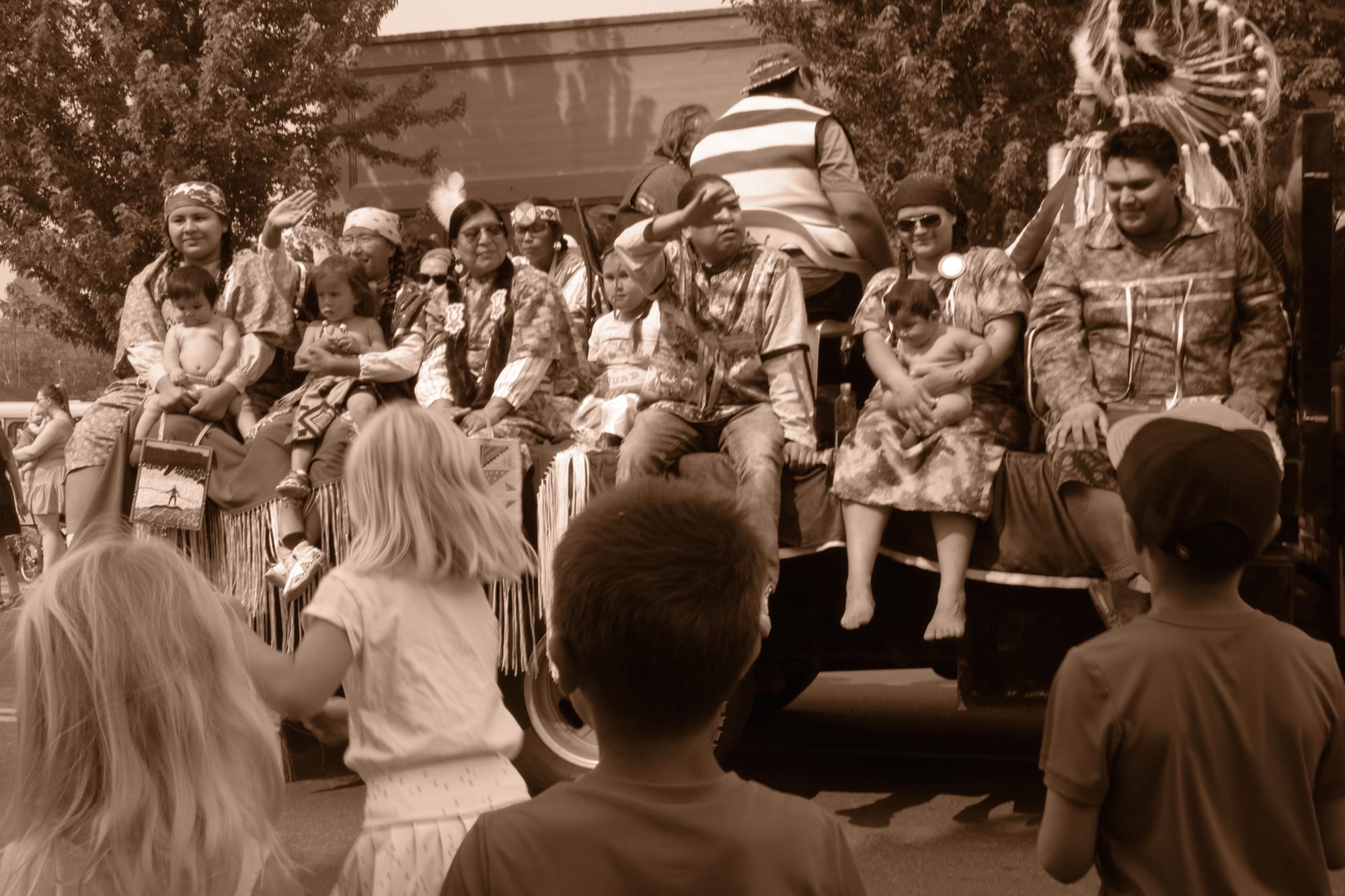
As for Chief Joseph Days, we see the rodeo culture, the Cowboy Church, and the rural mythology as standard bearers for this capital dominant, extractive, destructive system. The Nez Perce with their belief system that prioritizes the health and well-being of the earth and the community and the concept of sharing over accumulation provides some ideas worth considering.
Old Chief Joseph's skull was eventually recovered and reburied. The Nez Perce recovered a little bit of land in their ancestral homeland. The great majority of what was lost can never be regained, but they are trying to rebuild on what is left.
For the climate disaster something like that is the best we can hope for. But before we can rebuild from the ashes, we have to stop burning it all down.